Uranium’s Ugly Step-Sister ? Sounds like a Greeny!!!! The thorium fantasy sort of reminds you of the Greenies' electric car in every garage fantasy. Uranium’s Ugly Step-Sister
By Rick Mills | More Articles by Rick Mills
 Most junior resource investors know uranium, and many got in on the action when NexGen Energy and Fission Uranium made their discoveries in the Athabasca Basin of Saskatchewan, the region with the highest grades of uranium in the world.
Smart, or lucky, shareholders of NXE enjoyed a cumulative share price rise of around 430% between 2014 and 2016, while Fission Energy – famous for its Patterson Lake South property that yielded the open-pittable Triple R deposit – jumped from 91 cents in November 2013 to $1.62 a share in April 2014, for a gain of 78%.
Uranium is the fuel needed to create the nuclear reaction that can either create nuclear power or nuclear weapons.
To make nuclear fuel from uranium ore, the uranium is first extracted from the rock, then enriched with the uranium-235 isotope, before being made into pellets that are loaded into assemblies of nuclear fuel rods.
In a nuclear reactor, several hundred fuel assemblies containing thousands of small pellets of uranium oxide are in the reactor core. The nuclear chain reaction that creates energy starts when U-235 splits or “fissions”, which produces a lot of heat in a controlled environment.
In a conventional nuclear reactor, the pressurized water reactor, fuel rods containing uranium pellets are placed in water. Visualized as a giant kettle, the heat generated from the pellets boils water to create steam, which turns turbines to generate electricity.
But the downside of conventional nuclear power stations is the nuclear reaction also produces plutonium, which is highly radioactive, and other wastes, causing a problem for disposal. Strontium-90 and cesium-137, contained in nuclear waste, have half-lives of about 30 years, but plutonium-239 takes 24,000 years to fully decay.
When it works well, the nuclear reaction is an efficient form of energy creation. One uranium pellet weighing just 6 grams is said to produce the same amount of energy as a tonne of coal. But it also leaves a lot of radioactive waste that needs to be incinerated, encased in concrete, or buried deep underground for centuries.
When nuclear power goes wrong, the fallout is catastrophic. Nuclear meltdowns like Chernobyl in Russia, Three Mile Island in the US, and Fukushima in Japan are burned into the collective consciousness and serve as constant reminders of the dangers of nuclear power that drive the anti-nuke movement.
While nuclear energy generation will never be without risks, proponents argue these are manageable and small compared to the risk of increased greenhouse gas emissions caused by the continued burning of fossil fuels for power, that are warming the planet.
For this reason, nuclear is always in the mix of energies required to make the transformation from an oil-based economy to one where renewable and nuclear energies make up a larger proportion of our global electricity.
The question is, must we keep using uranium in our nuclear power plants, or is there another option? There is. It’s uranium’s ugly stepsister, a little-known element known as thorium.
Some scientists believe thorium is key to developing a new version of cleaner, safer nuclear power. So why hasn’t thorium entered the popular and investor lexicon like uranium has? The silvery-white metal has a fascinating history, and despite taking a back seat to uranium as the primary nuclear fuel, it is making a comeback.
This is the story of thorium, the wünder-fuel that wasn’t, but could be.
HistoryThorium is named after Thor, the Norse god of thunder. It was first discovered in 1815 by Jöns Jakob Berzelius, a Swedish chemist, but a few years later it was determined that the mineral was actually yttrium phosphate.
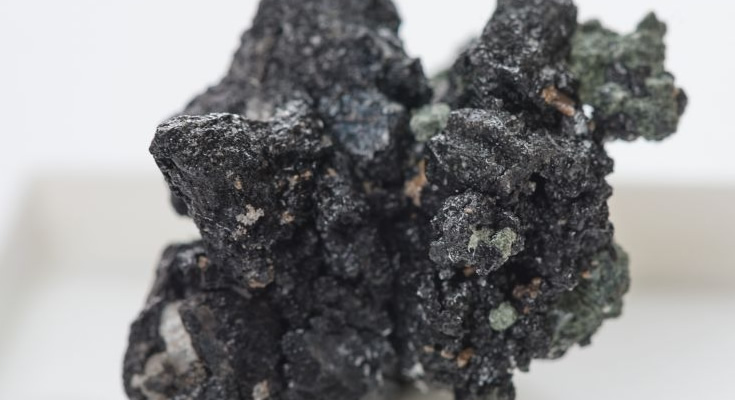
In 1828 Berzelius was given a sample of a black mineral found on an island off the coast of Norway by Hans Esmark, a Norwegian mineralogist.
The mineral contained several known elements including lead, tin, iron, manganese and uranium, but 60% was an unknown substance that was subsequently named thorite.
Thorium was first isolated by mixing thorium oxide with carbon, creating thorium chloride. When reacted with potassium, the result was thorium and potassium chloride, according to Chemicool.
It took another 70 years for scientists to realize that thorium was radioactive. The discovery was made by Gerhard Schmidt, a German chemist, and Marie Cure, a Polish physicist, who are often credited with its discovery.
Thorium oxide (ThO2) has the highest melting point of all oxides (3300°C) so it’s not surprising that its early applications were in lantern mantles, arc-light lamps, welding electrodes and heat-resistant ceramics. Thorium oxide is also used in camera lenses and scientific instruments.
Read the rest of the depressing reality of thorium herehttps://www.sharecafe.com.au/2018/10/03/uraniums-ugly-step-sister/

 Forum
Forum
 Pages:


