What a pile of impractical junk. The epitome of inconvenience. Hydrogen will have NO competition.What happens if a Tesla or similar EV runs out of power on the side of the road?Ron Rule Updated Sep 7
Yeah, so this just happened to me on Thursday.
I knew I was pushing it. First, the warning light came on. Then the buzzer. I was on my road, maybe three miles away from the house.There’s a baseball field on my left with a huge empty parking lot. What I should have done was just pull in there and come back with the truck and trailer.
But that isn’t what I did. “I can make it”, I said out loud.
It starts slowing down. It’s a 40 mph road and I’m going about five up hill with the pedal to the floor. I can see my mailbox. I barely make it over the hump and turn onto my driveway, and it dies.
One slight problem though… my driveway is about 1/8th of a mile up a mountain at a steep incline, with large boulders on each side and only wide enough for one vehicle. And my dead EV was now blocking it.
Crap.
“Well, at least we’re out of the road”, my son says.
The driveway is too steep to push the car, especially with a near 90 degree turn half way up, and my other vehicles are all up there, including the truck and trailer. Even if I had been crazy enough to attempt to back the trailer down the driveway, I wouldn’t be able to push the car onto it facing uphill anyway.
The Jeep has a winch on it, but the front of the EV is pretty long and it’s all fiberglass. There’s no recovery point to hook on to, and the only metal is the front axle. Winching from the back would be easy, but there’s no way to do it from the front without destroying the body in the process.
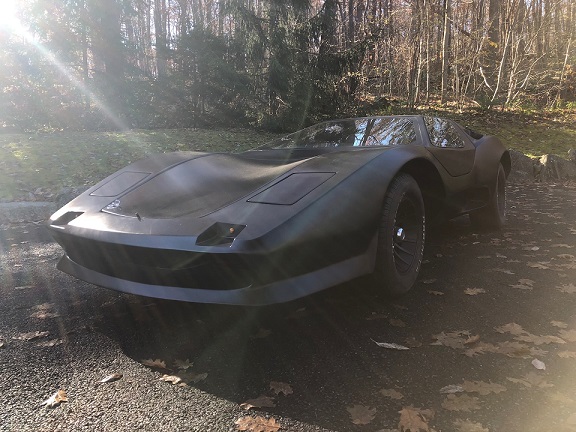
No way forward. No way backward without rolling into the road and not being able to push it back. Basically, I had only two options:
Figure out how to get one of the ATVs down to the road, pad up the back end of the car (also fiberglass) with towels and moving blankets, and use the ATV to push it up the hill.
Figure out how to charge it right there.
I really didn’t want to go with option one. That rear end was shaped completely by hand and was way too much work to risk destroying.
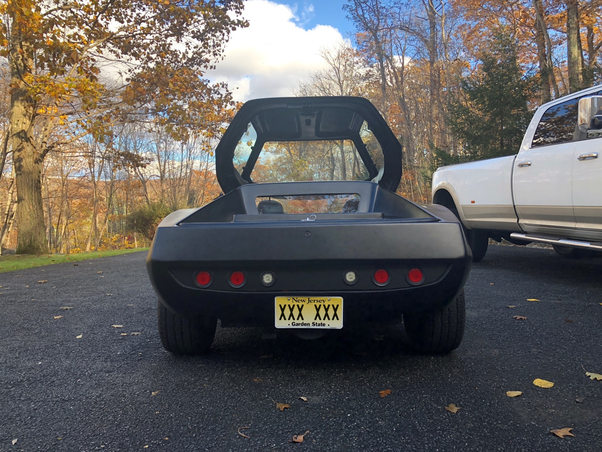
So we walked up to the house and started looking for extension cords. The closest electric outlet was just a 110V about 600 feet away. Fortunately I’m set up to charge on 220 or 110, it just takes a really long time on 110.
After rounding up every extension cord we had and connecting them all, going through the woods to get the straightest possible run, we were still at least 100 feet short. And since the driveway was blocked by the car, I couldn’t take one of the other cars to run out and get any more.
I ended up having to call a friend, who brought over two 100 foot cables. We plugged it in and left it alone for about two hours. Before moving it again I ran through every battery diagnostic and balancing check just to make sure I hadn’t damaged the batteries by completely discharging them, and then finally drove it up to the garage.
When an EV dies, it’s a very abrupt death. It’s not like a gas tank where the needle can drop an inch below “empty” and if you do run out you can just fill up from a gas can and be on your way. If the “this poo is about to die” light comes on in an EV, don’t ignore it.
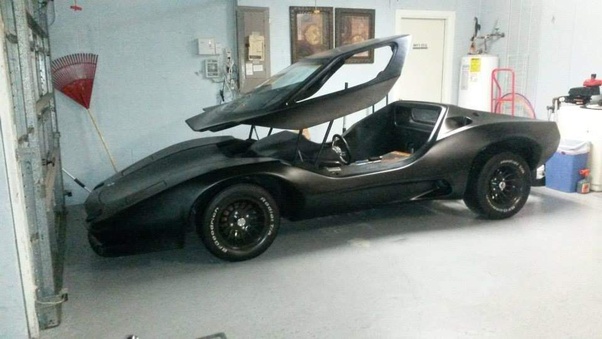
Edit: For those asking about the car, it started as a 1968 Volkswagen Beetle. The Sterling body kit was from one of the original California Component Cars back in the 70’s, which was in really rough shape when I found it and needed to be blasted down to the original gel coat and built back up. I made a bunch of modifications to it but mostly just in the front and rear, and kept the overall lines of the car intact.
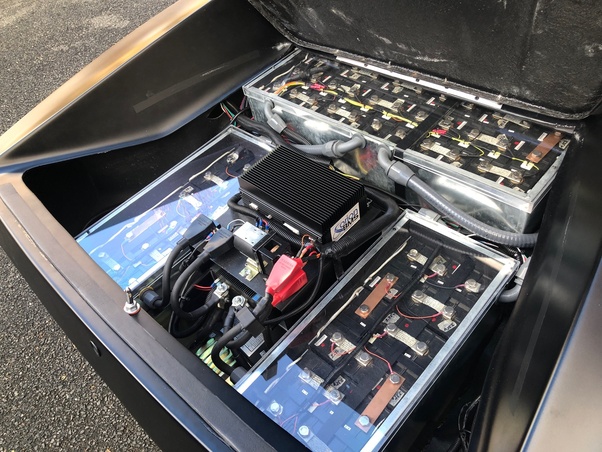
The EV drivetrain uses a series wound motor and 40 LiFePO4 batteries. There are better battery choices out there now, but they were considered top of the line in 2013. I had originally put everything together myself using random components sourced online - it ran but I was in over my head and wasn’t ever really happy with it. Last year I met some EV enthusiasts (AmpRevolt in PA) whose knowledge greatly exceeded my own and long story short, I ended up having them redo the drivetrain and modernize things a bit. They took the whole car apart and basically did a phenomenal job.
The next upgrade will probably be to retire those batteries and go with Tesla battery packs, but my wife wants some safety features first. Currently there are none; a fiberglass body on a flat VW chassis = zero crash protection. But I have a few friends who are amazing fabricators and build competition Jeep roll cages, so I’m confident we can come up with something.
Anyway, it’s been a crazy project where nothing went according to plan and I’ll probably never do it again, but happy with the results overall.
 https://www.quora.com/What-happens-if-a-Tesla-or-similar-EV-runs-out-of-power-on...

 Forum
Forum
 Pages:


