Quote:Conclusions
In this article, we developed and presented a new dataset describing seasonal and annual Arctic sea ice extents for the period 1901–2015. Our dataset consists of separate seasonal indices for three Arctic regions (North American, Nordic and Siberian) as well as composite indices for the entire Arctic Ocean and seas, although excluding those non-Arctic Northern Hemisphere seas with seasonal sea ice (e.g. Sea of Okhotsk, Bering Sea, Gulf of St Lawrence).
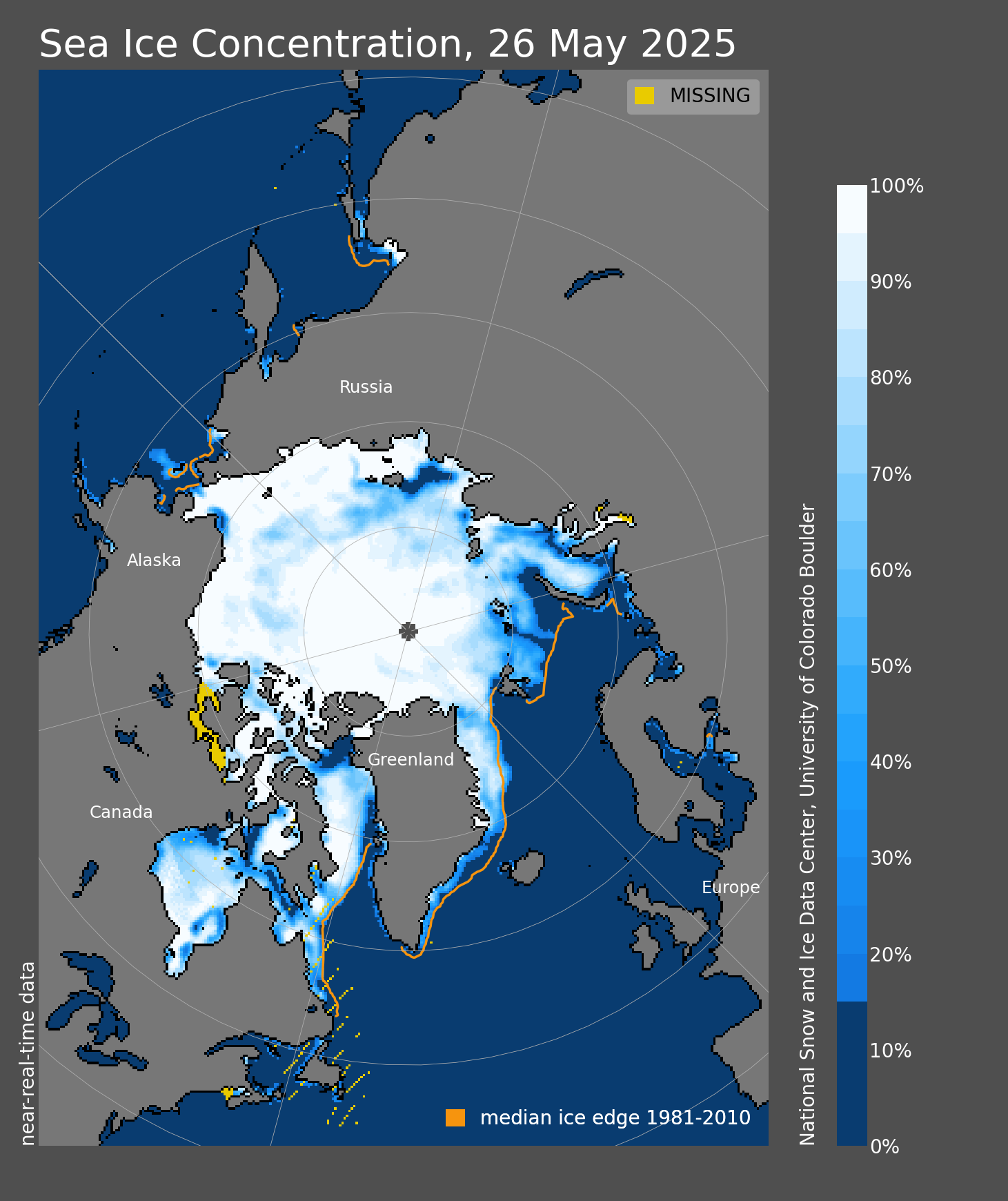
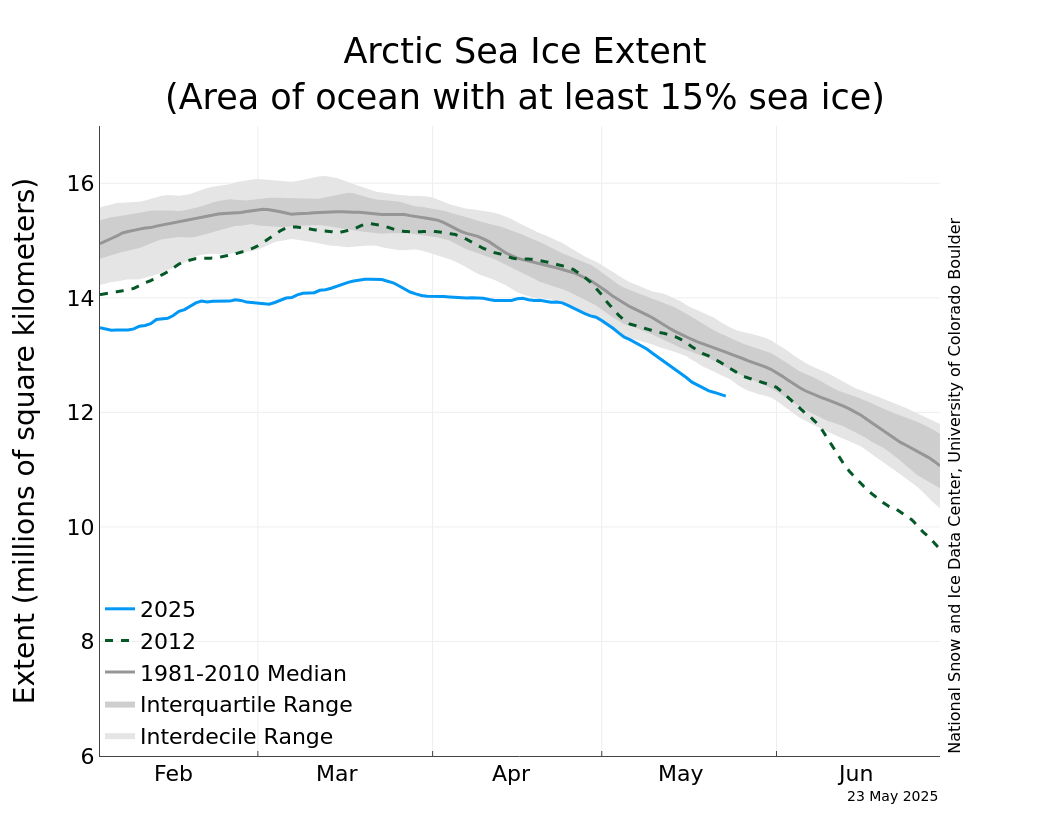
According to this new dataset, the recent period of Arctic sea ice retreat since the 1970s followed a period of sea ice growth after the mid 1940s, which in turn followed a period of sea ice retreat after the 1910s. Our reconstructions agree with previous studies that have noted a general decrease in Arctic sea ice extent (for all four seasons) since the start of the satellite era (1979). However, the timing of the start of the satellite era is unfortunate in that it coincided with the end of several decades during which Arctic sea ice extent was generally increasing.
This late-1970s reversal in sea ice trends was not captured by the hindcasts of the recent CMIP5 climate models used for the latest IPCC reports, which suggests that current climate models are still quite poor at modelling past sea ice trends. Nor is it described in previous Arctic sea ice reconstructions such as the Walsh dataset or the widely used HadISST sea ice dataset, although some recent studies have noted similar reversals, e.g. Pirón and Pasalodos (2016 Pirón, M.Á.C. and Pasalodos, J.A.C., 2016. Nueva serie de extension del hielo marino ártico en septiembre entre 1935 y 2014. Revista de Climatología, 16, 1–19. (in Spanish). Available from:
http://webs.ono.com/reclim/
[Accessed 6 February 2016].
[Google Scholar]
) and Alekseev et al. (2016 Alekseev, G., Glok, N., and Smirnov, A., 2016. On assessment of the relationship between changes of sea ice extent and climate in the Arctic. International Journal of Climatology, 36, 3407–3412. doi:10.1002/joc.4550
[Crossref], [Web of Science ®], [Google Scholar]
).
As we saw from Figure 1, and Tables 1 and 2, Arctic sea ice is a key component of the Arctic hydrological cycle. So, this new dataset should be of use for improving our understanding of Arctic hydrology.
Seems the sea ice extent in the Arctic more or less corresponds to the temperature trend.
Since the 1970s—rapid rise in temperatures and decline in sea ice extent and volume.


 Forum
Forum
 Pages:


