many blessings ,
a revelation beloved beings in that
the arduous and loony hypothesis upon crop circles
and the makers of such geometries upon your world
has been recorded in antiquity for those with eyes to beholden unto as much ..
drink college guys with plankeths much ?
http://oldcropcircles.weebly.com/uk-1678-hertfordshire.html1678 - Hertfordshire: 'The Mowing Devil'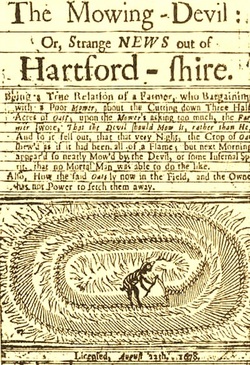
The artifact pictured left is a pamphlet dated August 22, 1678, entitled The Mowing-Devil: Or Strange NEWS out of Hertford-shire. It takes the form of a primitive news report, which started life as a woodcut – a type of early printing plate created by carving into a wooden block and then inking it.
The image depicts a demon, scythe in hand, felling crop stems in what seems like a systematic fashion. The accompanying text reads:
Being a True Relation of a Farmer, who Bargaining with a Poor Mower, about the Cutting down Three Half Acres of Oats; upon the Mower's asking too much, the Farmer swore That the Devil should Mow it rather than He: And so it fell out, that very Night, the Crop of Oats shew'd as if it had been all of a flame; but next Morning appear'd so neatly Mow'd by the Devil, or some Infernal Spirit, that no Mortal Man was able to do the like.
Also, How the said Oats ly now in the Field, and the Owner has not Power to fetch them away.
Analysis

This artifact was rediscovered in 1989 by several crop circle researchers, independently of one another. Some of the details in the accompanying text are worthy of our attention.
The event took place in a field of oats
It occurred overnight
It took place in late August
The oats appeared "neatly mowed" and "lay in the field"
The illustration provides further clues, depicting either oval or (allowing for foreshortening) circular rings in which the oat stems are laid neatly parallel to one another, with their heads away from the centre, and apparently inclining towards an anti-clockwise swirl.
This artifact was subsequently reproduced in 1898, in a piece by Lewis Evans called Witchcraft In Hertfordshire, which featured in the book Bygone Hertfordshire edited by William Andrews. (It was later also included in one of a series of pamphlets by the East Herts Archaeological Society, subsequently issued as a book entitled Hertfordshire Folklore by William Blyth Gerish.)
In the Lewis Evans piece, the author presents the original woodcut, and recounts the accompanying story in more modern prose, with his own embellishments. Some of these extrapolations appear to have been deduced from the drawing itself, and it is particularly interesting to see how he interpreted the imagery without the lens of knowledge of the crop circle phenomenon. Evans comments as follows:
The inquisitive farmer no sooner arrived at the place where his oats grew, but to his admiration he found the crop was cut down ready to his hands, and as if the Devil had a mind to shew his dexterity in the art of husbandry, and scorned to mow them after the usual manner, he cut them in round circles, and placed every straw with that exactness that it would have taken up above an age for any man to perform what he did in that one night.
So Evans seems to have taken the image as a depiction of "round circles", with the crop stems "placed" with "exactness" on the ground. This is to all intents and purposes, the description of a classic crop circle formation.
Of course it is impossible to make any conclusive statement about the account, open as it is to interpretation. Objections have been raised to the crop circle reading, on two bases: 1. that there is detail of flames, and that the illustration may depict fire around the central image; and 2. that the oats are described as having been cut rather than flattened.
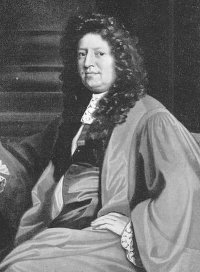
“Fairy Circles” Professor Robert Plot’s Hypothesis. Part 2 Modern Interpretation.
In 1686 Sir Isaac Newton was 44 years old and engaged in his greatest work the ‘Principia’ (published in1687.) His contemporary, Professor Robert Plot .LLD was Keeper of the Ashmolean Museum and Professor of Chemistry at the University of Oxford. He was one of, if not the first palaeontologists in that he discovered and published evidence of the first fossil bone now known to be part of a dinosaur. This was revealed in his book “A Natural History of Oxfordshire” of 1676.
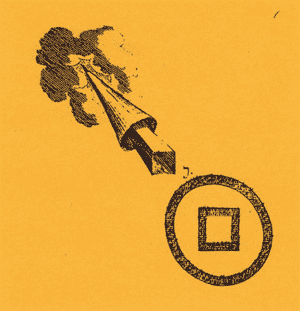
plots hypothesis ?
" square and circular winds old boy
cometh forth with the adorations "
one of the profane were heard to mention
namaste
- : ) =

 Forum
Forum
 Pages:

 Massive Global Eruptions (Read 117613 times)


