http://www.crystalinks.com/consciousness.htmlConsciousness
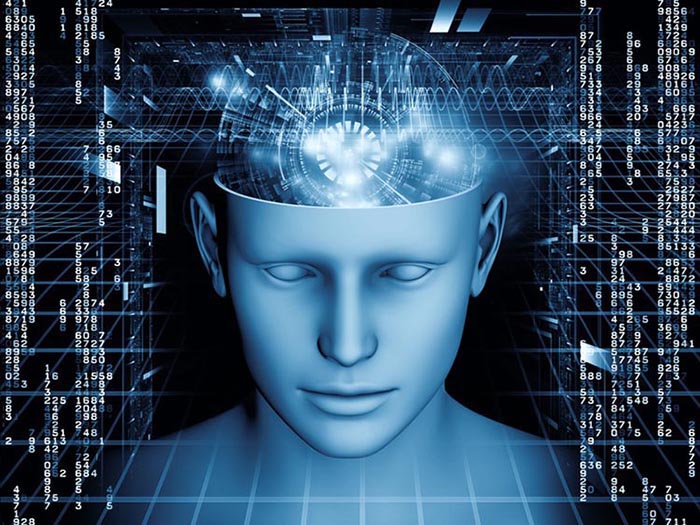
We exist in a matrix, simulation, hologram, or virtual programmed
reality that we believe is real because our brains tell us it is.
Consciousness is all and everything in the virtual hologram of our experiences brought into awareness by the brain - an electrochemical machine forever viewing streaming codes for experience and interpretation. Consciousness originates from a source of light energy for the purpose of learning. The human biogenetic experiment is consciousness brought forth into the physical by the patterns of sacred geometry that repeat in cycles called Time.
Reality is about the evolution of consciousness in the alchemy of time. To become fully consciousness, is to remember who you are as a being of light, why you are here, and where we are going as dictated by the collective unconscious that creates the programs of realities through which your soul experiences simultaneously.
Rene Descartes said, "Cogito, ergo sum" -- "I think, therefore I am." He was correct.
Consciousness may involve thoughts, sensations, perceptions, moods, emotions, dreams, and self-awareness. It is variously seen as a type of mental state, a way of perceiving, or a relationship between self and other. It has been described as a point of view, an I, or what Thomas Nagel called the existence of "something that it is like" to be something.
Many philosophers have seen consciousness as the most important thing in the universe. On the other hand, many scientists have seen the word as too nebulous in meaning to be useful.
Consciousness is the subject of much research in philosophy of mind, psychology, neuroscience, cognitive science, and artificial intelligence. Issues of practical concern include how the presence of consciousness can be assessed in severely ill or comatose people; whether non-human consciousness exists and if so how it can be measured; at what point in fetal development consciousness begins; and whether computers can achieve conscious states.
In common parlance, consciousness sometimes also denotes being awake and responsive to the environment, in contrast to being asleep or in a coma.
Consciousness is a term that refers to the relationship between the mind and the world with which it interacts. It has been defined as: subjectivity, awareness, the ability to experience or to feel, wakefulness, having a sense of selfhood, and the executive control system of the mind. Despite the difficulty in definition, many philosophers believe that there is a broadly shared underlying intuition about what consciousness is. As Max Velmans and Susan Schneider wrote in The Blackwell Companion to Consciousness: "Anything that we are aware of at a given moment forms part of our consciousness, making conscious experience at once the most familiar and most mysterious aspect of our lives." Read more ...
Mysterianism
Mysterianism is a philosophical position proposing that the hard problem of consciousness cannot be resolved by humans. The unresolvable problem is how to explain the existence of qualia (individual instances of subjective, conscious experience). In terms of the various schools of philosophy of mind, mysterianism is a form of nonreductive physicalism. Some "mysterians" state their case uncompromisingly. Colin McGinn has said that consciousness is a mystery that human intelligence will never unravel. Others believe that consciousness is not within the grasp of present human understanding, but may be comprehensible to future advances of science and technology. Read more
World's Smartest Physicist Thinks Science Can't Crack Consciousness Scientific American - August 18, 2016
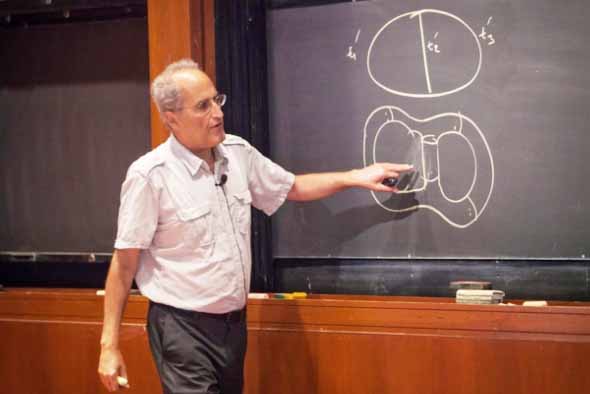
String theorist Edward Witten says consciousness will remain a mystery. Some mind-ponderers, notably philosopher Colin McGinn, argue that consciousness is unsolvable. Philosopher Owen Flanagan calls these pessimists mysterians, after the 60Õs-era rock group Question Mark and the Mysterians. Recently, physicist Edward Witten came out as a mysterian. Witten is regarded with awe by his fellow physicists, some of whom have compared him to Einstein and Newton. He is largely responsible for the popularity of string theory over the past several decades. String theory holds that all of nature's forces stem from infinitesimal particles wriggling in a hyperspace consisting of many extra dimensions.

 Forum
Forum
 Pages:

 Consciousness (Read 404248 times)


