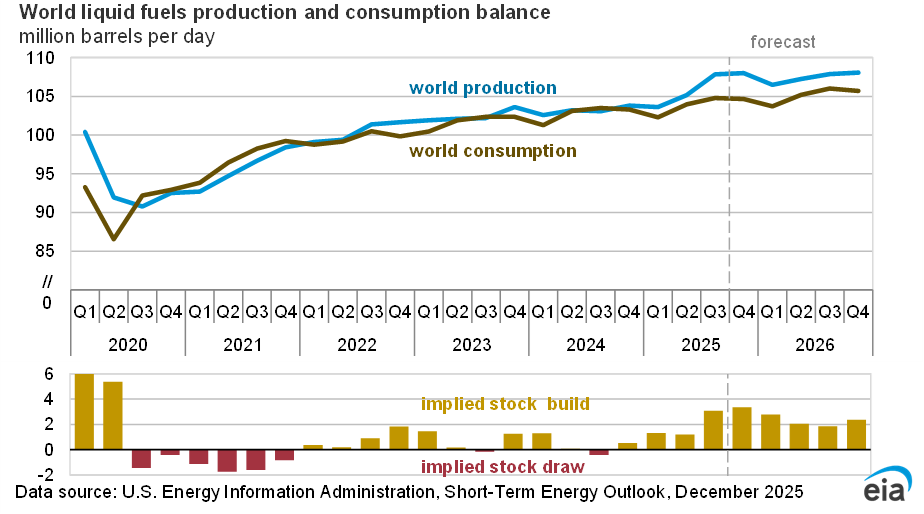
Not quite yet. See bottom image for trend since 1965. The more recent trend and predictions, influenced by the Iran war:
The big question for the short term is, what will electric cars do to the market? First off, are they actually cheaper?
https://www.comparethemarket.com.au/car-insurance/features/electric-vs-petrol-value/
Quote:The data revealed that despite there being an almost $30,000 difference in purchase price between the electric and petrol models, the electric counterpart will work out to be cheaper to own and operate in the long run. The catch? You would need to own the car for 16 years before those cost benefits became clear.
That was from 2021, so already outdated. You can now get an EV for $25k. So, they are getting close in terms of upfront cost, and already well cheaper over the long run. The upfront cost is trending down. Plus, the cost of charging is trending down, with renewable energy pushing the price of electricity down. With rooftop solar you can charge them for free at home. Plus, most Australians are about to start getting 3 hours of free electricity a day.
5 years ago, EVs made up 9% of global car sales. Now it is more than 25%. So the end is nigh for petrol cars.
What difference will that make to peak oil? Cars are not the only consumer of oil. The transport sector as a whole makes up 64% of current oil consumption, with road making up 45 to 50%, aviation 7 to 8% and marine and rail 6 to 7%. Aviation and marine are not switching to electric any time soon, but that still leaves almost half the oil market in road transport.
What about other uses? Petrochemicals uses 15 to 18% for making fertiliser, plastic etc. And other manufacturing, including heating, uses 7 to 8%. About 5% goes to a combination of residential and commercial heating, cooking and farm machinery and 4% to electricity generation.
There are alternative energy options for all those other uses, but it is difficult to predict when they will be commercially viable.
What about pricing signals? With the adoption of EVs, oil should get cheaper, so there will be less incentive to use alternatives in other industries. To some extent their use of oil may actually go up to take advantage of all that production with no-where to go. But it won't take long for existing production infrastructure to age out, and the price will have to keep going up to justify more investment in oil production. It will probably have to go up considerably, as it would take a brave investor to put money into oil production assets that might take years to build and decades to pay off.
A look at coal may shed some light on this dynamic.
It looks like Australia is not going to build any more coal fired power stations. For the moment, this seems to be increasing the value of existing power plants. So there is a lot of money to be made in keeping the existing infrastructure running, and a few people have made a fortune buying up old power stations and coal mines at bargain prices because they looked like they had no future, only for them to suddenly become valuable again due to short term increases in demand or issues with other suppliers going offline. But, that could all change suddenly and they might literally be worthless one day.

 Forum
Forum
 Pages: 1


 peak oil? (Read 278 times)


