https://wentworthreport.com/2026/04/01/australias-fuel-supply-in-the-long-term/Liquid hydrocarbons are irreplaceable in terms of energy density and convenience of handling.
We have lots of coal. So, coal-to-liquids is the obvious future:
There are two choices in coal liquefaction processes: Bergius and Fischer-Tropsch, both invented in Germany in the 1910s.
In the Bergius process, hydrogen is forced into coal molecules at a temperature of 450˚C and a pressure of 170 kg/cm2 (165 atmospheres or 2,420 psi).
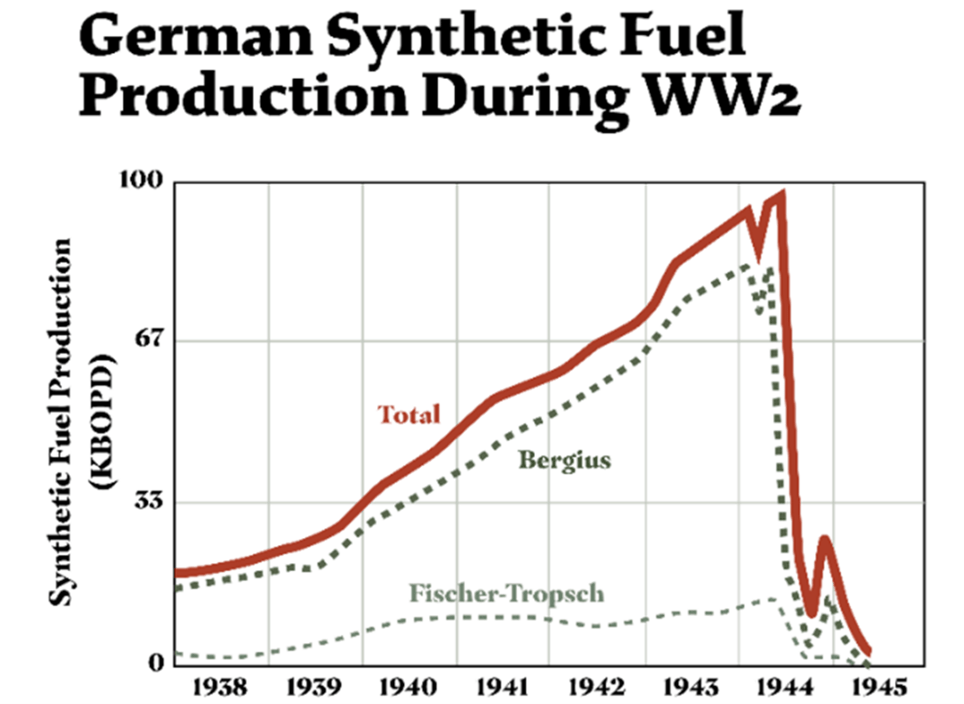
The Fischer-Tropsch process burns coal in pure oxygen to produce a synthesis gas that is catalysed to long chain hydrocarbons in an oil bath. Bergius is the better process. In WW2, German synthetic fuel production was dominantly via the Bergius process:
Cost per liter of a Bergius plant? About A$1.21 per liter (~US$135 per barrel).
The wholesale price is affordable. What about the capital cost per consumer? The drive-away price of a Toyota Corolla Hybrid is $37,000. Its fuel consumption rate is 25 kilometres per litre. If the vehicle does the normal 20,000 km per year, that is 800 litres to get there. The capital cost of a litre of annual production is $2.63. If we multiply that by the 800 litres of fuel consumption per annum, the Corolla’s share of the cost of the Bergius plant to supply it is $2,100. This is 5.7% of the drive-away price, less than the cost of a refrigerator or some TVs, and a fraction of the $8,000 you can pay for extra trim for the Corolla. Car buyers should be given the option of buying a perpetual fuel supply for their vehicles.
It is the same story with wheat-growing. Medium-rainfall country in the WA wheatbelt is currently selling for $7,500 per hectare. Each hectare is expected to produce 2.5 tonnes of wheat per hectare, using 15 litres of diesel per tonne in no-till cropping, equating to 38 litres per hectare.
At the moment, that diesel supply is on a hand-to-mouth basis. The farmer might get his crop in, but will there be diesel for sale come harvest? To reduce risk he could buy in the diesel for harvest at the time of planting and keep it in tanks on the farm. Better yet, he could guarantee supply in perpetuity by paying $2.63 per annual litre of production from a Bergius plant for an outlay of $100 per hectare, increasing his capital outlay by 1.3%. The cost of disruption is far, far greater than the outlay for fuel supply to the farm. The same is true for mining, trucking and all the other activities of productive people. And it applies to aircraft:

 Forum
Forum
 Pages: 1


