... in a cycle of death of its own making.
Israeli Jews have been concealing the consequences of the war in terms of the death and injury of Israeli Jews from fighting.
Israeli Jews have lost their military superiority to a defensive militia.
Israeli Jews are facing disinvestment even greater than that being caused by the BDSM campaign.
Israeli Palestinians are starting to join the fight with acts of terrorism inside Israel.
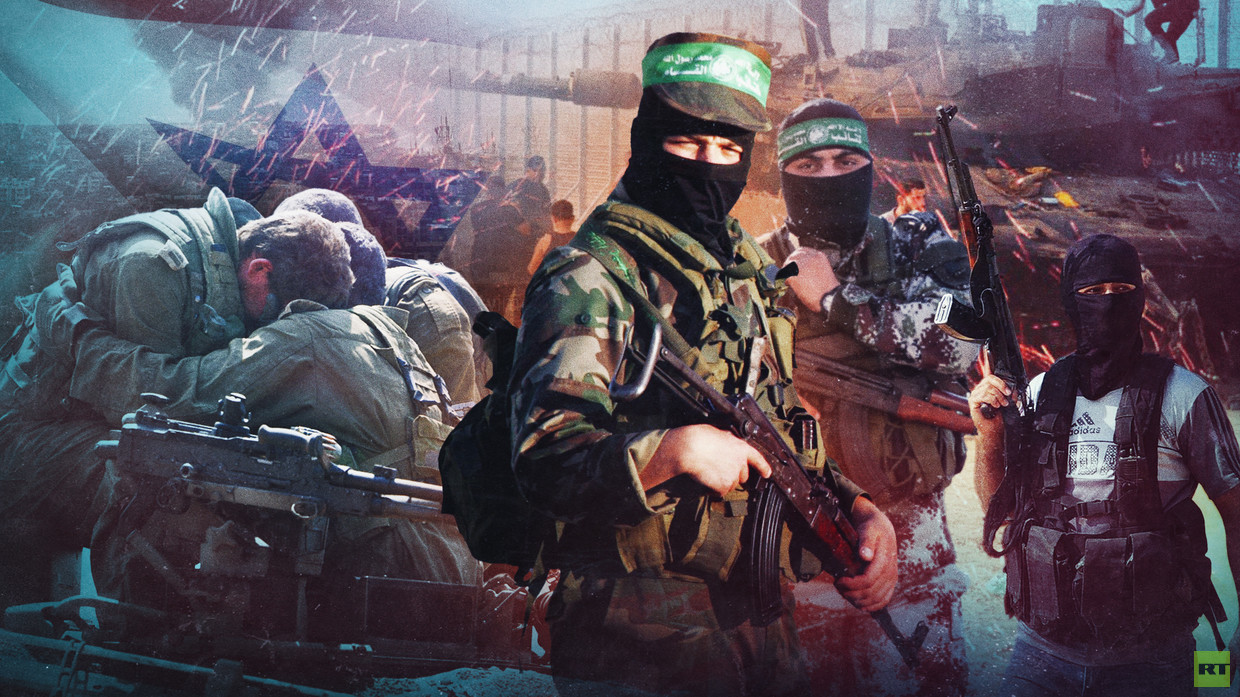
The costs are mounting.
https://www.rt.com/news/600393-israel-claims-defeat-hamas/ Quote:‘Hamas has never been stronger’: Israel is stuck in a war it can’t win
West Jerusalem claims it’s close to defeating Gaza’s militants but the facts show otherwise
‘Hamas has never been stronger’: Israel is stuck in a war it can’t win
© RT / RT
Through April, the IDF had targeted more than 32,000 military sites belonging to Hamas and its allies. In June, Israel announced that 15,000 of the group's militants had been eliminated. But experts are certain those measures won’t eradicate the Islamic group that has been in charge of Gaza since 2007.
“We are advancing to the end of the stage of eliminating the Hamas terrorist army,” Prime Minister Benjamin Netanyahu said on Monday, addressing the cadets of Israel National Defense College.
“I was very impressed by the achievements above ground and below ground, and by the commanders’ fighting spirit. With this spirit we will achieve our objectives: Returning our hostages, eliminating Hamas’ military and governing capabilities, ensuring that Gaza will not constitute a threat...” he added.
Since October 7, 2023 – when hordes of Hamas militants attacked Israel and killed more than 1,500 people – Israel has eliminated dozens of Hamas tunnels. It has seized weapons depots and cash, destroyed various military sites, killed operatives of Hamas and of the Palestinian Islamic Jihad and captured thousands others.
Victory Is Still Remote?
But almost nine months in, Israel’s victory over Hamas still seems remote.
Israel’s isolation: An anti-Semitic horror story or inevitable outcome?
Read more Israel’s isolation: An anti-Semitic horror story or inevitable outcome?
Before the deadly October 7 attack, the Islamic group that has been in control of the Strip since 2007, boasted five brigades or 25 battalions with a total number of active combatants standing at 30,000.
In June, Israel admitted that it had only eliminated half of that original force, or 15,000 Hamas combatants. On Tuesday evening, the country’s chief of staff, Herzi Halevi, said Israeli forces had killed at least 900 militants in Rafah, south of the Strip.
Reports suggest that Hamas is now actively recruiting new cadets, many of whom are 18 year-olds, to replenish its ranks, but even if they fail to reach their initial numbers, the existing battalions are more than enough to challenge Israel.
Just on Monday, Hamas militants fired twenty rockets from Khan Yunis at Israel’s southern communities, showing they are still capable of putting up a fight. Areas that had been vacant of Hamas before are now seeing a resurgence. Israeli soldiers continue to fall in the Strip, almost on a daily basis, with the total number already exceeding 670.
“I don’t believe Israel can destroy Hamas completely,” said Shadi Abdelrahman, a political analyst and native of Gaza who left the Strip shortly before the war.
“Hamas is not like any other group. They are not outsiders. They have an ideology connected to a cause, and that cause is to fight for their lands or to avenge the death of their loved ones,” he added.
Stemming from the Muslim Brotherhood, a radical Islamist organization that’s deemed terrorist by many regional and international players, Hamas was established in Gaza in late 1980s as a response to what they call Israeli occupation and the inability of other Palestinian factions, including Fatah, to confront it. But they were far more than just a group that wanted to resist Israel militarily. Just like their patrons, the Muslim Brotherhood, they were a social movement: they established schools and hospitals, they ran charities and served as mediators in family feuds, and that made them an indispensable part of the Gazan society.
“Socially speaking, Hamas of today doesn’t have that much power and cannot provide what it used to before, simply because they cannot move freely due to Israel’s heavy shelling,” explained Abdelrahman.
Why Israel is the one thing you can’t protest against in Western universities
Read more Why Israel is the one thing you can’t protest against in Western universities
“Militarily, their capabilities have also been damaged. The stocks of their weapons have been depleting, many tunnels have been destroyed, infrastructure has been devastated. Their combatants must be exhausted as they have been fighting for a long time. But from the political point of view, Hamas has never been stronger,” added the analyst.
According to a recent poll, conducted by the Palestinian Center for Policy and Survey Research, 67% of Palestinians – both in the West Bank and Gaza – believe that Hamas was right in launching the deadly October attack, while 61% said they would want to see Hamas, not any other group, control the Strip after the war. ...

 Forum
Forum
 Pages: 1


 ‘Hamas has never been stronger’: Israel is stuck (Read 358 times)


