Suitably ticked off ajax whimpers a few excuses. But he is forgiven for not knowing everything as the Hydrogen Energy Revolution is creeping up everywhere all around the world and most people misled by Greeny and GetUp! and Musky propaganda are not even aware of it.
The simple driving force around the world is POLLUTION in the big cities caused largely by diesel pollution especially from big trucks moving freight.
The ONLY thing holding Hydrogen back is simply infrastructure. The truck impetus will accelerate the hydrogen infrastructure and once it is established then hydrogen cars will follow as the dangerous unsafe pollution spewing electric inconveniences go into the junk yards just like back in the 1800's.
Hydrogen infrastructure now is at the same stage that petrol and diesel infrastructure was back in the 1800's after the invention of the starter motor which spelled the death of the electric cars at that time.
Nowadays hydrogen is stored at pressure in the vehicle tanks just like LPG. The tanks are not metal and are a special design perfected by Toyota.
For export to Japan and Sth Korea hydrogen is converted to ammonia which is easily handled and then converted back for use.
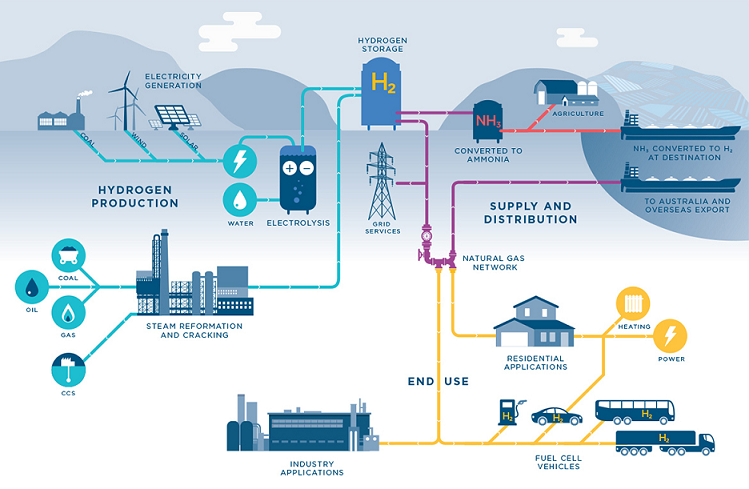
How the HUGE Hydrogen fuel and export industry is taking place in Australia. It is BIG and worth billions!!!
And SA is going full bore getting its hydrogen economy going.Hydrogen Park South Australia Takes Shape 17 Apr 2020 by Joanna Sampson
Australia’s largest renewable gas project Hydrogen Park South Australia (Hyp SA) is starting to take shape.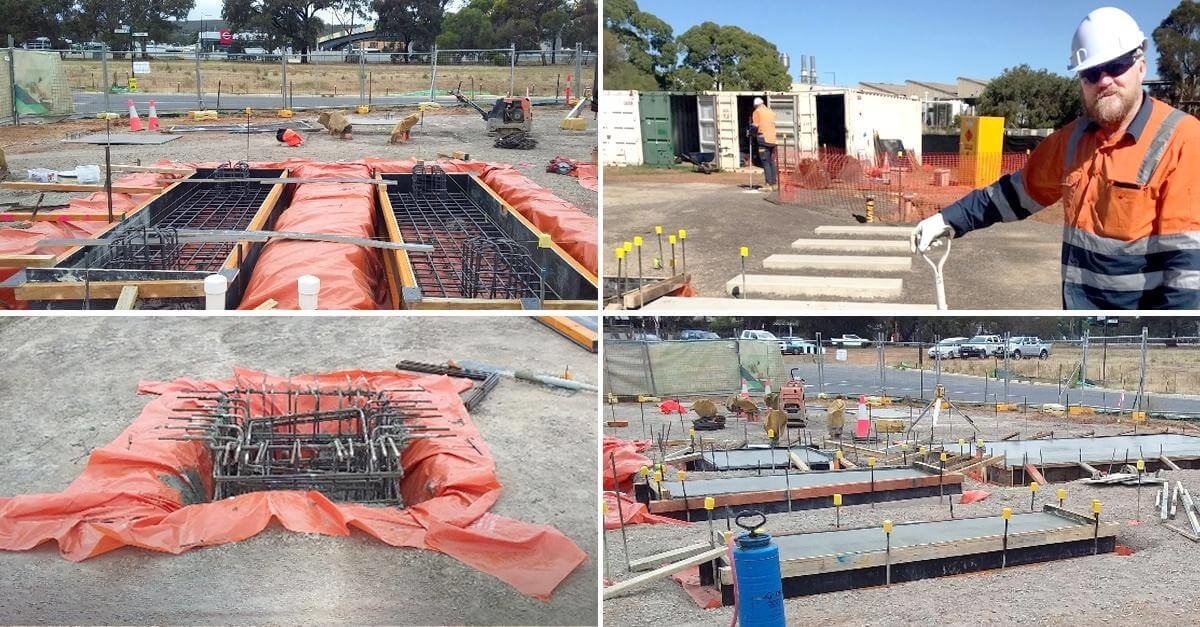
Based at the Tonsley Innovation District in Adelaide, the $11.4m demonstration project, delivered and funded by Australian Gas Networks (AGN), will produce renewable hydrogen using water and renewable electricity through electrolysis from mid-2020.
The project will demonstrate the feasibility of blending hydrogen into the South Australian gas network and inform the South Australian Government’s planning to transition the gas distribution network.
AGN will supply more than 700 properties in the nearby suburb of Mitchell Park with a blend of 5% renewable hydrogen in natural gas, delivered through the existing gas network.
Australian energy and infrastructure services company Valmec is currently completing the concrete works for the electrolyser shed slab foundation and the stand-alone foundations for the balance of plant supporting packages.
The next phase of the project involves the construction of the electrolyser shed and the positioning of supporting packages on the foundations.
Once operational, the facility is set to produce renewable hydrogen by mid-2020, for blending with natural gas, and supply to nearby properties via the existing gas network as part of a five-year demonstration.
https://www.world-energy.org/article/8405.htmlNow how hydrogen is stored on a vehicle.HYDROGEN COMPRESSED STORED GAS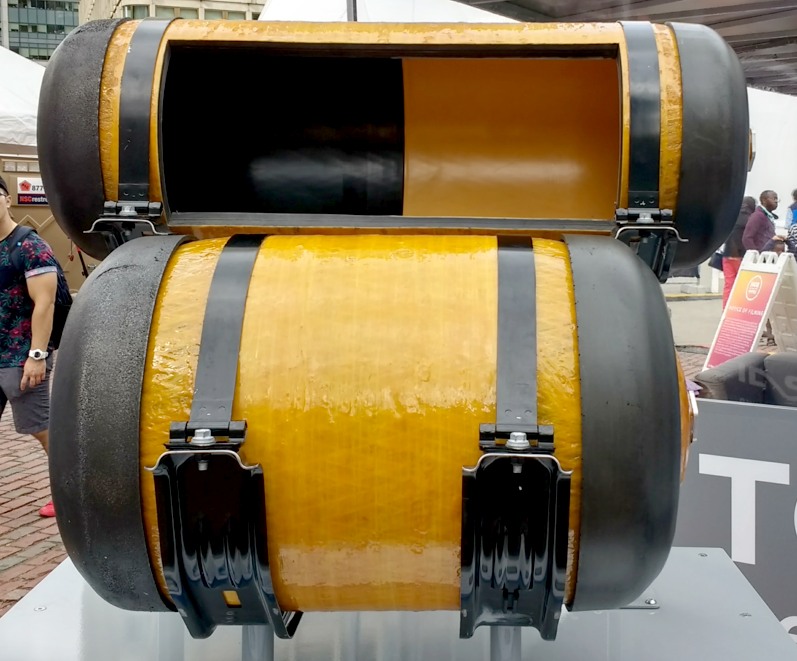
Compressed hydrogen in hydrogen tanks at 350 bar (5,000 psi) and 700 bar (10,000 psi) is used for mobile hydrogen storage in hydrogen vehicles. It is used as a fuel gas.
Compressed hydrogen is a storage form where hydrogen gas is kept under pressures to increase the storage density. Compressed hydrogen in hydrogen tanks at 350 bar (5,000 psi) and 700 bar (10,000 psi) is used for hydrogen tank systems in vehicles, based on type IV carbon-composite technology. Car manufacturers have been developing this solution, such as Honda or Nissan.
Hydrogen gas has good energy density by weight, but poor energy density by volume versus hydrocarbons, hence it requires a larger tank to store. A large hydrogen tank will be heavier than the small hydrocarbon tank used to store the same amount of energy, all other factors remaining equal. Increasing gas pressure would improve the energy density by volume, making for smaller, but not lighter container tanks. Compressed hydrogen is estimated to cost about 2.1% of the energy content to power the compressor for a large scale underground facility such as an underground cavern or aquifer from 1 to 200 bar. Higher compression without energy recovery will mean more energy lost to the compression step. Compressed hydrogen storage can exhibit very low permeation.
The first type IV hydrogen tanks for compressed hydrogen at 700 bars (70 MPa; 10,000 psi) were demonstrated in 2001, the first fuel cell vehicles on the road with type IV tanks are the Toyota FCHV, Mercedes-Benz F-Cell and the GM HydroGen4.
Various applications have allowed the development of different H2 storage scenarios. Recently, the Hy-Can consortium has introduced a small one liter, 10 bars (1.0 MPa; 150 psi) format. Horizon Fuel Cells is now selling a refillable 3 megapascals (30 bar; 440 psi) metal hydride form factor for consumer use called HydroStik.
Read more here
http://www.change-climate.com/Renewables/Hydrogen_Compressed_Gas_Storage_Technol...

 Forum
Forum
 Pages:


