The Greeny slime continues...This morning Greens MP Adam Bandt was asked about Mr Joyce’s comments during an interview on ABC RN, and whether the party was cautious about backburning.
“We support hazard reduction burns,” Mr Bandt said.
Greens MP Adam Bandt says the party does support hazard reduction burns. Picture: David Crosling/AAPSource:AAP
“We support effective and sustainable backburning strategies guided by the fire authorities, we will listen to what the fire authorities say is necessary.”
Mr Bandt said fire authorities had made the point in recent days that it was harder to do effective backburning because fire seasons were getting longer due to climate change.
He said former and current fire chiefs had also made the point that the amount of backburning necessary to avoid catastrophic fires was becoming impractical because of increasing drought.
But RN Breakfast host Hamish Macdonald brought the conversation back to criticisms made by Mr Joyce.
“Do you acknowledge that the fire authorities are having difficulties getting into national parks to do backburning at appropriate times?” Macdonald asked.
Mr Bandt responded: “I’ve listened very closely to what fire authorities have been saying over recent days and I have not heard them say that that is their primary problem”.
Macdonald hit back with: “Have you heard them say that it is a problem?”
Mr Bandt tried to steer the conversation on to the comments about “unprecedented” conditions but Macdonald pulled him back.
“I appreciate that you are trying to take this conversation elsewhere,” Macdonald said.
“But I am seeking a pretty direct answer to this question, and that is whether you acknowledge that there are problems for the fire authorities getting into national parks, to do the backburning when they have the opportunity? It may not be the primary cause that’s been outlined to you, but do you accept that it is part of the problem?”
Mr Bandt answered: “We support effective backburning strategies guided by the fire authorities, so if the fire authorities have something to say on that point, of course we’ll listen.
“But we are not in power in the NSW Government, the Liberal Government is in power there, so if people like Barnaby Joyce have got concerns they should direct them to there.”
While many people use the terms interchangeably, hazard reduction is done ahead of bushfire season to reduce the intensity of fires if they do happen, while backburning is done as a last resort to stop a fire that’s already burning.
A Qld Dept of Environment and Science (DES) spokesperson said the agency had worked to reduce fuel loads and minimise the impact from fires by carrying out planned burns.
“The department takes its obligations in regards to fire management very seriously, with priority given to protecting life and property, particularly where urban and rural communities adjoin our parks and forests,” the spokeswoman said.
“This year, since January, there have been 296 planned burns conducted in protected areas, covering more than one million hectares. This (is the) most hectares treated by planned burns in five years.”
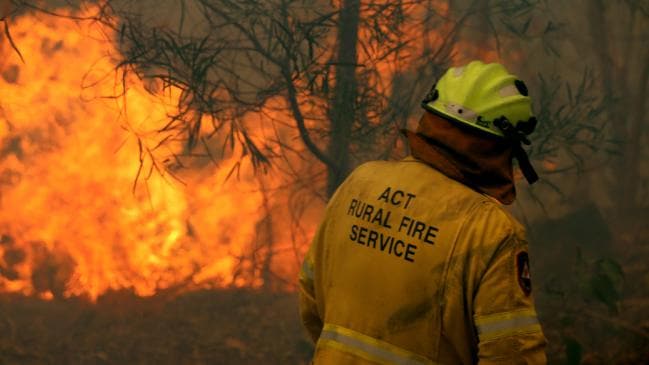
A strike team from the ACT RFS perform bushfire property protection at Telegraph Point north of Port Macquarie on the NSW mid north coast. Picture: Nathan Edwards.Source:Supplied
In an article on The Conversation, Professor David Bowman of the University of Tasmania explains that the purpose of fire reduction burning is to reduce the intensity of fires by removing things such as leaf litter.
It has to be done frequently to be effective and this has raised concerns among ecologists.
“In Victoria, for instance, the 5% fuel-reduction target means a given area of bush will be burnt every 20 years,” he wrote.
“But ecologists are concerned that such high frequencies can have damaging effects on plant and animal species that require longer fire-free intervals to complete their life cycles.”
Prof Bowman said there was debate about the effectiveness of fuel-reduction burning, given that a huge area of landscape needs to be treated.
“It is also dangerous work, which carries a risk of destroying houses and infrastructure if the fires escape control.”
Another serious side effect was smoke pollution.
“Because of these constraints, attention is increasingly being focused on managing fuel without burning,” he wrote.
“This can involve using herbivores and thinning vegetation, including burning the debris in specially designed portable furnaces that have low smoke emissions.”
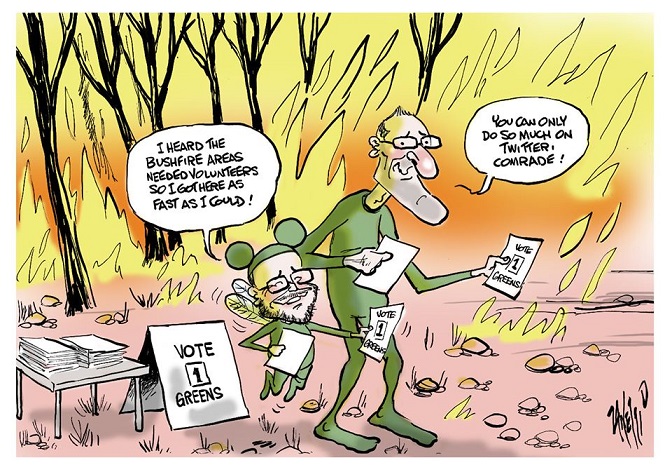
Mr Bandt has caused controversy in recent days after he suggested the PM Morrison was responsible for the dangerous bushfire conditions, because of the government’s lack of action on climate change.
“We have been told for decades now that unless we keep coal in the ground and cut pollution drastically then the risk of fires like this is going to increase,” Mr Bandt told RN on Tuesday.
But his comments linking the bushfires to climate change were slammed by Deputy PM McCormack, who said people didn’t need to hear the “ravings of some pure, enlightened and woke capital city greenies at this time”.
https://www.news.com.au/technology/environment/greens-policies-blamed-for-increa...

 Forum
Forum
 Pages:


