What would be hilarious is a hydrogen powered tow truck pulling a broken down electric toy car into the junk yard.What will it take to make hydrogen the clean fuel of the future?By Rachael BrownSeptember 10, 2019Climate change resilience
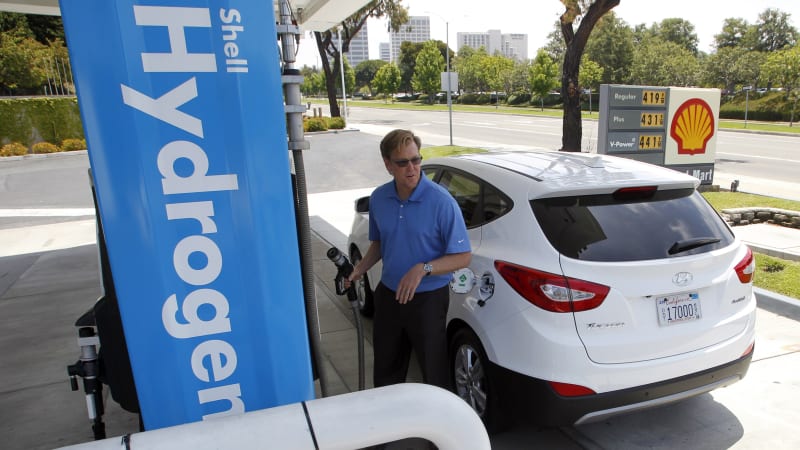
Hygrogen the magic fuel of the future
renewable energy exports as hydrogenInterest in hydrogen as a source of clean energy has risen in recent years, and engineers have a key role in scaling up technology to help Australia fulfil its potential as a major exporter.
According to Chief Scientist Dr Alan Finkel, a keynote speaker at the upcoming World Engineers Convention, Australia has all of the key ingredients needed to make and export hydrogen.
“We’ve got the land, the sun, the wind, the coal and gas, the technology smarts, the regional hubs, the global networks and the industry expertise,” he said.
Finkel added that clean hydrogen technologies could also help reduce emissions on the home front. For example, hydrogen-powered trucks, trains and ships could meet the growing demand for zero-emissions transport.
Hydrogen could also replace liquified natural gas (LNG) in domestic and industrial heating, which has the potential to cut emissions and reduce energy bills at a greater rate than electrification.
And engineers will have a key role in making hydrogen a viable energy source for both local use and export.
“The key challenges here are to get to scale, bring down production and utilisation costs and improve efficiencies – these are all the bread and butter of engineers,” Finkel explained.
Why now?As well as a zero-emissions energy alternative to coal, oil and natural gas, hydrogen can be used as a feedstock for industrial chemistry.
And while this isn’t the first time the world has gotten excited about a hydrogen revolution, Finkel said current interest is being driven by factors including rapidly falling production costs, as well as hydrogen fuel cell transport options such as the Toyota Mirai and Hyundai Nexo, which are starting to compete with petrol-fuelled vehicles in terms of cost, efficiency and performance.

Vehicles powered by hydrogen fuel cells offer benefits like faster charging compared to electric vehicles.
“This isn’t the first time the world has been interested in hydrogen. But I can tell you that this time it is different,” he added.
Another driver is that energy-intensive countries such as South Korea and Japan do not have the capacity to generate enough clean and renewable electricity to meet their needs.
“These countries will be looking to import zero-emissions energy. This is where clean hydrogen comes into the picture,” Finkel said.
Japan has already made a strong commitment to importing hydrogen from Australia. Construction has recently begun on a government-backed joint venture between Japanese and Australian industry to prove the technology to liquefy hydrogen produced from brown coal in Victoria’s Latrobe Valley and ship it to Japan, although carbon capture and storage will be needed to prevent increased local emissions if the trial is scaled up to commercial proportions.
It won’t happen overnightFinkel said that turning this opportunity into a real-world transformation will require both the production and use of hydrogen to be significantly scaled up.
“This is not something that can happen overnight. It is a journey to be navigated with patience, innovation and determination. We will need to build out gradually, learning and recalibrating along the way,” he added.
But Finkel believes that Australia has what it takes to build a large-scale hydrogen industry, citing the three decades of work that has put Australia in a position to surpass Qatar as the world’s leading exporter of LNG.
To help the country fulfil its potential, Finkel is leading the development of a national hydrogen strategy commissioned by the Coalition of Australian Governments Energy Council (COAG), which is due for release in December .

Dr Alan Finkel, Australia’s Chief Scientist
The strategy is focused on six areas: hydrogen exports; hydrogen for transport; hydrogen in the gas network; hydrogen for industrial users; hydrogen to support electricity systems; and issues such as safety, finance, and research and development (which could affect the other five areas).
In July, the Hydrogen Working Group released nine issues papers that focus on various aspects of the emerging industry, which has already attracted more than $100 million in Federal Government funding. Finkel said these papers provide some indication of what the final strategy will look like, and will provide more details during his WEC keynote in November, when the strategy is closer to completion.
Read a bit more of the exciting future herehttps://www.wec2019.org.au/2019/09/10/make-hydrogen-viable-clean-fuel-energy-exp...

 Forum
Forum
 Pages:

 New hydrogen tank break through (Read 36594 times)


