Forum

 
  Back to OzPolitic.com   Welcome, Guest. Please Login or Register
  Forum Home Album HelpSearch Recent Rules LoginRegister  
 

Pages: 1 ... 3 4 5 6 7 ... 17
Send Topic Print
World rushes to the Hydrogen Energy Revolution (Read 31096 times)
juliar
Gold Member
*****
Offline


Australian Politics

Posts: 22966
Re: World rushes to the Hydrogen Energy Revolution
Reply #60 - Aug 7th, 2018 at 8:46pm
 
Go away Mad Munk.
Back to top
 
 
IP Logged
 
Jovial Monk
Gold Member
*****
Offline


Dogs not cats!

Posts: 51474
Gender: male
Re: World rushes to the Hydrogen Energy Revolution
Reply #61 - Aug 7th, 2018 at 9:54pm
 
No.
Back to top
 

OzPolitic needs a >real< Environment MRB now!
OzPolitic needs a >real< Food MRB now!
OzPolitic needs a >real< Health MRB now!
OzPolitic needs a >real< Economics MRB now!

Topics in the right MRB!
 
IP Logged
 
juliar
Gold Member
*****
Offline


Australian Politics

Posts: 22966
Re: World rushes to the Hydrogen Energy Revolution
Reply #62 - Aug 7th, 2018 at 10:32pm
 
Mad Munk here is the perfect site for you to haunt  http://aussiepolitics.forumotion.com/f6-science-technology
Back to top
 
 
IP Logged
 
juliar
Gold Member
*****
Offline


Australian Politics

Posts: 22966
Re: World rushes to the Hydrogen Energy Revolution
Reply #63 - Aug 8th, 2018 at 6:36am
 
Now the pundits are advising to buy fuel cell stocks while they are shorting the dismal Tesla stocks.

...
Another Tesla loaded with a lithium fire bomb goes up in smoke.


Time to buy fuel cell stocks
By Brian Hicks Written Aug. 07, 2018

Two weeks ago, automobile maker Toyota made a major decision that will not just impact the future of the Japanese car giant, but could alter the global transportation and possibly the global energy market for years to come.

It will also positively impact investors in a small but quickly developing tech industry.

Toyota announced it is “doubling down on its investment in hydrogen fuel cell vehicles (FCV) designing lower-cost, mass-market passenger cars and SUVs and pushing the technology into buses and trucks to build economies of scale.”

Why is this so significant?  Easy.
With a market capitalization of nearly $200 billion and $266 billion in annual sales, Toyota is by far the largest automaker in the world.  In fact, no other automobile company comes close.


To put this in perspective, here are the market caps of some of the other top global automakers:
Company      Market Cap(billions)
General Motors      $53
Ford                      $40
BMW                     $54
Fiat-Chrysler         $26
Honda                  $55
Nissan                  $37
In terms of market valuation, Toyota is twice the size of the entire U.S. auto industry.


So when the king of the hill declares it’s going all in on hydrogen fuel cells as its future power source for its automobiles, you have to take notice. Period.

According to Toyota:
We’re going to shift from limited production to mass production, reduce the amount of expensive materials like platinum used in FCV components, and make the system more compact and powerful.

The company is planning a phased introduction of other FCV models, including a range of SUVs, pick-up trucks, and commercial trucks beginning around 2025.

Toyota sees hydrogen as the future fuel for the next 100 years.

What are the benefits of hydrogen fuel cells?
Several:
•      Impressive driving range
•      Clean energy (zero emissions)
•      Nearly limitless fuel source
•      Efficient (there are no moving parts in a fuel cell)
•      Renewable


Let me talk about the first benefit, driving range. Toyota intends to push the driving range of its fuel cell vehicle, the Mirai, to hit 1,000 kilometers by 2025. That’s a range of over 600 miles on a single tank.

One of the obstacles to mass adoption of electric vehicles like the Tesla and Chevy Volt is something known as “range anxiety.” In other words, Americans are concerned they’ll run out of a charge before making it to a charging station.

In my more youthful years, it was nothing for me to pack up my car and head to the Eastern Shore for the day. A one-way trip to Ocean City, Maryland, is 150 miles. If I came back that night, the round trip is 300 miles.

And, of course, there was no shortage of gas stations on the route. Filling my tank took less than five minutes.

For comparison, the Tesla Model S has a range of 270 miles on a single full charge. And charging it takes no less than 20 minutes.


The differences don’t end there.
Hydrogen is the most abundant element in the universe and stores more energy than a battery of equivalent weight.

This is one of the reasons the U.S. military is testing hydrogen fuel cells as its primary fuel source. It’s limitless, can power just about everything (not just vehicles), and is silent and gives off no heat signature, a major plus for the military, which relies on stealth.

As Toyota and the U.S. military continue to explore, develop, and adopt hydrogen fuel cells as their power source, you can expect hydrogen fuel cell stocks to come into focus by investors.

Hydrogen fuel cell stocks have a long history of boom and bust cycles. But just a casual glance at some of the more popular names in this space shows this industry is ripe for a breakout.

Toyota will be the spark that ignites the next rally.
In the coming weeks, we will show you exactly how to play the coming boom.

Until then,
Brian Hicks


Back to top
 
 
IP Logged
 
juliar
Gold Member
*****
Offline


Australian Politics

Posts: 22966
Re: World rushes to the Hydrogen Energy Revolution
Reply #64 - Aug 8th, 2018 at 7:14am
 
The hydrogen future just seems to grow exponentially leaving the frustrated gullibles who wasted money on a range anxiety half day to refuel Tesla heap loaded with a lithium fire bomb looking for somewhere to dump their heap.


$20b Pilbara solar, wind farm backers eye local market
Peter MilneThe West Australian Tuesday, 1 May 2018 12:44PM

VIDEO: Pilbara’s $13.2 billion renewable energy project


An expanse of solar panels and wind turbines could export renewable energy to Indonesia.

Backers of a giant Pilbara wind and solar farm that will send electricity to Indonesia also want to power local industry and produce hydrogen through a 50 per cent capacity increase which bolsters the project’s budget to about $20 billion.

The Asian Renewable Energy Hub plans to install six gigawatts of wind generation, from about 1250 turbines, and 3GW of solar panels on a 6400sqkm East Pilbara site. The hub’s backers, wind farm investor CWP Energy Asia, privately owned Intercontinental Energy, and Danish wind turbine manufacturer Vestas, are targeting a final investment decision in 2020 or 2021.

The initial plan was to only send power to Java, Indonesia’s most populous island, through two high voltage direct current subsea cables.

AREH project director Alex Tancock said after the original announcement in November the Pilbara Development Commission helped the consortium understand the potential demand in the Pilbara.

...
As well as sending our renewable energy to Indonesia, the Asian Renewable Energy Hub now wants to power local industries.

The extra generation could power mines, minerals processing or the splitting of water into hydrogen and oxygen using electrolysis. Hydrogen produced by renewable energy is attracting increasing interest as a greenhouse-friendly fuel.

CWP business development manager Andrew Dickson said exporting power would cost about $15 billion, including the subsea cables, and the domestic generation and overhead transmission lines about $5 billion.

Mr Dickson said the increasing size and capacity of wind turbines allowed the initial site to accommodate the expanded generation capacity.

“The 3GW capacity subsea cables to Java would export an average of 2.1GW over a year and 2GW of overhead transmission capacity would deliver an average of 1.2GW to the Pilbara,” he said.

https://images.thewest.com.au/publication/B88821073Z/1525145110763_G8T1JLV54.1-1...
Back to top
 
 
IP Logged
 
Jovial Monk
Gold Member
*****
Offline


Dogs not cats!

Posts: 51474
Gender: male
Re: World rushes to the Hydrogen Energy Revolution
Reply #65 - Aug 8th, 2018 at 7:19am
 
So more RE being built that MAY involve electrolysis to generate hydrogen???

So hydrogen is not the fuel of the future, the sun is.
Back to top
 

OzPolitic needs a >real< Environment MRB now!
OzPolitic needs a >real< Food MRB now!
OzPolitic needs a >real< Health MRB now!
OzPolitic needs a >real< Economics MRB now!

Topics in the right MRB!
 
IP Logged
 
juliar
Gold Member
*****
Offline


Australian Politics

Posts: 22966
Re: World rushes to the Hydrogen Energy Revolution
Reply #66 - Aug 8th, 2018 at 7:26am
 
God that nauseating Mad Munk troll is polluting the joint with his attention seeking trash ALREADY.

There's no stopping the massive Hydrogen energy revolution now as it is advancing on many fronts.


Hydrogen plant plan for Burrup Peninsula
Peter LongPilbara News Thursday, 7 December 2017 9:46AM

...
A kangaroo in front of the Yara TAN plant on the Burrup Peninsula.Picture: Tom Zaunmayr

In what promises to be a fantastic boost to our local economy in the long term, Yara Pilbara intends to construct a renewable hydrogen plant at its ammonia production facility on the Burrup Peninsular.

Hydrogen is an ingredient of ammonia, and Yara currently takes it from natural gas, which is energy-intensive and results in CO2 emissions.

However, hydrogen can also be made through electrolysis of water, which breaks down into its constituent parts — hydrogen and oxygen — when an electric current is passed through it. If the electricity is produced using the sun with photovoltaic cells, this clean, renewable electricity can produce clean, renewable hydrogen, and so clean, renewable ammonia forever.

Yara makes ammonia by combining hydrogen with nitrogen extracted from the atmosphere. The ammonia from Karratha is exported worldwide, where it is used mainly as a fertiliser, as well as many other uses.

The process is a renewable cycle as the nitrogen is returned to the soil for use by plants that release it again when they die, and the hydrogen returns as water.

The proposal is for a pilot renewable hydrogen plant and is planned to be operating by 2019. If the pilot plant works as intended, Yara will scale it up for future ammonia production.

https://thewest.com.au/news/pilbara-news/hydrogen-plant-plan-for-burrup-peninsul...
Back to top
 
 
IP Logged
 
juliar
Gold Member
*****
Offline


Australian Politics

Posts: 22966
Re: World rushes to the Hydrogen Energy Revolution
Reply #67 - Aug 8th, 2018 at 7:28am
 
The Asia renewable Hub is BIG.

VIDEO: Asia renewable Hub


Back to top
« Last Edit: Aug 8th, 2018 at 7:34am by juliar »  
 
IP Logged
 
juliar
Gold Member
*****
Offline


Australian Politics

Posts: 22966
Re: World rushes to the Hydrogen Energy Revolution
Reply #68 - Aug 8th, 2018 at 7:34am
 
Hydrogen to purge domestic gas of impurities. Now if only the same process would purge the joint of trolls that don't have a clue.


Renewable hydrogen trial could help decarbonise Australian gas network
August 9, 2017 Energy Matters

ARENA funding study for project allowing dairy farmers to trade energy via blockchain.
A new trial will see excess solar and wind power stored as renewable hydrogen and injected into Australia’s largest gas network.

With $5 million in funding from the Australian Renewable Energy Agency (ARENA), Wollongong-based company, AquaHydrex, has developed a new class of electrolyser to produce cheap renewable hydrogen by splitting water.

The trial involves injecting small amounts of hydrogen into the gas grid, a process called “power-to-gas”.

AquaHydrex born from homegrown research
AquaHydrex was founded in 2012 by scientists from the ARC Centre of Excellence for Electromaterials, University of Wollongong and Monash University.

The company’s new high-efficiency water electrolyzer makes the conversion of surplus clean electricity into renewable hydrogen commercially viable.

When hydrogen burns, it produces no carbon emissions, making it the perfect renewable substitute for gas.

“Hydrogen is an outstanding energy carrier,” said AquaHydrex Managing Director Paul Barrett. “[It] has the potential to connect the electricity and natural gas grids, significantly increasing the storage capacity available for renewable electricity and helping decarbonise the natural gas grid.”

The power-to-gas trial converts excess electricity into hydrogen and injects it into the mains gas pipeline. This provides long-term energy storage and stability as more solar and wind energy is added to the grid, according to ARENA.

...
Renewable hydrogen will funnel into South Australia’s gas network, stabilising variable sources like the Clements Gap wind farm.

100 percent renewable hydrogen possible: ARENA chief
Australia’s gas network can support up to 100 percent hydrogen, but gas pipelines would need modification, said ARENA CEO Ivor Frischknecht.

“You can inject hydrogen into the gas main up to at least 10 per cent of the total gas in there,” ARENA CEO Ivor Frischknecht said.

Power to gas represented a vast, untapped potential to convert surplus renewable energy to hydrogen, Mr Frischknecht said.

“In the future, there will be increasing amounts of surplus renewable energy when it is sunny or windy.”

https://www.energymatters.com.au/renewable-news/renewable-hydrogen-trial-could-h...
Back to top
« Last Edit: Aug 8th, 2018 at 7:47am by juliar »  
 
IP Logged
 
Jovial Monk
Gold Member
*****
Offline


Dogs not cats!

Posts: 51474
Gender: male
Re: World rushes to the Hydrogen Energy Revolution
Reply #69 - Aug 8th, 2018 at 7:45am
 
You are still here!
Back to top
 

OzPolitic needs a >real< Environment MRB now!
OzPolitic needs a >real< Food MRB now!
OzPolitic needs a >real< Health MRB now!
OzPolitic needs a >real< Economics MRB now!

Topics in the right MRB!
 
IP Logged
 
juliar
Gold Member
*****
Offline


Australian Politics

Posts: 22966
Re: World rushes to the Hydrogen Energy Revolution
Reply #70 - Aug 8th, 2018 at 7:48am
 
God that nauseating Mad Munk troll is STILL HERE polluting the joint with his attention seeking trash.

The rush to the fantastic MASSIVE Hydrogen Energy Revolution is accelerating.


CSIRO takes the wheel on cars powered by Aussie-made hydrogen
By Cole Latimer 8 August 2018 — 6:01am

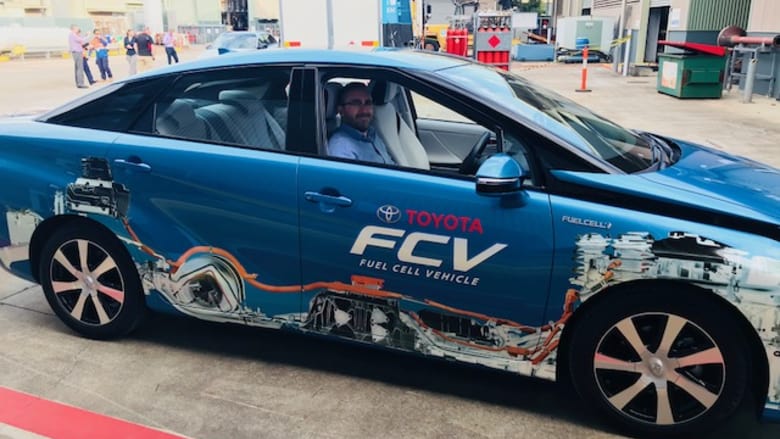
CSIRO scientists have taken the wheel of the first vehicle to be powered by Australian-made ultra-high purity hydrogen created through the organisation’s membrane technology and now plan to increase production.
...
CSIRO scientists take a hydrogen-powered car for a test drive. Photo: sUPPLIED

The CSIRO first launched its hydrogen fuel program late last year to support the development of the technology as a new energy export for Australia.

It invested around $7 million in creating a hydrogen-focused Future Sciences Platform.

This was soon followed by the launch of a $496 million project, backed by state and federal governments and a Japanese consortium, to convert Victoria’s brown coal into liquid hydrogen for export to Japan.

The latest development is a membrane technology that separates ultra-high purity hydrogen from ammonia, while blocking other gases, allowing it to be used a clean fuel source for vehicles.

“This links hydrogen production, distribution and delivery in the form of a modular unit that can be used at, or near, a refuelling station,” the CSIRO said.

“The newly developed technology has the potential to fill a gap in the supply chain. [This] provides an opportunity to decarbonise both the energy and transport sectors while creating new export opportunities.”

The fuel generated from this process was used to power a Toyota Mirai and Hyundai Nexo.

After the successful demonstration this week, the CSIRO will now look to increase the scale of hydrogen production.

“This is a watershed moment for energy, and we look forward to applying CSIRO innovation to enable this exciting renewably-sourced fuel and energy storage medium a smoother path to market,” Dr Marshall said.

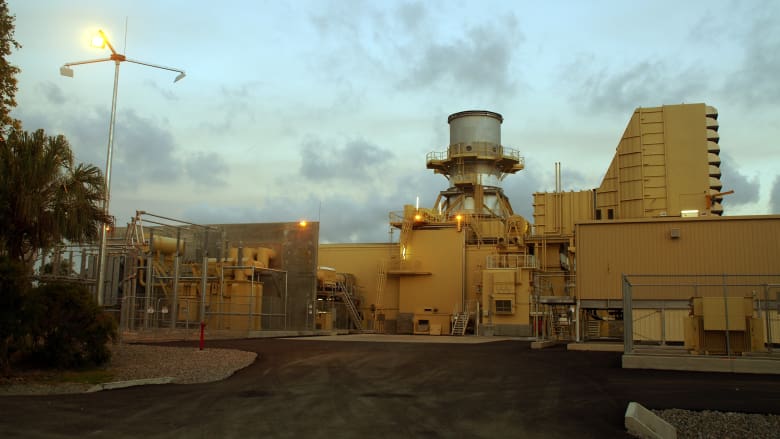
Meanwhile, Energy company Origin unveiled an Australian first energy development, a large-scale battery storage unit twinned with a gas turbine.

The two work together to provide power during peak demand periods, with the battery pushing power into the system to balance the grid as the gas turbine starts up, after which the gas turbine then charges the battery. It also provides power to start up the gas turbine if a blackout occurs.
...
Origin's Mt Stuart Gas plant, where it is building the Australian first dual battery and gas installation. Photo: Origin Energy

It will install the 4-megawatt, grid-scale battery at its Mt Stuart, 414-megawatt gas-fired power station in Townsville, in partnership with a Korean consortium led by Bosungpowertec.

“This will be the first time in Australia that a grid-scale battery has been connected to an open cycle gas turbine system and will not only create efficiencies but enable a reliable start-up in the event of a large scale power outage,” Origin executive general manager of energy supply, Greg Jarvis, said.

“Having a battery of this size means we’re able to store the energy needed to start the power station without the aid of the electricity from the transmission network should a loss of power occur due to an event like a cyclone.”

Installation and commissioning of the battery will be completed by May 2019.

There is currently only one other combined gas and battery unit in the world, located in California in the US.

https://www.smh.com.au/business/the-economy/csiro-takes-the-wheel-on-cars-powere...

Back to top
« Last Edit: Aug 8th, 2018 at 7:58am by juliar »  
 
IP Logged
 
juliar
Gold Member
*****
Offline


Australian Politics

Posts: 22966
Re: World rushes to the Hydrogen Energy Revolution
Reply #71 - Aug 8th, 2018 at 7:48am
 
Gosh it is hard to keep up with the rapid advances in hydrogen technology.


Hydrogen-powered mobility edges closer with next-generation fuel cell systems
August 7, 2018, CORDIS

Hydrogen-powered mobility edges closer with next-generation fuel cell systems.

Scientists have made significant progress in the design of vital components used in hydrogen fuel cell vehicles. Improved features will lower production costs and help create a clean automotive future.


With hybrid and all-electric battery-powered cars now becoming mainstream, hydrogen's importance as a versatile, clean and safe energy carrier is increasingly recognised. Although its use in transport is gaining momentum, the current market share of fuel cell electric vehicles (FCEVs) is small due to high costs and efficiency problems. A group of experts is addressing this challenge as part of the EU-funded INN-BALANCE project. They have recently specified the interfaces between the crucial components of the FCEV technology to improve their design.

As stated in a press release on the project website, "important milestones have been reached regarding the definition of interfaces between components and the fuel cell stack as well as the design of the stack housing and the anode, cathode and the cooling modules."

These components are referred to as auxiliary components, or 'balance of plant' (BoP). They regulate the fuel cell system and manage the supply of hydrogen and air to the stack. "INN-BALANCE seeks to engineer various improvements at the BoP level with a special focus on manufacturing-oriented design. The aim is to lower the costs for the industrial production of fuel cell systems."

Quoted in the same press release, Jörg Weiss-Ungethüm from the German Aerospace Center, who is in charge of developing the cooling system, said the cooling module is used for the thermal management of the stack. This has a significant impact on the water management and is critical in terms of performance. In addition, the BoP components have to be kept at "optimal temperature and heat has to be supplied to the passenger cabin as needed."

Maximising output while minimising losses

The ongoing INN-BALANCE (INNovative Cost Improvements for BALANCE of Plant Components of Automotive PEMFC Systems) project also proposes an "integrated injector/ejector solution." This will maximise the power output from the stack while minimising hydrogen losses.

PEMFC stands for proton exchange membrane (PEM) fuel cell, also called polymer electrolyte membrane fuel cell. It's a type of acid-based fuel cell that uses the transport of protons from the anode to the cathode through a solid PEM. These fuel cells run at temperatures below 100 °C. Anode and cathode are the two electrodes in a battery or fuel cell, where the former is positively charged and the latter is negatively charged during electricity generation. Most fuel cells designed for use in vehicles produce less than 1.16 volts of electricity – far from enough to power a vehicle. Therefore, multiple cells must be assembled in a fuel cell stack.

In an FCEV, electrical energy that powers the electric motor to propel the vehicle is supplied through a chemical reaction that takes place between hydrogen and oxygen in the fuel cell. Converting hydrogen gas into electricity produces only water and heat as a by-product. If the hydrogen is being generated by a sustainable source, this means fuel cell vehicles could provide zero-emission transportation opportunities.

INN-BALANCE was set up to develop a novel and integrated platform for developing advanced BoP components in current fuel cell-based vehicles. This is aimed at improving their efficiency and reliability, reducing costs, and presenting a stable supply chain to the European car manufacturers and system integrators.


https://phys.org/news/2018-08-hydrogen-powered-mobility-edges-closer-next-genera...
Back to top
« Last Edit: Aug 8th, 2018 at 8:46am by juliar »  
 
IP Logged
 
juliar
Gold Member
*****
Offline


Australian Politics

Posts: 22966
Re: World rushes to the Hydrogen Energy Revolution
Reply #72 - Aug 8th, 2018 at 7:58am
 
Everyman and his dog wants to get the new hydrogen powered cars which are a DIRECT replacement for the current petrol and diesel cars. Same range and same refuel time.

In Australia no normal straight person would waste their money on the useless dangerous gimmicky all electric heaps.


Will hydrogen-powered cars gradually become mainstream in Europe?
July 19, 2018, CORDIS

An EU initiative will deploy hydrogen fuel cell electric vehicles in three European capitals as taxis, private-hire and police cars. The move will accelerate their commercialisation and help realise emissions-free transport.

The role of fuel cell electric vehicles (FCEVs) in the transition to a clean, low-carbon energy system is increasingly recognised worldwide. Yet, their mass roll-out is still years away. This is not surprising because high costs, efficiency issues and the limited number of hydrogen refuelling stations (HRSs) affect the business case for their production and use on a large scale.

The EU-funded ZEFER project is addressing this challenge by introducing 180 FCEVs in Brussels, London and Paris. As explained in a press release on the project website, their regular use on a daily basis will create hydrogen demand from each vehicle roughly four times that of a normal privately owned car. "This will help to ensure high utilisation of the early networks of HRS which are already operating in each city." As a result, the economics of operating the stations will be improved and the uptake of FCEVs will speed up.

Business case for FCEVs

Project partners hope most of the vehicles will be deployed by the end of 2018. ZEFER predicts the FCEVs will cover a lot of ground. For Paris and Brussels, the estimate for mileages is over 90 000 km per year and for London 40 000 km. It will collect data on the vehicles as they make their rounds, and will also provide an analysis of the business cases and technical performance of the deployments.

Stored in vehicles in a tank just like petrol or diesel, hydrogen is utilised in an electrochemical energy conversion process with oxygen in fuel cells to generate electricity. This powers the electric motor to propel the FCEV. A similar electrochemical process is used to produce electricity from batteries. But while a battery will lose its charge over time, a fuel cell will continue to work so long as it has hydrogen and oxygen flowing into it.

Another advantage of hydrogen-powered cars is that they have a long range, over 480 km, with some in the market travelling up to 800 km or more on a single tank. They also charge faster than traditional battery-powered vehicles – the refuelling time is typically 3 minutes. Converting hydrogen gas into electricity produces only water and heat as a by-product. If the hydrogen is generated by renewable sources, FCEVs could provide zero-emission transportation opportunities.

The ongoing ZEFER (Zero Emission Fleet vehicles For European Roll-out) project was set up to demonstrate viable business cases for captive fleets of FCEVs in operations that can realise value from hydrogen vehicles. This could be done, for example, by intensive use of vehicles and HRSs, or by avoiding pollution charges in city centres with applications where the refuelling characteristics of FCEVs suit the duty cycles of the vehicles.


https://phys.org/news/2018-07-hydrogen-powered-cars-gradually-mainstream-europe....
Back to top
« Last Edit: Aug 8th, 2018 at 8:53am by juliar »  
 
IP Logged
 
juliar
Gold Member
*****
Offline


Australian Politics

Posts: 22966
Re: World rushes to the Hydrogen Energy Revolution
Reply #73 - Aug 8th, 2018 at 7:59am
 
Mainstream vehicles both small and large will obviously become hydrogen powered.


Why Toyota is doubling down on hydrogen fuel cell vehicles for its future
Alicja Siekierska August 7, 2018 5:00 AM EDT Last Updated August 7, 2018 5:00 AM EDT

Elon musk may call hydrgen technology 'dumb', but Toyota believes it's a better answer to the problems of distance and size of zero emission cars.

When Ontario Premier Doug Ford cancelled the province’s incentives for consumers who bought electric vehicles in July, executives at Toyota Canada weren’t upset.

“I wasn’t a big fan of the incentives,” vice-president of corporate strategy Stephen Beatty said in an interview with the Financial Post.

“If you build up consumer demand solely based on how many thousands of dollars the government can give you to encourage you to buy a car, that to me doesn’t sound like a terribly sustainable business model.”

Toyota has argued that a one-size-fits-all approach focusing on the sale of zero-emission vehicles — particularly on the sale of electric cars — misses the mark when it comes to reducing greenhouse gas (GHG) emissions.

In fact, while many automakers are following Telsa’s footsteps and investing heavily in launching new battery electric vehicles, Toyota has taken a different approach. The Japanese automaker is doubling down on hydrogen fuel cell vehicles — still a zero-emission electric vehicle, but one that is powered by the most abundant element on earth.


Read the rest here and be informed of the FACTS

https://business.financialpost.com/transportation/why-toyota-is-doubling-down-on...
Back to top
« Last Edit: Aug 8th, 2018 at 9:02am by juliar »  
 
IP Logged
 
juliar
Gold Member
*****
Offline


Australian Politics

Posts: 22966
Re: World rushes to the Hydrogen Energy Revolution
Reply #74 - Aug 8th, 2018 at 8:46am
 
Toyota is leaping ahead with its hydrogen power vehicles both small and LARGE leaving tesla in the dust with its cranky little heaps.


Toyota has unveiled the second iteration of its Project Portal hydrogen fuel cell electric Class 8 truck.
BY RACHEL EVANS ON AUGUST 7, 201

...
Toyota reveals latest iteration of its hydrogen fuel cell electric truck

The capabilities of the new ‘Beta’ truck are said to significantly exceed that of the ‘Alpha’ demonstrator vehicle revealed in 2017, including increasing the estimated range to more than 300 miles per fill. Versatility and maneuverability have also been improved with the addition of a sleeper cab and a unique fuel cabinet combination that further increases cab space without increasing wheelbase.

For both the Beta and its predecessor, Ricardo assisted Toyota with much of the engineering. This included systems integration and packaging, including the fuel cells, power electronics, hydrogen tanks, cooling systems, batteries, electric motors and transmission.

Many of the ancillary systems that are traditionally driven by the engine were also electrified, including the air compressor, power steering and HVAC system, the controls of which required integration into the vehicle’s J1939 CANbus.

Crucially, both the Alpha and Beta vehicles were constructed by Ricardo at the workshops of its Detroit Technical Center in Bellville, Michigan.

With a gross combined weight capacity of 80,000 lb, the +670hp Alpha truck produced 1,325 lb/ft of torque from two Mirai fuel cell stacks and 12kWh of battery.

The Project Portal Beta vehicle maintains these torque and horsepower numbers while also extending the range of the vehicle by 50% to in excess of 300 miles between hydrogen refills.


“The Ricardo team is pleased to have been able to continue our successful collaboration with Toyota on the very important Project Portal heavy-duty zero emission fuel cell electric truck demonstration project,” commented Chris Brockbank, VP of vehicle engineering at Ricardo.

“The Beta Project Portal vehicle is an impressive advance over its Alpha predecessor, offering practical design improvements in addition to its very practical 300-plus mile range, which makes it a capable ZEV option for drayage operations.

“We look forward to working with Toyota in the completion of the real-world drayage testing, and to seeing the results of the project which, I believe, may well inform the future vision of heavy-duty transportation.”

https://www.automotivetestingtechnologyinternational.com/news/fuel-cells/toyota-...
Back to top
« Last Edit: Aug 8th, 2018 at 9:09am by juliar »  
 
IP Logged
 
Pages: 1 ... 3 4 5 6 7 ... 17
Send Topic Print