Phemanderac wrote on Sep 21
st, 2015 at 9:37am:
Maybe read up a bit on Druids, just a thought.
Look into sacred groves as well, pretty sure from memory now, there were oaks also planted in circles to create a similar space. Presumably for worship or ceremony at least.
The demise of the Druids exemplifies the benefits of immigration and genetic diversity. Otherwise UK would still be practicing cannibalism and human sacrifice.
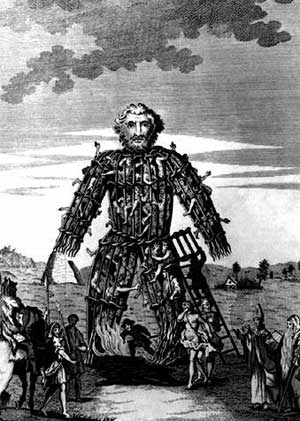
Druids were barbarians who practiced cannibalism and mass human sacrifice. If Druids had popular support the Romans would not have been able to defeat them. Circles of various sorts were probably barbecue pits for cannibals.
http://news.nationalgeographic.com/news/2009/03/090320-druids-sacrifice-cannibal... Quote:Druids Committed Human Sacrifice, Cannibalism?
James Owen in London
for National Geographic News
March 20, 2009
Recent evidence that Druids possibly committed cannibalism and ritual human sacrifice—perhaps on a massive scale—add weight to ancient Roman accounts of Druidic savagery, archaeologists say.
Stonehenge Was Cemetery First and Foremost, Study Says
After a first century B.C. visit to Britain, the Romans came back with horrific stories about these high-ranking priests of the Celts, who had spread throughout much of Europe over a roughly 2,000-year period.
Julius Caesar, who led the first Roman landing in 55 B.C., said the native Celts "believe that the gods delight in the slaughter of prisoners and criminals, and when the supply of captives runs short, they sacrifice even the innocent."
First-century historian Pliny the Elder went further, suggesting the Celts practiced ritual cannibalism, eating their enemies' flesh as a source of spiritual and physical strength.
But with only the Romans' word to go on—the ancient Celts left no written record of their own—it's been easy for historians to dismiss such tales as wartime propaganda.
Until now, that is.
Gruesome Druid Discoveries
Recent gruesome finds appear to confirm the Romans' accounts, according to Secrets of the Druids, a new documentary airing Saturday on the U.S. National Geographic Channel.
At least one thing appears nearly certain about the ancient twentysomething: He was the victim of a carefully staged sacrifice.
Recent studies have revealed that Lindow Man's head had been violently smashed and his neck had been strangled and slashed.
"You've got a rope tightened round his neck, and at the moment where the neck was constricted, the throat was cut, which would cause an enormous fountain of blood to rise up," said archaeologist Miranda Aldhouse-Green, an archaeologist at Cardiff University in Wales and an expert on the Druids.
Another clue lay inside the body's well-preserved gut: pollen grains from mistletoe, a plant that was sacred to the Druids. (Romans wrote that Druids cut mistletoe from trees with golden sickles.)
Lindow Man's death is dated to around A.D. 60, when the Romans launched a new offensive in the island of Great Britain, currently part of the United Kingdom.
He may have been sacrificed to persuade the Celtic gods to halt the Roman advance, Aldhouse-Green said.
"Something had to be done to stop them in their tracks," she said in the documentary. "And what better way than sacrificing a high-status nobleman?"
The idea jibes with something Julius Caesar wrote: In times of danger, the Celts believed that "unless the life of a man be offered, the mind of immortal gods will not favor them."
Mass Druid Sacrifice?
Other grisly clues come from a cave in Alveston, England.
Skeletons belonging to as many as 150 people and dating back to about the time of the Roman conquest were discovered in 2000.
Druids may have killed the victims—who show evidence of skull-splitting blows—in a single event. It may have been the Roman invasion itself that escalated the Druids' ritualized slaughter, researchers say.
Mark Horton, an archaeologist at the University of Bristol, thinks the pile of bodies suggests savage resistance to the Romans, either on the battlefield or through deadly ritual.
"Maybe the whole thing is a gigantic sacrifice ... an appeasement to the gods in order that they will get ultimate victory against the Romans," Horton said.
The Alveston cave bones hint at something even more sinister—cannibalism.
A human thighbone in the cave had been broken open in exactly the same method people use to get at the nutritious bone marrow of nonhuman animals.
But if the bone is proof of Celtic cannibalism, the practice was probably extremely rare, Horton said. It may be evidence of increasing hunger and desperation as Roman invaders closed in, he added.


 Forum
Forum
 Pages: 1


 Stonehenge a fake perpetrated by John Bull (Read 1698 times)


