http://www.sbs.com.au/news/article/1752668/Abuse-hearings-unable-to-meet-deadlin...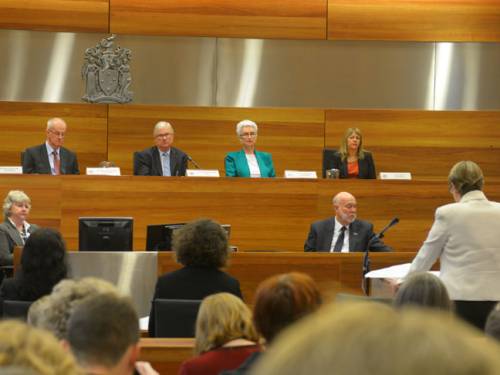
The first sitting of the royal commission into institutional child sexual abuse began today in Melbourne.
The first sitting of the royal commission into institutional child sexual abuse began today in Melbourne.
Counsel assisting the Commission Gail Furness, SC, said the types of institutions that would form part of the commission's investigations include orphanages, schools, churches, parishes, groups such as the scouts, organised sports.
Ms Furness said the commission has received over 1200 calls already.
Anyone wishing to share their experiences with the commission can call 1800 099 340 between 8am and 8pm, or email solicitor@childabuseroyalcommission.gov.au.
If they want their case to be forwarded to the police, the royal commission will liase with authorities.
She said it would be taken into account that people may not remember specific dates, and that some people may require assistance such as an interpreter.
The Attorney-General Mark Dreyfus earlier announced that any victims of child abuse giving evidence to the commission will have access to free legal advice.
The community has to acknowledge fundamental wrongs that have been committed in the past, the chairman of the royal commission says.
Justice Peter McClellan was outlining the process under which the commission will operate.
He said the commission had to examine some difficult truths.
"The community has come to acknowledge that fundamental wrongs have been committed in the past which have caused great trauma and lasting damage to many people," Justice McClellan said at the first sitting in Melbourne on Wednesday.
Justice McClellan said it was vital victims of child abuse had their stories heard.
"Part of the task given to us ... is to bear witness, on behalf of the nation, to the abuse and consequential trauma inflicted on many people who have suffered sexual abuse as children," he said.
"For the individuals who have been traumatised, giving an account of their experiences and telling their story can be an important part of the recovery process."
The commission will not begin hearing evidence until later this year.
Justice McClellan said the extent of abuse and the institutional response to it were among important issues raised by the royal commission's terms of reference.
"It is already apparent from the work done by other inquiries and the cases which have been prosecuted in the courts that children have been sexually abused in a variety of institutions over many decades," Justice McClellan said.
Justice McClellan said it would be difficult for the commission to complete a proper investigation between now and June 2014, when the interim report is due.
"It is unlikely that the commission can complete its work within the timeframe for the delivery of the final report."
He said it's expected at least 5000 people will want to appear before the commission.
"The number could be much higher," he added.
He said the commission anticipates each person may need at least an hour in which to tell of his or her experience.
Justice McClellan expects many institutions will co-operate and waive confidentiality clauses they have with victims.
He said if such clauses were not waived the commission had powers to overcome them.
Justice McClellan said the commission had already requested documents from several organisations.
"I can indicate that the commission had already served notices on particular bodies within the Catholic Church in Australia and its insurer, the Salvation Army and the NSW Director of Public Prosecutions seeking the production of documents," he said.
"More notices are being prepared."

 Forum
Forum
 Pages:

 Freemasonry on Trial (Read 467683 times)


