Post by aquascoot on Apr 28th, 2026 at 5:55pm
No, not because you might get matchete attacked.
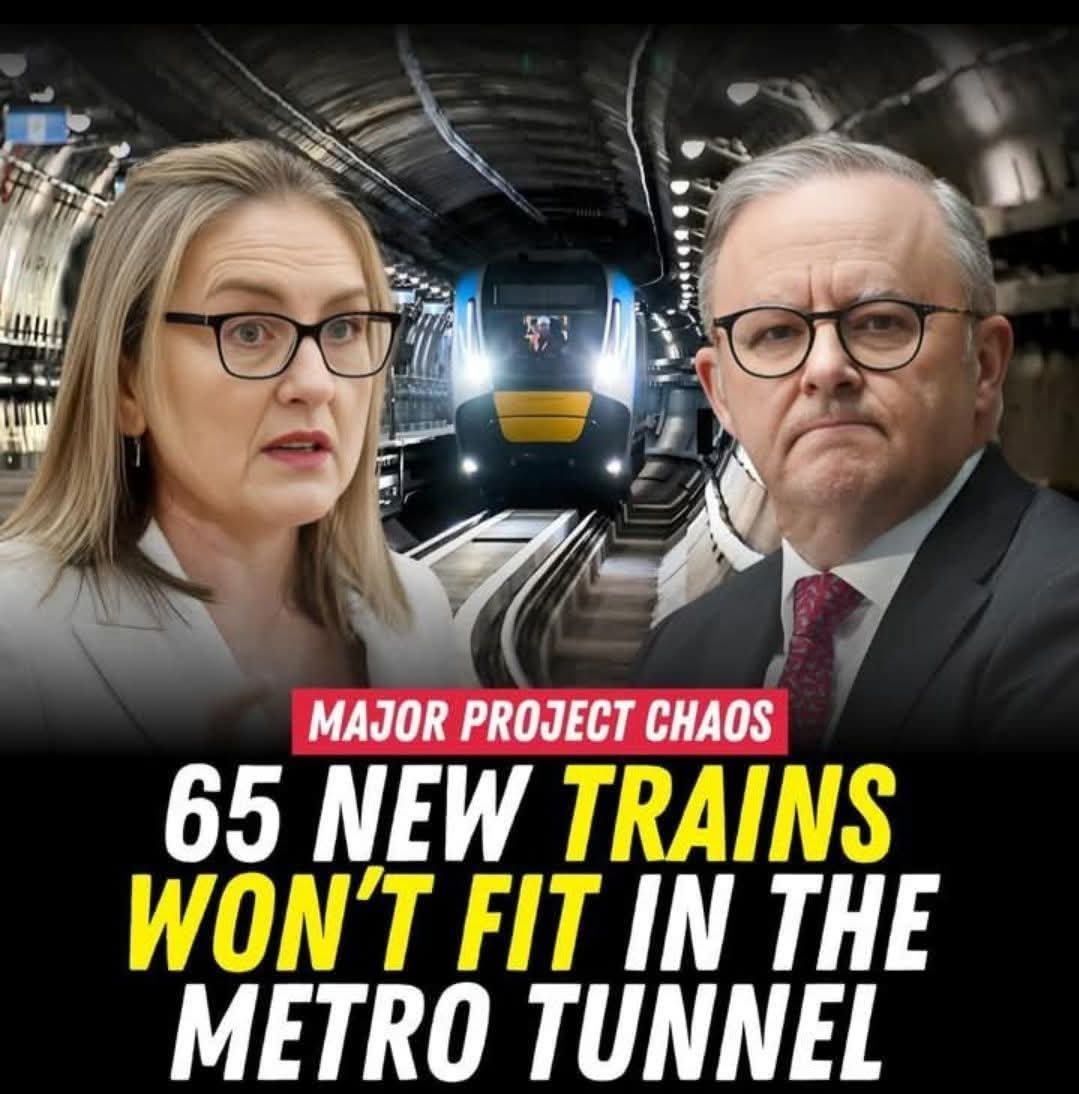
Your train might not make it
 FB_IMG_1777361638371.jpg (91 KB | 6
)
FB_IMG_1777361638371.jpg (91 KB | 6
)| Australian Politics Forum | |
|
http://www.ozpolitic.com/forum/YaBB.pl
General Discussion >> State and Local >> Bobby, don't catch the Train. http://www.ozpolitic.com/forum/YaBB.pl?num=1777362932 Message started by aquascoot on Apr 28th, 2026 at 5:55pm |
|
|
Title: Bobby, don't catch the Train. Post by aquascoot on Apr 28th, 2026 at 5:55pm No, not because you might get matchete attacked. Your train might not make it FB_IMG_1777361638371.jpg (91 KB | 6
) |
|
Title: Re: Bobby, don't catch the Train. Post by Bobby. on Apr 28th, 2026 at 6:09pm Link for story? :-/ |
|
Title: Re: Bobby, don't catch the Train. Post by aquascoot on Apr 28th, 2026 at 6:30pm
1. Lack of flexibility across the network
Because the tunnel uses platform screen doors and precise stopping systems, only HCMTs can run through it. That means Melbourne can’t just send any available train through the tunnel if there’s a disruption. Critics argue this reduces operational flexibility compared to a more “mixed fleet” system. 2. Fleet fragmentation Melbourne already has multiple train types (Comeng, Siemens, X’Trapolis), and the tunnel effectively creates a separate “sub-network” that only one fleet can use. Some transport analysts say this makes maintenance, scheduling, and upgrades more complicated over time. 3. Future procurement constraints If the city buys new trains later, they’ll either have to: match the HCMT design very closely, or accept that those trains won’t be able to use the tunnel That limits competitive procurement and could increase costs or reduce options. 4. Platform screen doors = permanent lock-in The platform screen doors are a big part of the criticism. They improve safety and allow higher-frequency “metro-style” service—but they also require exact door alignment, which effectively locks in train dimensions and door placement for decades. 5. “Only part of the fleet can use the flagship tunnel” Some critics frame it as a poor return on investment: a multibillion-dollar tunnel that only a subset of trains can use. Supporters counter that it’s not meant to serve every train—it’s meant to run a dedicated high-capacity corridor. 6. Risk during disruptions In a disruption (e.g., breakdown, maintenance), operators have fewer fallback options. You can’t just reroute a different train type through the tunnel, which could make incident recovery slower. |
|
Title: Re: Bobby, don't catch the Train. Post by aquascoot on Apr 28th, 2026 at 6:31pm
1. Lack of flexibility across the network
Because the tunnel uses platform screen doors and precise stopping systems, only HCMTs can run through it. That means Melbourne can’t just send any available train through the tunnel if there’s a disruption. Critics argue this reduces operational flexibility compared to a more “mixed fleet” system. 2. Fleet fragmentation Melbourne already has multiple train types (Comeng, Siemens, X’Trapolis), and the tunnel effectively creates a separate “sub-network” that only one fleet can use. Some transport analysts say this makes maintenance, scheduling, and upgrades more complicated over time. 3. Future procurement constraints If the city buys new trains later, they’ll either have to: match the HCMT design very closely, or accept that those trains won’t be able to use the tunnel That limits competitive procurement and could increase costs or reduce options. 4. Platform screen doors = permanent lock-in The platform screen doors are a big part of the criticism. They improve safety and allow higher-frequency “metro-style” service—but they also require exact door alignment, which effectively locks in train dimensions and door placement for decades. 5. “Only part of the fleet can use the flagship tunnel” Some critics frame it as a poor return on investment: a multibillion-dollar tunnel that only a subset of trains can use. Supporters counter that it’s not meant to serve every train—it’s meant to run a dedicated high-capacity corridor. 6. Risk during disruptions In a disruption (e.g., breakdown, maintenance), operators have fewer fallback options. You can’t just reroute a different train type through the tunnel, which could make incident recovery slower. |
|
Title: Re: Bobby, don't catch the Train. Post by aquascoot on Apr 28th, 2026 at 6:32pm
So good , I posted it twice
|
|
Title: Re: Bobby, don't catch the Train. Post by Carl D on Apr 28th, 2026 at 10:54pm aquascoot wrote on Apr 28th, 2026 at 5:55pm:
What does any of this have to do with getting "matchete (machete) attacked"? And, please learn how to resize your pictures. Forgiven. Namaste. :) |
|
Title: Re: Bobby, don't catch the Train. Post by Sophia on Apr 28th, 2026 at 11:54pm Carl D wrote on Apr 28th, 2026 at 10:54pm:
Really Carl? It’s obvious, Melbourne is notorious with repeated machete attacks and train travel to outer city burbs has spread the attacks. Tongue in cheek by Aqua re: trains… |
|
Title: Re: Bobby, don't catch the Train. Post by Sophia on Apr 28th, 2026 at 11:55pm aquascoot wrote on Apr 28th, 2026 at 6:31pm:
Some experts need to go back to using old fashioned tape measures! |
|
Title: Re: Bobby, don't catch the Train. Post by Carl D on Apr 29th, 2026 at 12:01am Sophia wrote on Apr 28th, 2026 at 11:54pm:
Good evening Sophia. Nah, I'd much prefer to go along with something like: "Lame attempt at trolling (as usual) by Aqua". :) |
|
Title: Re: Bobby, don't catch the Train. Post by Bobby. on Apr 29th, 2026 at 12:14am Carl D wrote on Apr 29th, 2026 at 12:01am:
Still no link - resized for Aqua. ::) |
|
Title: Re: Bobby, don't catch the Train. Post by Frank on Apr 29th, 2026 at 7:37am aquascoot wrote on Apr 28th, 2026 at 6:30pm:
They have a Department of Transport and Planning (DTP), don't you know. THey have worked hard to achieve yet another cock-up. It takes dedication and effort. Oh, yes. "DTP is part of the state government and works together with local councils in Victoria to implement the objectives of planning. Each council in Victoria has its own planning scheme which it uses to help deliver planning objectives." |
|
Title: Re: Bobby, don't catch the Train. Post by Yadda on Apr 29th, 2026 at 10:42am Sophia wrote on Apr 28th, 2026 at 11:55pm:
Oh really ? WWW search.... WOKE admission standard for engineering degrees universities....lowering admission standard for engineering degrees The Equity Illusion Why Lowering Standards Doesn't Help Admission pathways Engineering UNSW Sydney University lowers entry score for female applicants in engineering, computing and construction degrees Quote:
QUESTION; Where are the locations of the bridges that these recent graduate engineers have built !!! ? p.s. STANDARDS [or, the lack thereof....... Our society......doesn't need to sentence violent criminals for long imprisonment terms, either. We can just release them into the community after a year or two 'inside', and then 'carefully' 'manage' their 'rehabilitation'....into the community. /sarc off Where is ARMCHAIR ??? ;D |
|
Title: Re: Bobby, don't catch the Train. Post by tallowood on Apr 29th, 2026 at 12:42pm
Now know why Richard Marles called Bushmaster vehicle a "battle taxi", it is good choice for commuting in Victoria ;)
|
|
Australian Politics Forum » Powered by YaBB 2.5.2! YaBB Forum Software © 2000-2026. All Rights Reserved. |