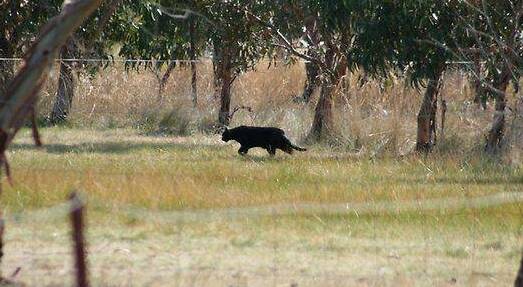
In fact the appearance of poms coincides with the disappearance of Australian Aboriginals.
Birds good ... Poms bad.
https://www.tribuneindia.com/news/schools/native-birds-have-vanished-across-australia-since-colonisation-367848[QUOTE]Native birds have vanished across Australia since colonisation
Native birds have vanished across Australia since colonisation
Regent honeyeater. (iStock)
Queensland, Feb 7
In the 250 years since Europeans colonised Australia, native birdlife has disappeared across the continent. The new research has, for the first time, registered just how much Australia has actually lost – and the findings are astonishingly sad.
Researchers focused on 72 species of birds faced with extinction today, including the Kangaroo Island glossy black cockatoo, regent honeyeater, and night parrot. They found 530 million hectares, or 69%, of Australia, has lost at least one bird species. In some parts of the country, over 17 birds have been lost.
Land clearing, along with threats such as cat predation, have driven ten birds to disappear from over 99% of their historical habitat. Indeed, researchers show the last 250 years has seen more than 100 million hectares of now-threatened bird habitat cleared on mainland Australia – that's 15% of Australia's landmass.
For many of the species researchers examined, their remaining habitats occur in patches surrounded by farmland, towns and cities. To give birds and other animals a chance at survival, researchers need effective national leadership not only to protect existing habitats, but also to restore lost habitat and manage future habitat under climate change.
Lost, but not forgotten
In the last 250 years, 22 native birds have gone extinct. We found two more currently listed as threatened under Australia's environmental legislation may also be now extinct.
One is the eastern star finch. This bird was once found from northern New South Wales to Queensland's Burdekin River. A victim of overgrazing, it has not been seen since 1995. Surprisingly, this bird is only listed as “endangered” rather than “critically endangered” under [Australian law]. The other is the Tiwi Islands hooded robin, which has not been seen for 27 years. Changed fire patterns from European colonisation and invasive species such as cats and weeds have likely driven it to extinction.
Other species are on their last legs. The western ground parrot, for example, once swept across large parts of Western Australia, but are now in just two locations: Cape Arid National Park and Nuytsland Nature Reserve.
They've become locally extinct across more than 99% of their historical habitat because of habitat destruction, invasive species, and changed fire patterns. They're at significant risk from isolated catastrophic events such as major bushfires. For example, the 2019-2020 fires alone destroyed 40% of the bird's last remaining habitat.
The extinction wave
The research used a combination of historical field guides, reference books, research papers, government records, spatial data and expert elicitation to create maps of past habitats, and compared those to current habitats.
We found certain areas across continental mainland Australia to be in worse shape than others.
For example, we revealed extinction hotspots in areas between Swan Hill in Victoria and Marmon Jabuk range in South Australia. In this region, up to 17 birds have gone extinct (red areas in map), such as the black-eared miner.
Likewise, over the last century, almost 10% of all known breeding land-based birds have vanished in SA's Mount Lofty ranges. This includes the rufous fieldwren, bush stone-curlew, ground parrot, king quail, azure kingfisher, barking owl, regent honeyeater, and swift parrot.
The story of decline is not limited to only threatened species, with more common birds such as willie wagtails, brolgas, boobook owls, and even magpies now disappearing from many places they were once common.
Indeed, the loss of so many species is the canary in the coal mine of total ecosystem collapse. And total ecosystem collapse poses an existential threat to food systems, water quality and climate stability.
If we don't make fundamental changes in the way we manage and use landscapes, the extinction wave will continue to inundate Australia. (The Conversation)