Australian Politics Forum
http://www.ozpolitic.com/forum/YaBB.pl
General Discussion >> Technically Speaking >> Residential Batteries
http://www.ozpolitic.com/forum/YaBB.pl?num=1546412768

Message started by lee on Jan 2nd, 2019 at 5:06pm

Title: Residential Batteries
Post by lee on Jan 2nd, 2019 at 5:06pm
"Another year, another reason to take the promises of residential home batteries with a grain of salt.

This month, a group of researchers from the University of California San Diego (UCSD) published a paper in Environmental Science and Technology reporting that there are very few cases in which operating a residential home battery reduces overall emissions—assuming that households are economically rational and trying to minimize costs.

Of course, if the battery is only discharged during periods of peak emissions and only charged when fossil fuel use is low, then a household might reduce emissions. But across 16 representative regions, operating a battery this way ended up being costly.

The results are similar to those published in Nature Energy in the beginning of 2017, although that study looked at a narrower region (99 homes in Texas) and modeled different battery software configurations.

The UCSD study looks at representative homes under 16 different utilities across the country. Each utility has its own emissions profile and unique demand requirements (depending on the weather in the region). The study also looked at three different configuration possibilities:

    A demand-shifting configuration, where the battery is used to minimize costs when electricity rates vary by time of day;
    A solar self-consumption configuration, where the user has solar panels and wants to maximize the amount of energy they get from those panels; and
    An energy arbitrage configuration, where the residential battery owner can buy and sell electricity at retail rates depending on what's cheaper at the moment.

Further Reading
Want to minimize your home’s carbon footprint? Go for solar, forget the battery
All of these configurations are a little futuristic but still representative of shifts that are happening in the electricity industry today. While most people don't have time-of-use pricing, it's becoming more common (this author's household is charged time-of-use pricing) and it will become the mandatory rate structure for many households in California in 2019. While most solar panel owners prefer not to maximize self-consumption because it's more cost-efficient to sell electricity back to utilities under net metering, utilities have been pushing back on requirements to buy back solar power from residential customers. The energy arbitrage configuration is the most futuristic, and "reflects the vision of advocates of decentralized energy management," according to the researchers.

The researchers found that the only way to reliably decrease emissions using batteries is if utilities incorporate a "Social Cost of Carbon" into their pricing schemes—that is, charging people extra for using electricity during carbon-heavy periods of generation. This helps bring batteries into the emissions-reducing fold. Unfortunately, including a cost for carbon dioxide emissions has proven politically difficult.

If customers were to operate their residential batteries to reduce carbon emissions regardless of cost, the average household would cut their carbon footprint by 2.2 to 6.4 percent. "But the monetary incentive that customers would have to receive from utilities to start using their home systems with the goal of reducing emissions is equivalent to anywhere from $180 to $5,160 per metric ton of CO2," a press release from UCSD noted."


https://arstechnica.com/science/2018/12/residential-batteries-may-save-households-money-but-rarely-reduce-emissions/

The paper -  Environmental Science and Technology, 2018. DOI:
http://dx.doi.org/10.1021/acs.est.8b03834

If Ars Technica, a generally Greenie site, is finding problems they must be there.

Title: Re: Residential Batteries
Post by juliar on Jan 2nd, 2019 at 5:50pm
Another Greeny myth exposed as a fraud.

What about the fire risk of having a Tesla Lithium Fire bomb on the wall of your house ? Imagine what that might do to your home insurance!!!!!

No doubt Tweedledum and Tweedledee will appear to parrot some Greeny junk.


How Safe Are Solar Battery Storage Systems?
The solar battery revolution will soon start really getting into gear in Australia. According to a survey carried out in 2017, safety is among the major concerns of Australians considering purchasing energy storage – and this includes environmental safety issues when a battery system reaches the end of its service life.

For those of you wishing to dive into the technical nitty-gritty of these issues, this report (PDF) by the Clean Energy Council contains everything you'd ever need to know about home battery storage system safety.

For everyone else, here's an overview:

Solar battery storage, regardless of whether it's lithium ion, lead acid, flow or aqueous hybrid ion, is perfectly safe if it is installed by an accredited electrician and properly maintained.

However, the inherent safety behind battery storage does vary between competing technologies. Even within each technology, quality in this regard will vary between manufacturers and how the system is installed.

Lead acid batteries are generally safe, and easily recyclable. By "generally safe", it needs to be kept in mind that lead acid batteries emit an explosive combination of hydrogen and oxygen gases towards the final stage of charging, so adequate ventilation is very important.

While it sounds a little offputting, it's just a case of avoiding a potentially dangerous situation by observing appropriate care and maintenance when working with lead-acid batteries. The danger level is really not much different to that associated with petrol powered cars and gas used in the home.

Lithium ion batteries pose a fire hazard if not installed properly, or if you use inferior quality batteries. This is due to the chemistry behind lithium-ion batteries making them more prone to 'thermal runaway'  if they are damaged or if they overheat.

Thermal runaway is a phenomenon whereby where an increase in temperature fuels a further boost in temperature, which can very rapidly lead to a battery venting with flame or even exploding.

Because 'lithium ion' is an umbrella term that describes a wide variety of lithium chemistries (such as lithium iron phosphate, lithium cobalt oxide, lithium manganese oxide and lithium nickel manganese cobalt oxide), it's important to note that some types of lithium ion batteries are much safer than others. Lithium Iron Phosphate (LiFePO4) is considered the safest in terms of thermal runaway risk and is the most durable lithium battery chemistry.

Aside from the type of lithium-ion chemistry, safety will also depend on what else is built into the battery storage system. For example, Tesla's Powerwall battery also boasts a special safety feature that seals off any thermally unstable cells if they pose a thermal runaway risk, which is why they're rated for both outdoor and indoor installations.

Lithium ion batteries are very difficult to dispose of/recycle, making them hazardous from an environmental perspective.

Flow batteries are much more environmentally friendly, and have a very low fire risk due to the chemistry of the solutions they contain, such as zinc-bromide electrolyte, which is essentially a fire retardant. They're also very easy to recycle.

Salt water batteries are non-toxic, non-flammable, and non-explosive. Their chemistry is inherently safe and not capable of thermal runaway. The batteries are also entirely touch-safe, and environmentally friendly to recycle.

One other important safety issue regardless of chemistry or solar battery type relates to the primary purpose of the product – to store energy, and a lot of it; i.e there is a potential electrocution hazard.

In short? Don't skimp on battery system quality or installation costs. Get the job done right, and your home solar battery storage system will operate safely and have a long service life.

National standards are currently being developed by Standards Australia  to ensure safe home energy storage products are used in Australia and that they are installed correctly. Additionally, the Clean Energy Council has introduced installation guidelines for home battery systems. The CEC's Battery Installation Guidelines for Accredited Installers (PDF) became mandatory as of the beginning of November 2017.

https://www.solarquotes.com.au/battery-storage/safety/

Title: Re: Residential Batteries
Post by DonDeeHippy on Jan 2nd, 2019 at 8:41pm
I’m not sure what u r saying is bad with the 2 posts u made there Jules..... first one says if your on the grid , battery packs r not as good as using grid in the USA, second is saying be careful what u buy as dodgy equipment might explode... seeing Tesla use lifepo4 and have extra protection against fire they seam the best choice , both good articles.         .....thanks Jules  ;)
Also Australia made a great flow battery called red flow I think  and if any Aussie can afford one they should buy one over any overseas made battery pack  ;)

Title: Re: Residential Batteries
Post by Rhino on Jan 2nd, 2019 at 10:19pm
We dont need batteries, we need a small scale distribution network. There is no battery technology anywhere near what is required to run a household on a cost effective basis and we are decades away from acheiving even that.

Title: Re: Residential Batteries
Post by Sir lastnail on Jan 3rd, 2019 at 9:07am
What about Lithium Titanate ? You have overlooked those haven't you. ;)

https://www.youtube.com/watch?v=GPLF6qrAfa0

Title: Re: Residential Batteries
Post by juliar on Jan 3rd, 2019 at 10:14am
Rhino speaks the PRACTICAL TRUTH about the Greeny myth solar batteries that last about 10 minutes. You need about 7 PowerWalls to charge an unsafe Tesla heap of junk.

As predicted the dimwit twins Tweedledum and Tweedledee crawl out of their lairs to display their gross ignorance of all things great and small.

The output of their child's minds in adult bodies is boring and irrelevant and as usual is downright rubbish.

Their style of "argument" is so like that used universally by Gay Greenies it makes one wonder.

Pump out Greeny rubbish and then attack anyone who correctly points out that what they have said is simply rubbish.

Their attitude is I am RIGHT and if you dare disagree then you are WRONG.

But ignoring the bad smell of the trolls and back to the TOPIC which is way beyond the miniscule impaired comprehension of the backward unhinged trolls.

Whatever will the nervous home insurance companies reckon about drongos putting a high risk Tesla PowerWall Lithium Fire Bomb on the wall of their house ????


‘Years to understand’ fire risk of solar power systems
GREG BROWN 1:00AM JULY 12, 2017
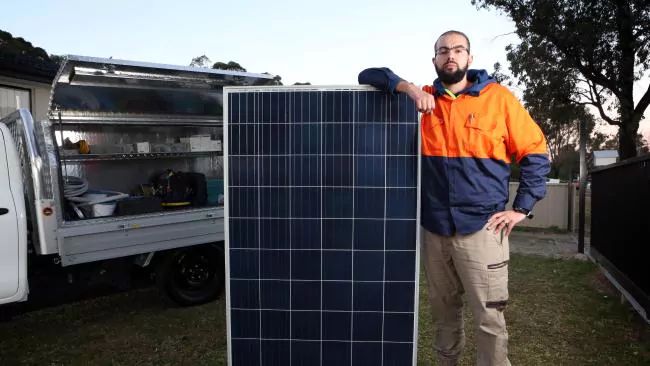

SunSeeker Electrical owner Abdullah Sultan says he knows of hundreds of fires caused by poor installation of solar panels. Picture: James Croucher

Victoria’s Metropolitan Fire Brigade has responded to more than 40 fires caused by home solar power systems in the past five years and warned that it would take years to understand the fire risk posed by lithium ion battery storage.

The MFB said the solar installations were vulnerable to faults across their systems, including isolation switches, inverters and installed wiring, and from deteriorating components.

The alarming figures come as the solar battery storage industry pushes to kill new regulations that would force homeowners to build a separate “fire bunker” housing for battery installations.

Under draft rules released by Standards Australia, lithium ion batteries are classed as “Fire Class 1” and would not be allowed inside or within 1m of a domestic dwelling. The industry will have until August 15 to respond to the draft regulations.

The safety moves are designed to avoid a repeat of Labor’s insulation batts scheme in which the rapid rollout of roof insulation in 2009 led to more than 200 house fires across the nation, and ultimately four deaths.

The MFB warned last night that the risk caused by the rapidly growing uptake of solar panels on homes had not yet been properly understood.

“In the past five years, MFB has responded to more than 40 fires involving solar panels,” a spokeswoman said.

“The causes of these fires vary but are usually sparked by system faults including isolation switches, inverters, installed wiring, and deteriorating components.

“As with any new technology, it will take some time before the risks associated with lithium ion batteries in solar panels can be fully understood.”

Energy Safe Victoria director Neil Fraser said at least eight solar panel models had been taken off the market in the past five years because of fire concerns.

“We are aware of as many as eight recalls nationally over the last five years of DC isolator switches which are located next to the solar panel on the roof,” Mr Fraser said.

“It is important that those ­people who have panels maintain them. They need to be cleaned regularly and inspected, preferably by a licensed electrician.”

Sales of battery storage have risen to 6750 battery installations last year, up from 500 in 2015, ­according to a recent survey.

Solar energy equipment supplier SunWiz forecasts at least a threefold increase this year.

The owner of a Sydney-based solar panel maintenance company said he had seen “hundreds” of fires caused by solar panels in the past five years.

SunSeeker Electrical owner Abdullah Sultan said this was because of “cowboy” installers operating under little regulation.

He said cheap products from China had forced local installers to drop prices and cut corners.

“There are a lot of cowboys out there who want a quick buck and the pricing isn’t regulated so you get people charging dirt cheap and customers don’t know what they are buying.”

The Clean Energy Council’s voluntary code outlines concerns that lithium-based batteries can overheat.

But CEC chief executive Kane Thornton said yesterday the lithium ion batteries were not a fire hazard, although he acknowledged it would take time to fully understand their risk.

“Things can go wrong from time to time but they are a relatively low risk, particularly relative to a bunch of other appliances and things that people have got in their homes: tins of lawnmower petrol, gas bottles, toasters.”

A spokesman for Victorian Energy Minister Lily D’Ambrosio said the industry was heavily regulated and the fire risk from solar panels was not high.

https://www.theaustralian.com.au/national-affairs/state-politics/years-to-understand-fire-risk-of-solar-power-systems/news-story/bcb237fc4e13e3cf37e56cadfaf44430
Title: Re: Residential Batteries
Post by juliar on Jan 3rd, 2019 at 10:27am
Powerwall fire preparations against human fallibility.
Submitted by trx430ex on March 20, 2017

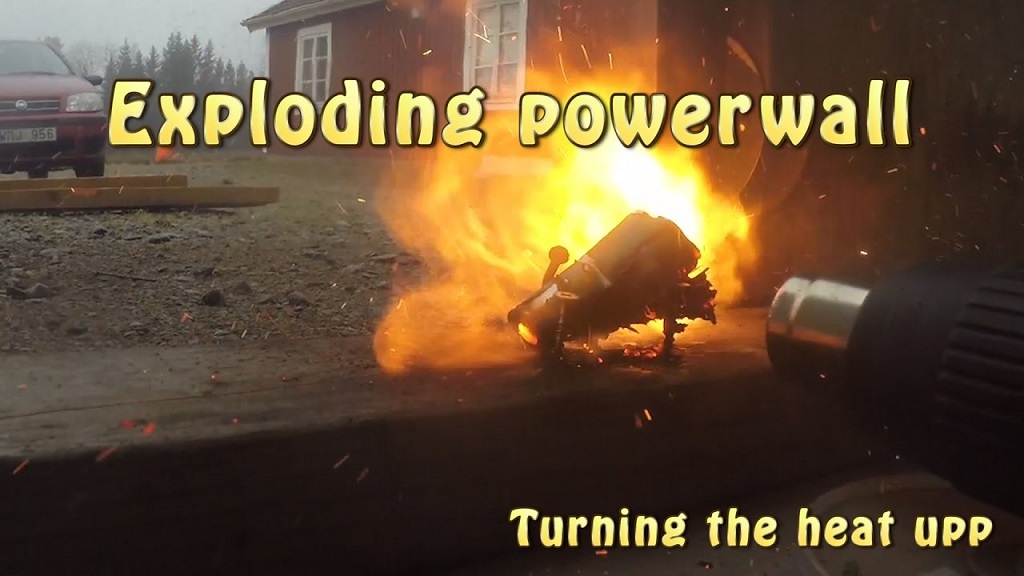
It is inevitable human fallibility will set a Powerwall Lithium Fire Bomb on fire, so how do we deal with it?

May I suggest a 2 stage rip cord that comes off a spool to 8 feet. At that 8 feet it requires 60 pounds of force to blow the explosive bolt that disconnects the spool & power from the wall. (The reason I say explosive bolt is as Space X could make one down to the size of a firecracker).

The second pull on the Powerwall itself setting off 4 explosive bolts that separates the Powerwall from the wall. Then the Powerwall could be dragged on the ground out of the building and harms way by the spool cord. Or off the RV in my case.

It may not do much for marketing, but it does a hell of a lot for insurance actuaries.The fat rat in everybody's lives.
Also protecting the Powerwall from itself in series at scale.

On the theft angle the wall becomes a brick until reactivated like IBM did with the Think pad,encrypted censors through the wall, but could snap back into cradle and phone home by location.

Legacy Powerwalls past 5 years or cycles censors are open sourced or turned off the encryption. Helping the second hand owner learn the next level.

Hmm, some deeper thought of reassembly in speed.

It is one thing to build, solar storage, it is another to watch humanity blow it up for greed, but then watch it be rebuilt again  in mobile.

Title: Re: Residential Batteries
Post by juliar on Jan 3rd, 2019 at 10:36am
All Hell will break lose when the first Tesla PowerWall Lithium Fire Bomb explodes and razes a home to the ground just like the unsafe Tesla heaps of junk burn to the ground.


Lithium-Ion Batteries: Crucial for Utility-Scale Solar, but a Fire Risk for Cities
Posted to Energy June 12, 2018 by Erin Mundahl


Kaboom up she goes - goodbye house and home!!!!!

Frequent flyers may remember a period when the TSA warned travelers not to take certain smart phones onboard airplanes out of fear that their batteries could catch fire.

While the small lithium-ion batteries used in cell phones may cause injury, they are generally not large enough to cause damage to buildings or other structures.

When batteries reach utility-scale, however, fires begin to pose a serious risk, one already seen with some electric vehicles.

As utilities invest more in the solar+storage model of generation, battery purchases are expected to only continue to grow. This could make for an increased fire risk, however, one that many municipalities are only just beginning to plan for.

Lithium-ion batteries store more energy for their size and weight than do other existing technologies and increasingly are used both in consumer electronics and proposed electricity storage facilities.

Although they are generally stable, lithium-ion batteries can catch fire if something causes them to overheat. These fires are difficult to fight because of the high heats.

Recent fires in Tesla cars are under investigation by the National Transportation Safety Board, and the National Highway Traffic Safety Administration is investigating another incident with an eye towards setting appropriate vehicle safety standards. The batteries used in electric cars are smaller than those proposed for utility-scale installations. Still, it is enough to make some regulators wary.

New York City is making one of the first attempts to establish battery safety standards. One of the primary fears is that hot spots could linger in residential battery installations, reigniting hours or even days later and posing a risk to firefighters.

“The installation of lithium-ion and other new energy storage technologies offer exciting opportunities, but also present significant safety concerns,” Ronald Spadafora, the department’s chief of fire prevention told Bloomberg. “Installations at scale necessary to power buildings and building systems potentially present very serious fire and life-safety hazards.”

Utility-scale batteries would be larger than those used in electric cars, potentially as large as a shipping container. New York City wants to have 100 megawatt-hours of storage deployed by 2020 and California and Massachusetts have also set ambitious storage goals. Achieving them will mean increased deployment of batteries in densely populated residential areas.

If, that is, the cities can work out appropriate safety measures. Thus far, New York City is the first municipality to wade into the issue. In April, the city’s fire and building departments, along with City University of New York, New York State Energy Research and Development Authority, and utility Con Edison published a permitting and connection guide for outdoor lithium-ion systems. The next step will be finishing a similar guide for indoor systems installed in buildings, which they hope will be finished by the end of the year.

On the West Coast, the California Public Utilities Commission provides consumers with information about best practices for battery installation. The list shows that, for the moment, standards are piecemeal. Santa Clara County, California has developed a “relatively advanced” list of best practices, but these are not required by statute across the state.

Alternate battery technology that doesn’t rely on lithium might reduce fire risk. Unfortunately, the market is largely settled on a single technology. According to the market research firm GTM Research, lithium-ion technology has been a market leader for 13 consecutive quarters, and GTM predicts that another 1,233 megawatt-hours of grid-connected storage will be deployed in 2018.

Battery fires are particularly hazardous because they involve both electricity and potentially hazardous chemicals, including rare earth metals and noxious fumes.

During a battery fire at a Hawaii wind farm in 2012, firefighters were advised not to enter the building housing the batteries because of the risk of explosions, poisonous gases, and structural collapse.

The wind farm used lead acid batteries, rather than lithium-ion technology. Even so, the event shows the need to make sure that first responders are properly trained to handle battery fires in jurisdictions where storage facilities are being constructed.

https://www.insidesources.com/lithium-ion-batteries-crucial-for-utility-scale-solar-power-but-a-fire-risk-for-cities/

Title: Re: Residential Batteries
Post by juliar on Jan 3rd, 2019 at 10:45am
Will the dangerous unsafe Tesla PowerWall Lithium Fire Bombs be banished to an outhouse like an old style dunny ?


Standards Australia might send Tesla's PowerWalls outside. Is the dining room the right place for 10 kWH of battery chemistry anyhow?
By Richard Chirgwin 14 Feb 2017 at 20:45


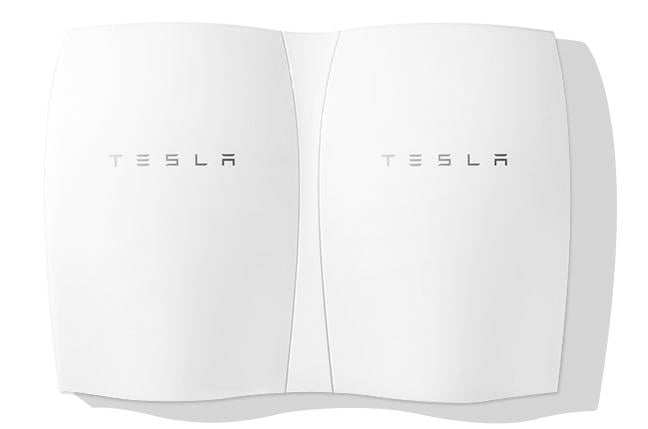
Tesla powerwall

Standards Australia is considering a change to building standards that might require storage batteries such as the Tesla PowerWall to be installed out-of-doors.

Responding to an report in Renew Economy, the organisation confirmed to The Register that building standards relating to battery installations are under discussion.

However, rather than considering a ban on internal installations, the Standards Australia statement (PDF) says the body is considering:

Installation requirements for all battery systems connected to inverter energy systems, covering all battery types;
Mitigating hazards associated with battery energy storage system installations; and
Classifying batteries based on hazards, and not chemistry type.
The organisation says a formal draft will be released "soon", with public comment welcome until April 2017.

As things now stand, there isn't any building regulation specific to lithium-ion storage batteries.

Unsurprisingly, home photovoltaic users with lead acid batteries have to put them in a suitable enclosure that conforms to Australian Standard 4509 (which stipulates suitable enclosures, warning signs, ventilation, and separation from potential spark sources).

There are also understandable electrical standards which would apply to any battery installation, regardless of technology.

While Li-Ion batteries don't present the fume and spark-explosion risks, building standards are catching up. The Clean Energy Council has, in the meantime, issued its own recommendations for their handling and installation, and notes that overcharging is the main fire risk.

That shouldn't happen in the case of units like the PowerWall, which includes battery management systems, and has been promoted as suitable for installation inside dwellings.

Standards Australia first issued its consultation (PDF) paper during 2016.

At that time, Li-ion and flow batteries (such as made by Australian company Redflow) were both identified as being in need of standards.

https://www.theregister.co.uk/2017/02/14/standards_oz_might_send_powerwalls_outdoors/

Title: Re: Residential Batteries
Post by Sir lastnail on Jan 3rd, 2019 at 11:06am
What about Lithium Titanate ? You have overlooked those haven't you. ;)

https://www.youtube.com/watch?v=GPLF6qrAfa0

Title: Re: Residential Batteries
Post by lee on Jan 3rd, 2019 at 12:04pm

Sir lastnail wrote on Jan 3rd, 2019 at 11:06am:
What about Lithium Titanate ? You have overlooked those haven't you


You mean like -

"The combustion behavior of large scale lithium titanate battery"

"The results indicate that the battery fire hazard increases with the SOC*. It is analyzed that the internal short and the Li+ distribution are the main causes that lead to the difference."

https://www.ncbi.nlm.nih.gov/pmc/articles/PMC4293605/

*SOC - State Of Charge


Title: Re: Residential Batteries
Post by juliar on Jan 3rd, 2019 at 12:05pm
More ridiculous retarded off topic SPAM nonsense from the troll with the child's mind in an adult body, the offensive Tweedledum and her mythical Greeny rubbish.

But ignoring this pathetic impaired useless waste of space that is not worth feeding creature and back to the TOPIC which the muddle minded creature cannot understand as the poor coot needs help with words of more than one syllable.

If a home installation of an unsafe Tesla PowerWall Lithium Fire Bomb is in a poorly ventilated area then the lithium fire bomb will overheat and EXPLODE in a fiery catastrophe taking the house with it.


Battery sector fights fire-risk rules
GRAHAM LLOYD Environment Editor Sydney The Australian 12:00AM July 11, 2017


Industry groups and manufacturers say modern solar batteries are designed not to overheat.

The fast-growing solar battery storage industry is engaged in a furious 11th-hour battle to kill new regulations that would force homeowners to build a separate “fire bunker” housing for battery installations.

Industry and consumer groups have until August 15 to challenge draft recommendations issued by Standards Australia that could dramatically slow the uptake of residential battery storage.

Final draft recommendations include a ban on in-house battery banks and are designed to avoid a repeat of the pink batts debacle in which a well-intentioned environmental initiative proved deadly.

Industry groups and manufacturers say modern solar batteries are designed not to overheat and have described the new rules as overkill.

Sales of battery storage have risen to 6750 battery installations last year, up from 500 in 2015, according to a recent survey. Solar energy equipment supplier SunWiz forecasts at least a threefold increase this year.

Currently there are no Standards Australia regulations for in-home battery installations. The Clean Energy Council issued industry rules last year limiting home batteries to “a dedicated equipment room or battery room”.

The council said installers should take account of ventilation, extreme temperatures and exclude “habitable rooms” including bedrooms, living rooms, kitchens, sunrooms, bathrooms or laundries. Its rules included an exemption for “all-in-one” battery and inverter control systems.

However, the draft Australian Standards go much further.
Lithium ion batteries are classed as “fire hazard class 1”, and under the draft rules they must not be installed inside a domestic dwelling, within a metre of any access or egress area or under any part of a domestic dwelling.
To qualify, lithium ion batteries must effectively be housed in a 3m x 2m fire shelter with eaves.

The council’s voluntary code outlines the concerns. “Some lithium-based batteries can fail due to internal overheating, in a process known as ‘thermal runaway’,” the council says. “The normal chemical reactions within the battery during charging are exothermic (heat-generating).

“If this heat is not able to dissipate, or the battery is overcharged for a long duration, the rate of chemical reaction can then speed up, which in turn increases the battery temperature further, in an increasing cycle until the battery is physically damaged.

“Once this happens, there is a risk of fire and/or rupture of the battery, with emission of toxic material,’’ the council says.
Standards Australia chief executive Bronwyn Evans said the draft report was a “comprehensive document” that was “the result of many hours of work from experts representing industry, government and community interests”.

“The work is being driven by a range of stakeholders from all parts of industry who have an interest in standards in Australia that support the safe uptake of battery-storage systems in all buildings, but particularly in homes,” she said.
Dr Evans said the standards were devised to give consumers and industry confidence in innovative solutions.

“They should give markets and governments confidence when making regulatory and investment decisions and get the balance right between all the different interests and voices in the room,” she said.

At the end of the consultation period “we will have an installation standard for battery storage systems which supports the uptake of systems in Australia”.

Dr Evans said battery storage had been a focus of Chief Scientist Alan Finkel’s review into the future security of the National Electricity Market, released last month.

https://hotcopper.com.au/threads/battery-sector-fights-fire-risk-rules.3538968/

Title: Re: Residential Batteries
Post by juliar on Jan 3rd, 2019 at 12:13pm
Imagine being at work and the phone rings and it is the fire dept to tell you that your Tesla PowerWall overheated during the hot day and exploded and burnt your house down and killed your pet dog with poisonous fumes!!!!


Home energy storage is a fire hazard; FDNY is on the case
Saqib Rahim, E&E News reporter Energywire: Thursday, December 10, 2015

The scenario hasn't yet come to pass, thankfully. But Lt. Paul Rogers knows the day may come that a large lithium-ion battery, set up in a New York City building, catches on fire.

If that happened today, would the average New York City Fire Department crew know what to do? Rogers, a 23-year veteran of the FDNY, guessed not. "They'd probably hand this off right now to the hazmat unit" -- his unit, he said.

Why? Because lithium-ion batteries don't often catch fire, but when they do, it's no garden-variety blaze.

"There's not a lot of information on what happens when these things go on fire," he said, referring to stationary lithium-ion systems. "I don't want to scare the public. We'll be able to manage that type of thing. But it's a concern until we can get data to prove otherwise.

"We don't want to stop any kind of technology from coming into the city," he said. "We just want to know what we're up against."


Lithium-ion batteries rarely catch fire, as seen here during Federal Aviation Administration testing, but firefighters are still concerned whether their teams are prepared for large-scale batteries in buildings. Photo courtesy of AP Photo.

Rogers' caution mirrors that of some of his colleagues in the firefighting world.

They accept that large, lithium-ion batteries are being attached to the grid to make it cleaner and more efficient. But they've also noticed the occasional fires that have occurred on planes, in cars and on the grid (ClimateWire, Feb. 27).

As these batteries enter homes and buildings, Rogers and others say they still have questions about them.

Should they douse the battery with water or another agent? Is the battery giving off toxic or flammable gas? How quickly is it radiating heat? Will firefighters' suits hold up against that?

Their questions point to the lack of universally accepted safety standards for lithium-ion batteries of this size, type and function. They also show how the conservatism of the fire service is bumping up against the urgency of companies that want to capitalize on the energy storage market.

"Some of the questions on safety, there's really no data to back it up," said Matthew Paiss, a fire captain for the San Jose Fire Department who helps design codes at the National Fire Protection Association, or NFPA. "We have to be very conservative in making sure we're not allowing something into the building environment that could pose a risk for the occupants or first responders."

A rare occurrence
Fire safety standards already exist for the lithium-ion batteries in phones, laptops and electric cars. Fires are so rare that experts struggle to quantify them.

Some in the research community ballpark the failure rate at 1 in 5 million to 10 million, said Chris Orendorff, principal investigator for the Battery Abuse Testing Laboratory at Sandia National Laboratories. Even that includes cells that fail "gracefully": They stop working but pose no safety risk.

Nevertheless, the Department of Energy has flagged fire safety as a key issue lithium-ion batteries must overcome to become widely used on the grid.

"The prospects of employing Li-ion cells in applications depend on substantially reducing the flammability, which requires materials developments (including new lithium salts) to improve the thermal properties," DOE said in a report last year.

As it turns out, it's not as simple as borrowing the safety standards used for phones, laptops and cars. Lithium-ion battery cells act differently depending on how they're used.

So scaling them up for a home or building reintroduces the question of whether lithium-ion's fiery tendencies come back into play.

For now, localities are left to answer that question for themselves.

In New York, the utility Consolidated Edison Inc. has connected three stationary lithium-ion systems to its grid.

Con Ed worked with the FDNY and the city's Buildings Department to set up a testing and permit process, spokesman Allan Drury said. Lead-acid batteries also have to go through the process.

"We are technology agnostic. We value battery projects based on their performance in helping reduce peak load and on their durability. If a project is unsafe, it will not be approved by the city," he said in an email.

Systems roll out ahead of standards
But firefighters said more battery systems are coming and they need to know more before the wave hits.

Their aim is a system where fire codes, product standards and firefighting practices all work together.

For example, if someone wants to install a lithium-ion system in Manhattan, the FDNY could look at its fire code and ask whether the battery meets the product standard listed there. Later, if the battery catches fire, a crew can know its specs and draw up a game plan before they even get there.


Read the frightening rest here

https://www.eenews.net/stories/1060029271

Title: Re: Residential Batteries
Post by Sir lastnail on Jan 3rd, 2019 at 12:31pm
But what about Lithium Titanate socko ?

https://www.youtube.com/watch?v=GPLF6qrAfa0

Title: Re: Residential Batteries
Post by juliar on Jan 3rd, 2019 at 12:48pm
The dumber than dumb silly old Tweedledum is like a broken record just repeating her gross ignorance.

But then when you have trouble with words of more than one syllable it is a bit hard to understand anything much.

A MacDonald's menu is Tweedledum's limit.


Lord help anyone caught in a Tesla PowerWall fire cause if the fire doesn't get you then the extremely poisonous gases will!!!


FIREFIGHTING MEASURES
Responding to a Venting Tesla Energy Product. Smoke emanating from a Tesla Energy Product is an
indication of an abnormal and hazardous condition. The smoke is likely flammable and may ignite at any
time. If fire or smoke is observed emanating from a Tesla Energy Product at any time, evacuate the area, and
notify appropriately trained first responders and the local fire department.

A trained first responder team or the local fire department should shut off power to the Tesla Energy Product,
to prevent charging of the battery. However, shutting off power to the Tesla Energy Product does not deenergized
the battery, and thus a shock hazard may still be present. The Tesla Energy Product should then be
monitored for evidence of continued smoke evolution. Application of high volumes of water from a safe
distance to cool the battery pack may prevent further reaction and prevent a fire from developing.
If a fire develops, the Incident Commander should determine whether an attempt will be made to suppress the
fire (aggressive firefighting) or allow the battery to burn until it self-extinguishes, while protecting
surrounding materials (defensive firefighting).

Virtually all fires involving lithium-ion batteries can be controlled with water. To date, water has been found
to be the most effective agent for controlling lithium-ion battery fires. Water will suppress flames and can
cool cells, limiting propagation of thermal runaway reactions. If water is used, electrolysis of water (splitting
of water into hydrogen and oxygen) may contribute to the flammable gas mixture formed by venting cells,
burning plastic, and burning of other combustibles. Thus copious volumes of water should be used to fight a
lithium-ion battery fire.

Gaseous agents such as CO2 or Halon, or dry chemical suppressants may temporarily suppress flaming of
lithium-ion battery packs, but they will not cool lithium-ion batteries and will not limit the propagation of cell
thermal runaway reactions. Metal fire suppressants such as LITH-X, graphite powder, or copper powder are
not appropriate agents for suppressing fires involving lithium-ion battery packs as they are unlikely to be
effective.

A battery fire may continue for several hours and it may take 24 hours or longer for the battery pack to cool.
A lithium-ion battery fire that has been extinguished can re-ignite due to the exothermic reaction of constituent
materials from broken or damaged cells. To avoid this, remove sources of ignition and cool the burned mass
by flooding with water.

Aggressive Firefighting: If a decision is made to aggressively fight a fire involving a Tesla Energy Product,
then copious amounts of water should be applied from a safe distance. The water may not suppress all cell
thermal runaway reactions within the battery pack, but it may cool cells and control the spread of the fire. If
possible, direct the application of water towards openings in the battery pack enclosure, if any have formed,
with the intent of flooding the pack enclosure. The objective is to contact the surfaces of the affected and
surrounding individual battery cells with water.

Defensive Firefighting If a decision is made to fight a Tesla Energy Product fire defensively, then the fire
crew should pull back a safe distance and allow the battery to burn itself out. Fire crews may choose to utilize
a water stream or fog pattern to protect exposures or control the path of smoke. A battery fire may continue
for several hours and may result in multiple re-ignition events. It may take 24 hours or longer for the battery
pack to cool.

Firefighter PPE. Firefighters should wear self-contained breathing apparatus (SCBA) and fire protective
turnout gear. Cells or batteries may flame or leak potentially hazardous organic vapors if exposed to
excessive heat, fire or over voltage conditions. These vapors may include volatile organic compounds
(VOCs), hydrogen gas, carbon dioxide, carbon monoxide, soot, and particulates containing oxides of nickel,
aluminum, lithium, copper, and cobalt. Additionally, phosphorus pentafluoride, POF3 and HF vapors may
form.

https://forum.solar-electric.com/discussion/352365/new-battery-technologies-new-unfamiliar-dangers

Title: Re: Residential Batteries
Post by lee on Jan 3rd, 2019 at 12:54pm

Sir lastnail wrote on Jan 3rd, 2019 at 12:31pm:
But what about Lithium Titanate socko


ooh repetition. And the question has been answered. Don't like the answer? Provide a rebuttal. ;D ;D ;D ;D ;D

Title: Re: Residential Batteries
Post by Captain Nemo on Jan 3rd, 2019 at 1:14pm
It very much depends on the size of the solar installation and the feed in tariff.

I was an early adopter of solar panels so I still enjoy the premium feed in tariff of 66c per KWH

A battery for me makes no economic sense at the moment.

When my contract expires it may be a move to consider.


Title: Re: Residential Batteries
Post by Sir lastnail on Jan 3rd, 2019 at 1:56pm
But what about Lithium Titanate socko ??


Quote:
3. Enhanced Safety

In addition to the enhanced efficiency and energy-conserving qualities of Lithium Titanate Oxide (lithium titanium oxide) batteries, this technology is known for its high level of safety when used in comparison to alternative options. Due to the lower operating voltage of this technology, there are significant safety advantages for the consumer and the environment. As Lithium Titanate batteries are entirely free of carbon, they avoid thermal runaway or overheating which is a main cause of fires in traditional energy storage systems.


https://www.ev-power.eu/LTO-Tech/

Title: Re: Residential Batteries
Post by juliar on Jan 3rd, 2019 at 2:00pm
Thick as a brick Tweedledum carries on like a broken record repeating her gross ignorance. If her Greeny myth was so good then Tesla would be using it. But her Greeny myth is low energy and expensive.

Capt N who believes in the Global Warming HOAX may change his tune if the Greeny controlled Labor Party gets in and increases the price of electricity 5 to 6 times with their Carbon Tax and their technically unachievable 50% renewable rubbish.

And as they cripple the power network and the blackouts start a Tesla PowerWall will look even more attractive even if it lasts for only 1 hour.

And as the Greeny controlled Labor hits a massive debt wall with thousands of leaky boats arriving daily they may well cut the solar subsidy.

And home solar systems cause chaos in the power network by increasing the voltage on the network and burning out neighbors' appliances.

Some people have used a Prius or electric vehicular battery as a solar backup.

Title: Re: Residential Batteries
Post by Sir lastnail on Jan 3rd, 2019 at 2:03pm
But what about Lithium Titanate socko ??


Quote:
3. Enhanced Safety

In addition to the enhanced efficiency and energy-conserving qualities of Lithium Titanate Oxide (lithium titanium oxide) batteries, this technology is known for its high level of safety when used in comparison to alternative options. Due to the lower operating voltage of this technology, there are significant safety advantages for the consumer and the environment. As Lithium Titanate batteries are entirely free of carbon, they avoid thermal runaway or overheating which is a main cause of fires in traditional energy storage systems.


https://www.ev-power.eu/LTO-Tech/

Title: Re: Residential Batteries
Post by juliar on Jan 3rd, 2019 at 2:14pm
Bent and twisted Tweedledum is becoming deranged as she goes into an autistic fit.

Even way back then astute people recognized the extreme danger of plonking a Tesla Lithium Fire Bomb into your house.


Juha Saarinen: The burning battery question
By: Juha Saarinen Tech writer for NZ Herald. 13 Sep, 2016 1:50pm


If the risk of lithium-ion batteries is well documented, where does that leave consumers who buy devices with the power source in terms of insurance? Photo / File
     
Samsung's having a rough time of it currently, thanks to a small number of its new flagship device, the Galaxy Note S7, catching on fire during charging.

The fires are due to a small fault in some lithium-Ion batteries in Note 7 devices; even though only a small number of fires have so far occurred, the whole affair is a disaster for Samsung which has had to issue a worldwide recall of the smartphone.

Not only that, but airlines around the world are banning people from using or charging their Note 7s on board planes.

Samsung will probably have to rename the Note 7 after the spontaneous combustion fiasco, and also take a hard look at its battery manufacturing processes because the risk of lithium-ion batteries catching fire is real.

If you want to see what it looks like when lithium batteries burst into flames, there are heaps of videos on YouTube that'll show you. Don't try to poke a hole into the batteries or overcharge them yourself though: the combustion can be very violent and there's usually lots of toxic smoke billowing out as well.

While lithium-ion batteries currently represent the best compromise between energy storage capacity, size and price, researchers are working on alternatives - mainly because lithium-ion batteries are known fire hazards.

If the risk of lithium-ion batteries is well documented and has been known for years, where does that leave consumers who buy devices with the power source in terms of insurance?

For instance, I've been thinking about having a Tesla Powerwall or a Panasonic house battery installed to try them out in conjunction with solar power generation and to help with electricity cuts which usually happen when I can least afford it.

However, both the Tesla and Panasonic house batteries contain lithium-ion batteries which does make me a little nervous.

Perhaps unnecessarily so: Tesla senior marketing and communications manager Heath Walker pointed me to the Powerwall manual which outlines emergency procedures for the battery in case of fire.

"Like any device that has electricity there is a chance of fire, however the design and delivery of the power with Powerwall minimises this risk drastically," Walker said.

He did not think it would matter for house insurance, something that IAG's national technical specialist Chris Lysaght confirmed to me.

"For any house battery - installing and using these in accordance with the manufacturer's/supplier's instructions would not affect a person's house insurance," Lysaght said.

It's good to see that insurers will cover house and other's property in case of a battery fire, but don't be tardy in returning an expensive phone like the Galaxy Note 7 to the manufacturer in case there's a recall.

Like any device that has electricity there is a chance of fire, however the design and delivery of the power with Powerwall minimises this risk drastically.

"If a phone catches fire we would not expect that to invalidate the insurance for the resulting fire damage to other insured property, but the phone itself may not be covered for its self-destruction. We would hope most people would take up any supplier's/manufacturer's offer to resolve known problems in a recall situation," Lysaght added.

In addition to the above, if you have any old phones or other devices with batteries lying in a drawer somewhere, don't take the risk of them potentially catching fire and dispose of them.

Disposing the batteries could be a challenge, actually. I'm not suggesting anyone should panic, but the lithium-ion battery disposal situation needs to taken seriously. There are billions of devices with the combustible power sources out there, with more being made every day. Unfortunately, nobody seems to have given much thought to where they'll end once they're no longer usable though.

https://www.nzherald.co.nz/business/news/article.cfm?c_id=3&objectid=11708741

Title: Re: Residential Batteries
Post by Sir lastnail on Jan 3rd, 2019 at 2:17pm
But what about Lithium Titanate socko ??


Quote:
3. Enhanced Safety

In addition to the enhanced efficiency and energy-conserving qualities of Lithium Titanate Oxide (lithium titanium oxide) batteries, this technology is known for its high level of safety when used in comparison to alternative options. Due to the lower operating voltage of this technology, there are significant safety advantages for the consumer and the environment. As Lithium Titanate batteries are entirely free of carbon, they avoid thermal runaway or overheating which is a main cause of fires in traditional energy storage systems.


https://www.ev-power.eu/LTO-Tech/

Title: Re: Residential Batteries
Post by juliar on Jan 3rd, 2019 at 2:27pm
Definitely not the full quid Tweedledum is still spinning in an autistic fit.

Now a PRACTICAL alternative to the dangerous Tesla PowerWall Lithium Fire Bomb.


Dutch Hybrid alternative for the Tesla PowerWall
Nov 2018


Hybrid Energy claims to offer a battery which is safer, more circular, more modular and cheaper than the PowerWall

How incredible would it be to use your own generated solar or wind power whenever you want. Or sell if you don’t use the energy. With only the touch of a button.

Due to the special Lead Crystal® batteries, you are now able to store solar, wind or grid energy fast and safely. You can use the storage energy day or night, to run all your electric devices like TV, coffee machine, dish washer, laptop and lighting in your house. You will become less grid dependent, saving significantly on energy costs, and contribute to a greener planet.

Lead-Crystal technology
The Dutch company Hybrid introduced an alternative of the Tesla PowerWall. The company claims to offer a battery which is safer, more circular, more modular and cheaper than the PowerWall. According to Sales director Pim Kemper, the difference is that they don’t use the Li-Ion, but the patented Lead-Crystal technology. This technology is safer because it doesn’t have the risk on fire because of a short circuit. Besides, it’s cheaper and will store the energy for a longer period of time comparing to lithium. Additionally discharge is possible and ambient temperatures are not an issue for the performance.

Hybrid’s Crystal
The secret formula is the composition of the electrolyte. The white fabric crystal feels like paraffin or wax, contains 1.75 to 3 percent sulfuric acid and is completely safe. Initially it was a liquid. During the filling of the battery you can just stab your hand in it. After Hybrid has loaded the batteries – 8 to 10 times in 72 hours charging and discharging – the electrolyte crystallizes between the lead plates and after that, the battery is ready.

No corrosion
That’s why they called it: Lead Crystal. The crystals, and thus the small amount of acid, are evenly distributed over the lead plates. As a result, there occurs no corrosion or sulfation, something which is the case for lead acid batteries.

At the same time the chemical composition has been changed so much that it can not be traced back to the original formula of the electrolyte. So you can not apply a ‘reverse engineering’.

Advantages of the lead crystal battery
10 degrees above the specifications in the datasheet, a lead acid battery loses half of its capacity. In (sub) tropical regions, that’s about half of its efficiency. A lead crystal battery only looses only 13 per cent 10 degrees. The lifetime is several times higher.
With less failures, damages and losses, the ‘return on investment’ is considerably better than lead acid batteries.
The battery dry state occurs no sulfur gas emissions and this battery can be installed in any position.
The Lead Crystal battery can be discharged partly or even completely (even up to 1 Volt), without this being at the expense of the capacity and lifetime. This is not only more efficient but also cheaper.
Inverting power from 1 kW to 30 kW single phase and 10 kW to 60 kW 3 phase (systems can be chained together for even more power)
The batteries are made in one piece. In contrast to lithium-ion batteries, they do not need expensive BMS (Battery Management System), which determines a large part of the production cost. Lithium-ion batteries consist small cells to communicate via a BMS to include temperature and voltage with each other.

The batteries can be safely transported by air. Home batteries based on lithium-ion can not be transported with planes. Once these systems catch fire, they create their own oxygen which means they start to burn.

The Life Cycle Assessment has shown that the Lead Crystal battery backup device takes at least 3,300 cycles at 50% discharge. That number of cycles corresponds to a service life of about 10 years.

All-in-one system (no separate inverter, chargers or other electrical components required)
It’s just ‘plug and play’ with a cable to the network and cable to the PV panel. As a user, you only have to press the on / off button. So it remains attractive for both the distributor and installer and the consumer.
Special mobile app (optional extra)

Dutch design
Designed in the Netherlands, made locally
Manufacturers backed warranty
4 types of Lead Crystal batteries
Hybrid Lead Crystal batteries are available in four different categories: Battery back up available from 2,4 kWh to 260 kWh

1. Hybrid Leisure
Single phase system for recreational vehicles, small remote (holiday) houses, boats, etc.

Dimensions: 100x60x35cm
2. Hybrid Home

Single phase system for residential use.
Dimensions: 140x60x35cm

3. Hybrid Tower
Single or three phase system for large residents and small businesses.

Dimensions: 180x70x55cm
4. Hybrid Wall

Three phase system with modular energy storage capability, up to 230kW possible.

https://www.betterworldsolutions.eu/dutch-hybrid-alternative-for-the-tesla-powerwall/

Title: Re: Residential Batteries
Post by lee on Jan 3rd, 2019 at 2:44pm

Sir lastnail wrote on Jan 3rd, 2019 at 2:17pm:
But what about Lithium Titanate socko ??


"The results of temperature and heat generation rate demonstrate that the greater the current, the faster the battery temperature is rising. Furthermore, the thermal influence of the overheated cell on surrounding batteries in the module was simulated, and the variation of temperature and heat generation during thermal runaway was obtained. It was found that the overheated cell can induce thermal runaway in other adjacent cells
with in 3 mm distance in the battery module if the accumulated heat is not dissipated
rapidly."

https://pdfs.semanticscholar.org/72b8/b1a54536423f39f4dd32a8d61997560e8452.pdf

published 2015.

Against an undated paper.

"WHO ARE WE?

EVPower a.s., a wholesale distributor of LiFePO4 battery cells, photovoltaic solutions and electric bikes. "

Oh a corporate player. That's unbiased for you. ;D ;D ;D ;D ;D

Title: Re: Residential Batteries
Post by juliar on Jan 3rd, 2019 at 2:47pm
Sends shivers of fear up your spine!!!!


“Gas Safety risks in Li-Ion battery charging rooms:
Steve December 28, 2018 at 8:43 pm

http://www.alviautomation.com/lithium-ion-battery-fires-hydrogen-fluoride-detector/

Li-Ion batteries when overcharged or short circuited are overheated and catch fires.

Li-Ion battery fires have caused great concern because of risks due to spontaneous fires and intense heat generated by such fires.

As a result of the above-said a lethal amount of toxic Hydrogen Fluoride Gas, HF is generated.

HF from Li-Ion battery fires can pose severe gas safety risks in confined spaces like battery charging rooms, renewable energy storage plants in solar or wind power plants

The electrolyte in Li-Ion battery is flammable and generally contains Lithium Hexa- fluoro -phosphate (LiPF6)
In the event of overheating due to overcharging or short circuiting and backed by high temperature, the electrolyte in Li-Ion batteries will vaporise liberating toxic gases like CO, CO2, HF (hydrogen fluoride)

The moisture and humidity will further exacerbate the situation generating more HF (reaction of LiPF6 with water or humidity)

Typical HF concentration expected can be as high as 20-200 ppm of HF (NIOSH/USA Safety limit , TWA:3 ppm HF, STEL: 6 ppm HF)

Solutions:

Continuous monitoring of HF, Hydrogen Fluoride in toxic range of NIOSH/USA : 0-10 ppm

Continuous monitoring of other toxic gases like CO, CO2 (gases generated due to combustion fires)

Continues monitoring of humidity and temperature”

https://pubchem.ncbi.nlm.nih.gov/compound/hydrofluoric_acid#section=Top

“HYDROGEN FLUORIDE, ANHYDROUS is a colorless fuming liquid boiling at 67°F. Shipped as a liquid confined under its own vapor pressure. Corrosive to metals and tissue. Very short contact with fumes or small quantities of the liquid can cause severe, painful burns. Vapors are heavier than air. Density 8.2 lb / gal. Used as a catalyst and raw material in chemical manufacture. Rate of onset: Immediate & Delayed Persistence: Minutes to hours Odor threshold: 0.4 ppm Source/use/other hazard: Aluminum and other metal industries; insecticide manufacturing-corrosive liq.

Title: Re: Residential Batteries
Post by Sir lastnail on Jan 3rd, 2019 at 3:09pm

lee wrote on Jan 3rd, 2019 at 2:44pm:

Sir lastnail wrote on Jan 3rd, 2019 at 2:17pm:
But what about Lithium Titanate socko ??


"The results of temperature and heat generation rate demonstrate that the greater the current, the faster the battery temperature is rising. Furthermore, the thermal influence of the overheated cell on surrounding batteries in the module was simulated, and the variation of temperature and heat generation during thermal runaway was obtained. It was found that the overheated cell can induce thermal runaway in other adjacent cells
with in 3 mm distance in the battery module if the accumulated heat is not dissipated
rapidly."

https://pdfs.semanticscholar.org/72b8/b1a54536423f39f4dd32a8d61997560e8452.pdf

published 2015.

Against an undated paper.

"WHO ARE WE?

EVPower a.s., a wholesale distributor of LiFePO4 battery cells, photovoltaic solutions and electric bikes. "

Oh a corporate player. That's unbiased for you. ;D ;D ;D ;D ;D


Read it again idiot. The risk can be totally mitigated !

Title: Re: Residential Batteries
Post by lee on Jan 3rd, 2019 at 3:17pm

Sir lastnail wrote on Jan 3rd, 2019 at 3:09pm:
Read it again idiot.


yes petal.

"can induce thermal runaway".

As opposed to "they avoid thermal runaway or overheating".

I am sure even you can see that they are diametrically opposed. ;)

Title: Re: Residential Batteries
Post by lee on Jan 3rd, 2019 at 3:22pm

Sir lastnail wrote on Jan 3rd, 2019 at 3:09pm:
The risk can be totally mitigated !


Oh dear. edited while I was posting.

Mitigation is not the same as avoidance. Mitigation requires an active solution. Avoidance does not necessarily require an active solution.

Title: Re: Residential Batteries
Post by Sir lastnail on Jan 3rd, 2019 at 8:24pm

lee wrote on Jan 3rd, 2019 at 3:22pm:

Sir lastnail wrote on Jan 3rd, 2019 at 3:09pm:
The risk can be totally mitigated !


Oh dear. edited while I was posting.

Mitigation is not the same as avoidance. Mitigation requires an active solution. Avoidance does not necessarily require an active solution.


Most rechargeable battery systems have some kind of intelligent charging and monitoring system to avoid overcharging or over temperature. If you don't believe me open up your smart phone or laptop.

Title: Re: Residential Batteries
Post by lee on Jan 3rd, 2019 at 8:58pm

Sir lastnail wrote on Jan 3rd, 2019 at 8:24pm:
Most rechargeable battery systems have some kind of intelligent charging and monitoring system to avoid overcharging or over temperature. If you don't believe me open up your smart phone or laptop.


yes. And even they catch fire. ;)

You do know intelligent charging is a mix of software and sensors. There is no guarantee they will last.

Title: Re: Residential Batteries
Post by Sir lastnail on Jan 3rd, 2019 at 9:06pm
Put this in your pipe and smoke it you dickheads !!

https://www.youtube.com/watch?v=eAUYbSDEy6I

And this article confirms it too:-

https://www.eetimes.com/author.asp?section_id=36&doc_id=1325358


Quote:
The Lithium Titanate (LTO) battery
This technology is known for its very fast charging, low internal resistance/high charge and discharge-rate, very high cycle life, and excellent endurance/safety. It has found use mostly in electric vehicles and energy storage (Toshiba, YABO, and Altair Nanotechnologies), and wristwatches (Seiko). More recently, it is beginning to find use in mobile medical devices due to its high safety. One underlying reason for this technology's characteristics is that the chemistry uses nanocrystals on the anode instead of carbon, which provides much more effective surface area. Unfortunately, however, this battery has lower terminal voltages than other Lithium types.


What about Lithium Titanate Batteries socko ??

Title: Re: Residential Batteries
Post by lee on Jan 3rd, 2019 at 9:40pm

Sir lastnail wrote on Jan 3rd, 2019 at 9:06pm:
Put this in your pipe and smoke it you dickheads !!


From January 2015? ;D ;D ;D ;D ;D


What exactly is meant by "high safety"? It doesn't catch fire? It only catches fire rarely?

Please feel free to pontificate.

Title: Re: Residential Batteries
Post by Sir lastnail on Jan 3rd, 2019 at 10:44pm

lee wrote on Jan 3rd, 2019 at 9:40pm:

Sir lastnail wrote on Jan 3rd, 2019 at 9:06pm:
Put this in your pipe and smoke it you dickheads !!


From January 2015? ;D ;D ;D ;D ;D


What exactly is meant by "high safety"? It doesn't catch fire? It only catches fire rarely?

Please feel free to pontificate.


Watch the video then. You can actually buy these batteries today !

Title: Re: Residential Batteries
Post by juliar on Jan 4th, 2019 at 10:40am
Silly old dimwit Tweedledum is just digging herself deeper into her swill bowl as she piles more ignorance on top of the already smelly pile.

If these already rejected batteries were so wonderful then Tesla would be using them but with LOW energy density and expensive and difficult to produce reliably why would Tesla waste their time on such failed Greeny trash ?

Another stupid Greeny Tweedledum trash myth busted.


Lithium titanate stuff is rejected because of low energy density and expensive and it contains the ability to trigger a great big EXPLOSION!!!!!!


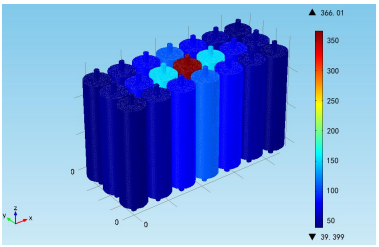
Temperature distribution of the battery module (the units are °C).

4. Conclusions
With the aid of the finite element technique, the thermal behavior of a 50 Ah lithium titanate battery
and the thermal effect of an overheated cell on the surrounding cells in a 7 × 3 battery module are
simulated. First, the greater the current rate, the higher the battery temperature and the longer the time
Energies 2015, 8 499 required for thermal balance with the environment is.

The simulation on an overheated battery in the 7 × 3 battery module shows that the temperatures of the overheated surrounding cells exceed 140 °C, which will cause the decomposition of the polymer separator, and then trigger the thermal runaway of the whole battery followed by a chain reaction in the module, leading to a potentially uncontrollable
explosion.

If the working current rate is 1.0 C, more attention should be paid to improve the battery
cooling conditions, because the cell temperature in the center of the module could rise sharply under
poor working conditions, which will cause the other adjacent cells’ temperature to rise, and thus increase
the risk of thermal runaway.

https://pdfs.semanticscholar.org/72b8/b1a54536423f39f4dd32a8d61997560e8452.pdf

Title: Re: Residential Batteries
Post by Baronvonrort on Jan 4th, 2019 at 12:43pm

Sir lastnail wrote on Jan 3rd, 2019 at 9:06pm:
Put this in your pipe and smoke it you dickheads !!

https://www.youtube.com/watch?v=eAUYbSDEy6I

And this article confirms it too:-

https://www.eetimes.com/author.asp?section_id=36&doc_id=1325358


Quote:
The Lithium Titanate (LTO) battery
This technology is known for its very fast charging, low internal resistance/high charge and discharge-rate, very high cycle life, and excellent endurance/safety. It has found use mostly in electric vehicles and energy storage (Toshiba, YABO, and Altair Nanotechnologies), and wristwatches (Seiko). More recently, it is beginning to find use in mobile medical devices due to its high safety. One underlying reason for this technology's characteristics is that the chemistry uses nanocrystals on the anode instead of carbon, which provides much more effective surface area. Unfortunately, however, this battery has lower terminal voltages than other Lithium types.


What about Lithium Titanate Batteries socko ??


If this is so good why is your Messiah Elon Musk not using them?

;D ;D ;D :D :D :D ;D ;D ;D

Title: Re: Residential Batteries
Post by juliar on Jan 4th, 2019 at 12:48pm
Baron because they are rejected trash just like the society outcasts Tweedledum and Tweedledee.

They have LOW energy density, are difficult and expensive to make, and can develop hot spots which makes the whole thing EXPLODE!!!!!!!!

Title: Re: Residential Batteries
Post by Sir lastnail on Jan 4th, 2019 at 3:00pm

Baronvonrort wrote on Jan 4th, 2019 at 12:43pm:

Sir lastnail wrote on Jan 3rd, 2019 at 9:06pm:
Put this in your pipe and smoke it you dickheads !!

https://www.youtube.com/watch?v=eAUYbSDEy6I

And this article confirms it too:-

https://www.eetimes.com/author.asp?section_id=36&doc_id=1325358


Quote:
The Lithium Titanate (LTO) battery
This technology is known for its very fast charging, low internal resistance/high charge and discharge-rate, very high cycle life, and excellent endurance/safety. It has found use mostly in electric vehicles and energy storage (Toshiba, YABO, and Altair Nanotechnologies), and wristwatches (Seiko). More recently, it is beginning to find use in mobile medical devices due to its high safety. One underlying reason for this technology's characteristics is that the chemistry uses nanocrystals on the anode instead of carbon, which provides much more effective surface area. Unfortunately, however, this battery has lower terminal voltages than other Lithium types.


What about Lithium Titanate Batteries socko ??


If this is so good why is your Messiah Elon Musk not using them?

;D ;D ;D :D :D :D ;D ;D ;D


because Musk manufactures Lithium Ion batteries in his giga-factory and has done so for quite a long time. You can't easily just tool up to make other batteries and Lithium Ion have higher energy density than Lithium Titanate.

Title: Re: Residential Batteries
Post by Sir lastnail on Jan 4th, 2019 at 3:04pm

juliar wrote on Jan 4th, 2019 at 10:40am:
Silly old dimwit Tweedledum is just digging herself deeper into her swill bowl as she piles more ignorance on top of the already smelly pile.

If these already rejected batteries were so wonderful then Tesla would be using them but with LOW energy density and expensive and difficult to produce reliably why would Tesla waste their time on such failed Greeny trash ?

Another stupid Greeny Tweedledum trash myth busted.


Lithium titanate stuff is rejected because of low energy density and expensive and it contains the ability to trigger a great big EXPLOSION!!!!!!


Temperature distribution of the battery module (the units are °C).

4. Conclusions
With the aid of the finite element technique, the thermal behavior of a 50 Ah lithium titanate battery
and the thermal effect of an overheated cell on the surrounding cells in a 7 × 3 battery module are
simulated. First, the greater the current rate, the higher the battery temperature and the longer the time
Energies 2015, 8 499 required for thermal balance with the environment is.

The simulation on an overheated battery in the 7 × 3 battery module shows that the temperatures of the overheated surrounding cells exceed 140 °C, which will cause the decomposition of the polymer separator, and then trigger the thermal runaway of the whole battery followed by a chain reaction in the module, leading to a potentially uncontrollable
explosion.

If the working current rate is 1.0 C, more attention should be paid to improve the battery
cooling conditions, because the cell temperature in the center of the module could rise sharply under
poor working conditions, which will cause the other adjacent cells’ temperature to rise, and thus increase
the risk of thermal runaway.

https://pdfs.semanticscholar.org/72b8/b1a54536423f39f4dd32a8d61997560e8452.pdf


You're out of luck socko the Yinlong LTO batteries don't have any of these problems. Here is the proof socko ;) Of course if you take the LNP stance and never do anything then nothing ever changes nor improves ! Just stick to flipping houses using lots of debt and making cups of coffee. You lot will go along way doing that :D LOL

https://www.youtube.com/watch?v=eAUYbSDEy6I


Title: Re: Residential Batteries
Post by lee on Jan 4th, 2019 at 3:32pm
Ah yes. Youtube the proof provided by experts because it is foolproof. ;D ;D ;D ;D ;D ;D

Flying saucer anyone?

Title: Re: Residential Batteries
Post by lee on Jan 4th, 2019 at 3:37pm

Sir lastnail wrote on Jan 4th, 2019 at 3:00pm:
because Musk manufactures Lithium Ion batteries in his giga-factory and has done so for quite a long time. You can't easily just tool up to make other batteries and Lithium Ion have higher energy density than Lithium Titanate.


But if they are so much safer than other lithium batteries he must do it. Unless of course he has no regard to the punters buying the current crop of batteries.

Title: Re: Residential Batteries
Post by lee on Jan 4th, 2019 at 3:39pm

Sir lastnail wrote on Jan 3rd, 2019 at 10:44pm:
Watch the video then. You can actually buy these batteries today !


And because you can buy them makes them safer than other iterations of lithium batteries? ;D ;D ;D

Title: Re: Residential Batteries
Post by Sir lastnail on Jan 4th, 2019 at 4:18pm

lee wrote on Jan 4th, 2019 at 3:39pm:

Sir lastnail wrote on Jan 3rd, 2019 at 10:44pm:
Watch the video then. You can actually buy these batteries today !


And because you can buy them makes them safer than other iterations of lithium batteries? ;D ;D ;D


You obviously didn't watch the video then. Their version looks pretty safe to me ;) Instead you prefer the results of a google search that agrees with your biased negativity.

Title: Re: Residential Batteries
Post by DonDeeHippy on Jan 4th, 2019 at 4:20pm
and how many of these lithium power packs for residential house's have had thermal meltdown and caught on fire so far ? (I think the answer rhymes with hero ) :D :D

Title: Re: Residential Batteries
Post by juliar on Jan 4th, 2019 at 4:43pm
Tweedledum is just too dumb to understand technical stuff. Even needs help with words of more than one syllable.

Silly fool thinks just because something is on YouTube it MUST BE RIGHT. She should stay in the extremist section.

Just goes to show how useless and uninformed Greeny fools are. What a useless waste of space that is not worth feeding.

Her batteries are of very little use like her.

But when you get the actual real working FACTS silly old Tweedledum looks even dumber and sillier and more uninformed and generally ignorant than normal. Typical empty headed full of fowl air Greeny type.

The missing practical FACTS to mention are the massive weight, space, and dollars saved by using L-ion rather than LTO. If LTO cannot come even close to competing by either cost or weight they will not be accepted by most consumers.

Lithium ion anodes have 175-455 watt hr/kg compared to 1302-1488 watt hr/kg. The result is LTO batteries end up being heavier, bigger and more expensive than if they had used a graphite anode.

The NCIB case study you posted about flammability of batteries is for an LTO anode, not a graphite one…..isn’t that the opposite of what you are claiming?

Either way I think you were right by accident because LTO’s swell due to a reaction where the electrolyte gives off gases carbon dioxide, and highly flammable carbon monoxide and hydrogen.

Graphite does not produce gasses from reacting with electrolyte. Not that safety concerns matters much for demand of L-ion batteries, they are time tested and proven safe, even if these airlines overreact to mere suspicions and ban transportation of batteries would that even be a bad thing? That just brings more battery factories and mines close to home.

The other link you posted shows that L-ion batteries are the most accepted on aircraft out of any types of battery, again I thought you were saying the opposite?: http://phmsa.dot.gov/safetravel/batteries

Did you read the end of the BIFA article you posted? The quote is below, they are not turning down business at all, just making sure they are packaged properly and restricting in shipments from Asia where there is quality control problems.

“…thousands of the batteries may be packed onto pallets and loaded into the cargo holds of passenger planes. At this point it is important to emphasise that no cargo fires aboard passenger airlines have been attributed to batteries.

United Airlines and Delta will continue to accept shipments when the batteries are packed inside or with equipment such as laptops or power tools.”


https://investorintel.com/sectors/technology-metals/technology-metals-intel/lithium-titanate-battery-technology-bigger-better/

Title: Re: Residential Batteries
Post by Sir lastnail on Jan 4th, 2019 at 4:44pm

DonDeeHippy wrote on Jan 4th, 2019 at 4:20pm:
and how many of these lithium power packs for residential house's have had thermal meltdown and caught on fire so far ? (I think the answer rhymes with hero ) :D :D


Haven't heard of any power walls using Yinlong LTO batteries melting down ;)

Title: Re: Residential Batteries
Post by lee on Jan 4th, 2019 at 4:45pm

Sir lastnail wrote on Jan 4th, 2019 at 4:18pm:
Their version looks pretty safe to me


Ah an expert witless. ;D ;D ;D ;D

Title: Re: Residential Batteries
Post by Sir lastnail on Jan 4th, 2019 at 4:46pm

juliar wrote on Jan 4th, 2019 at 4:43pm:
Tweedledum is just too dumb to understand technical stuff. Even needs help with words of more than one syllable.

Silly fool thinks just because something is on YouTube it MUST BE RIGHT. She should stay in the extremist section.

Just goes to show how useless and uninformed Greeny fools are. What a useless waste of space that is not worth feeding.

Her batteries are of very little use like her.

But when you get the actual real working FACTS silly old Tweedledum looks even dumber and sillier and more uninformed and generally ignorant than normal. Typical empty headed full of fowl air Greeny type.

The missing practical FACTS to mention are the massive weight, space, and dollars saved by using L-ion rather than LTO. If LTO cannot come even close to competing by either cost or weight they will not be accepted by most consumers.

Lithium ion anodes have 175-455 watt hr/kg compared to 1302-1488 watt hr/kg. The result is LTO batteries end up being heavier, bigger and more expensive than if they had used a graphite anode.

The NCIB case study you posted about flammability of batteries is for an LTO anode, not a graphite one…..isn’t that the opposite of what you are claiming?

Either way I think you were right by accident because LTO’s swell due to a reaction where the electrolyte gives off gases carbon dioxide, and highly flammable carbon monoxide and hydrogen.

Graphite does not produce gasses from reacting with electrolyte. Not that safety concerns matters much for demand of L-ion batteries, they are time tested and proven safe, even if these airlines overreact to mere suspicions and ban transportation of batteries would that even be a bad thing? That just brings more battery factories and mines close to home.

The other link you posted shows that L-ion batteries are the most accepted on aircraft out of any types of battery, again I thought you were saying the opposite?: http://phmsa.dot.gov/safetravel/batteries

Did you read the end of the BIFA article you posted? The quote is below, they are not turning down business at all, just making sure they are packaged properly and restricting in shipments from Asia where there is quality control problems.

“…thousands of the batteries may be packed onto pallets and loaded into the cargo holds of passenger planes. At this point it is important to emphasise that no cargo fires aboard passenger airlines have been attributed to batteries.

United Airlines and Delta will continue to accept shipments when the batteries are packed inside or with equipment such as laptops or power tools.”


https://investorintel.com/sectors/technology-metals/technology-metals-intel/lithium-titanate-battery-technology-bigger-better/


https://www.youtube.com/watch?v=eAUYbSDEy6I

What about Yinlong Lithium Titanate Batteries socko ??

Title: Re: Residential Batteries
Post by lee on Jan 4th, 2019 at 4:49pm

DonDeeHippy wrote on Jan 4th, 2019 at 4:20pm:
(I think the answer rhymes with hero )


Ah. You think. That must be a novelty for you.

Title: Re: Residential Batteries
Post by lee on Jan 4th, 2019 at 5:00pm

Sir lastnail wrote on Jan 4th, 2019 at 4:18pm:
Instead you prefer the results of a google search that agrees with your biased negativity.


You believe youtube over research papers? ::)

Title: Re: Residential Batteries
Post by juliar on Jan 4th, 2019 at 5:03pm
Poor retarded Greeny drongo Tweedledum is a poor loser and has totally lost the argument as her very limited use wonder batts are just a very specific use as they are too heavy and have too low density and are too expensive and so are mainly used for large buses trundling around a set route.

So Musky is a lot smarter than dumb dull dense Tweedledum when he uses the much lighter, higher power density and CHEAPER Li ion batteries even if they do explode.

Title: Re: Residential Batteries
Post by DonDeeHippy on Jan 4th, 2019 at 5:29pm

lee wrote on Jan 4th, 2019 at 4:49pm:

DonDeeHippy wrote on Jan 4th, 2019 at 4:20pm:
(I think the answer rhymes with hero )


Ah. You think. That must be a novelty for you.

yes u should try it some day Lee  :D ;D

Title: Re: Residential Batteries
Post by lee on Jan 4th, 2019 at 5:45pm

DonDeeHippy wrote on Jan 4th, 2019 at 5:29pm:
yes u should try it some day Lee


i do. that's why you keep getting shot down with science. ;)

Title: Re: Residential Batteries
Post by DonDeeHippy on Jan 4th, 2019 at 5:51pm

lee wrote on Jan 4th, 2019 at 5:45pm:

DonDeeHippy wrote on Jan 4th, 2019 at 5:29pm:
yes u should try it some day Lee


i do. that's why you keep getting shot down with science. ;)

u think ? ;D :o

Title: Re: Residential Batteries
Post by lee on Jan 4th, 2019 at 5:58pm

DonDeeHippy wrote on Jan 4th, 2019 at 5:51pm:
u think ?


Yep. That's why you keep getting shot down. :)

Title: Re: Residential Batteries
Post by Sir lastnail on Jan 4th, 2019 at 9:34pm

lee wrote on Jan 4th, 2019 at 5:00pm:

Sir lastnail wrote on Jan 4th, 2019 at 4:18pm:
Instead you prefer the results of a google search that agrees with your biased negativity.


You believe youtube over research papers? ::)


was it research done on the Yuling brand LTO batteries ? Not every battery is going to be constructed in the same way.

Title: Re: Residential Batteries
Post by Sir lastnail on Jan 4th, 2019 at 9:35pm

lee wrote on Jan 4th, 2019 at 5:45pm:

DonDeeHippy wrote on Jan 4th, 2019 at 5:29pm:
yes u should try it some day Lee


i do. that's why you keep getting shot down with science. ;)


your idea of science is an out of context copy and paste job :D LOL

Title: Re: Residential Batteries
Post by lee on Jan 4th, 2019 at 9:42pm

Sir lastnail wrote on Jan 4th, 2019 at 9:35pm:
your idea of science is an out of context copy and paste job


You always have the opportunity to show any out of context quotes.


Whereas yours is youtube. ;)

Title: Re: Residential Batteries
Post by Sir lastnail on Jan 4th, 2019 at 10:18pm

lee wrote on Jan 4th, 2019 at 9:42pm:

Sir lastnail wrote on Jan 4th, 2019 at 9:35pm:
your idea of science is an out of context copy and paste job


You always have the opportunity to show any out of context quotes.


Whereas yours is youtube. ;)


OK then refute their claims ;)

Title: Re: Residential Batteries
Post by lee on Jan 4th, 2019 at 10:46pm

Sir lastnail wrote on Jan 4th, 2019 at 10:18pm:
OK then refute their claims


Oh dear. youtube. The home of sales pitch and propaganda.

If they have any basis they should be able to point to a research paper. ;)

I am assuming since you haven't previously pointed to one their is no such claim.

Title: Re: Residential Batteries
Post by Sir lastnail on Jan 5th, 2019 at 10:30am

lee wrote on Jan 4th, 2019 at 10:46pm:

Sir lastnail wrote on Jan 4th, 2019 at 10:18pm:
OK then refute their claims


Oh dear. youtube. The home of sales pitch and propaganda.

If they have any basis they should be able to point to a research paper. ;)

I am assuming since you haven't previously pointed to one their is no such claim.


Oh dear, what's the problem now. Should be easy to refute their claims now that they provide actual physical evidence of their product in operation ;)

Title: Re: Residential Batteries
Post by lee on Jan 5th, 2019 at 10:43am

Sir lastnail wrote on Jan 5th, 2019 at 10:30am:
Oh dear, what's the problem now. Should be easy to refute their claims now that they provide actual physical evidence of their product in operation


Oh dear Lostsnail has now refuted the idea that youtube may be edited. Or be a compilation of different takes.
;D ;D ;D ;D ;D

Title: Re: Residential Batteries
Post by Sir lastnail on Jan 5th, 2019 at 11:06am

lee wrote on Jan 5th, 2019 at 10:43am:

Sir lastnail wrote on Jan 5th, 2019 at 10:30am:
Oh dear, what's the problem now. Should be easy to refute their claims now that they provide actual physical evidence of their product in operation


Oh dear Lostsnail has now refuted the idea that youtube may be edited. Or be a compilation of different takes.
;D ;D ;D ;D ;D


That's a supposition. If you have the evidence then by all means refute their claims.

I know it hurts you to be proven wrong on this but did it ever occur to you that sooner or later better battery designs were going to appear contrary to the do-nothing approach held by the retards in the LNP ?

Title: Re: Residential Batteries
Post by lee on Jan 5th, 2019 at 11:35am

Sir lastnail wrote on Jan 5th, 2019 at 11:06am:
That's a supposition.


What that youtubes can be edited? be a compilation of takes? ;D ;D ;D ;D ;D ;D


Sir lastnail wrote on Jan 5th, 2019 at 11:06am:
I know it hurts you to be proven wrong on this but did it ever occur to you that sooner or later better battery designs were going to appear contrary to the do-nothing approach held by the retards in the LNP ?


A better battery design may well occur. It won't be because of an infomercial on youtube.

Title: Re: Residential Batteries
Post by Baronvonrort on Jan 5th, 2019 at 12:05pm

Sir lastnail wrote on Jan 5th, 2019 at 11:06am:
I know it hurts you to be proven wrong on this but did it ever occur to you that sooner or later better battery designs were going to appear contrary to the do-nothing approach held by the retards in the LNP ?


Yes better battery designs will occur i doubt any of them will be lighter than Lithium batteries.

With a Relative Density of 0.53 there is not much that can compete with Lithium for weight.

For batteries that have to move like in cars boats and planes Lithium will be the choice for batteries that remain stationary like in homes does it really matter what they weigh?


https://www.reade.com/reade-resources/reference-educational/reade-reference-chart-particle-property-briefings/25-specific-gravity-table-metals-minerals-ceramics-substance


Title: Re: Residential Batteries
Post by Sir lastnail on Jan 5th, 2019 at 4:34pm

lee wrote on Jan 5th, 2019 at 11:35am:

Sir lastnail wrote on Jan 5th, 2019 at 11:06am:
That's a supposition.


What that youtubes can be edited? be a compilation of takes? ;D ;D ;D ;D ;D ;D


Sir lastnail wrote on Jan 5th, 2019 at 11:06am:
I know it hurts you to be proven wrong on this but did it ever occur to you that sooner or later better battery designs were going to appear contrary to the do-nothing approach held by the retards in the LNP ?


A better battery design may well occur. It won't be because of an infomercial on youtube.


Perish the thought that someone could actually come up with a better battery design. You must be having nightmares about it now :D LOL

Now it's turned into a debate about the authenticity of a youtube video and how they must have used trick photography :D LOL

Title: Re: Residential Batteries
Post by lee on Jan 5th, 2019 at 4:51pm

Sir lastnail wrote on Jan 5th, 2019 at 4:34pm:
Perish the thought that someone could actually come up with a better battery design. You must be having nightmares about it now


Nope.let it happen. But with someone else's money.


Sir lastnail wrote on Jan 5th, 2019 at 4:34pm:
Now it's turned into a debate about the authenticity of a youtube video and how they must have used trick photography


Not at all. You are the one saying youtube videos can't be edited or compiled. ;)

Any tesla authored youtubes about lithium battery fires?

Title: Re: Residential Batteries
Post by DonDeeHippy on Jan 6th, 2019 at 5:37am

Baronvonrort wrote on Jan 5th, 2019 at 12:05pm:

Sir lastnail wrote on Jan 5th, 2019 at 11:06am:
I know it hurts you to be proven wrong on this but did it ever occur to you that sooner or later better battery designs were going to appear contrary to the do-nothing approach held by the retards in the LNP ?


Yes better battery designs will occur i doubt any of them will be lighter than Lithium batteries.

With a Relative Density of 0.53 there is not much that can compete with Lithium for weight.

For batteries that have to move like in cars boats and planes Lithium will be the choice for batteries that remain stationary like in homes does it really matter what they weigh?


https://www.reade.com/reade-resources/reference-educational/reade-reference-chart-particle-property-briefings/25-specific-gravity-table-metals-minerals-ceramics-substance

except all the solid state batteries being made and developed of course :)

Title: Re: Residential Batteries
Post by Ajax on Jan 6th, 2019 at 8:46am
What about EMF coming from these batteries.....??

Title: Re: Residential Batteries
Post by Sir lastnail on Jan 6th, 2019 at 10:44am

DonDeeHippy wrote on Jan 6th, 2019 at 5:37am:

Baronvonrort wrote on Jan 5th, 2019 at 12:05pm:

Sir lastnail wrote on Jan 5th, 2019 at 11:06am:
I know it hurts you to be proven wrong on this but did it ever occur to you that sooner or later better battery designs were going to appear contrary to the do-nothing approach held by the retards in the LNP ?


Yes better battery designs will occur i doubt any of them will be lighter than Lithium batteries.

With a Relative Density of 0.53 there is not much that can compete with Lithium for weight.

For batteries that have to move like in cars boats and planes Lithium will be the choice for batteries that remain stationary like in homes does it really matter what they weigh?


https://www.reade.com/reade-resources/reference-educational/reade-reference-chart-particle-property-briefings/25-specific-gravity-table-metals-minerals-ceramics-substance

except all the solid state batteries being made and developed of course :)


My prediction is that someone other than an LNP supporter will develop a better battery whilst the LNP supporter will tell you that it can't be done :D LOL

Title: Re: Residential Batteries
Post by Sir lastnail on Jan 6th, 2019 at 10:47am

lee wrote on Jan 5th, 2019 at 4:51pm:

Sir lastnail wrote on Jan 5th, 2019 at 4:34pm:
Perish the thought that someone could actually come up with a better battery design. You must be having nightmares about it now


Nope.let it happen. But with someone else's money.


It has with china money not ours ! Just stupid aussies borrowing money to feed real estate agents and nothing else. A very good investment for a nation of low achievers :(

Title: Re: Residential Batteries
Post by DonDeeHippy on Jan 6th, 2019 at 10:58am

Ajax wrote on Jan 6th, 2019 at 8:46am:
What about EMF coming from these batteries.....??

Do u mean the EMF from  the wires when electricity is used.... do a google search and its very little from unsulated wires and only when the electricy is flowing..... the EMF from being connected to the grid would be the same EMF that would come off wires used coming from a battery, I'm sure no or very little would be coming from the batteries themselves. :)
If u have a overhead wire connecting u to the grid, that would be your highest source in a household situation.
Check the EMF's from train stations because of electric trains... that's where u see high readings, no insulation. ;)

Title: Re: Residential Batteries
Post by Sir lastnail on Jan 6th, 2019 at 11:17am

Ajax wrote on Jan 6th, 2019 at 8:46am:
What about EMF coming from these batteries.....??


You mean EMI ?

Title: Re: Residential Batteries
Post by lee on Jan 6th, 2019 at 12:35pm
EMF - ElectroMotive Force?
ElectroMagnetic Force?

Title: Re: Residential Batteries
Post by DonDeeHippy on Jan 6th, 2019 at 1:14pm
EMF
Elericro Magnetic Field ;)

Title: Re: Residential Batteries
Post by lee on Jan 6th, 2019 at 3:38pm

DonDeeHippy wrote on Jan 6th, 2019 at 1:14pm:
Elericro Magnetic Field


So the electro magenetic field will be influenced by both voltage and frequency.


DonDeeHippy wrote on Jan 6th, 2019 at 10:58am:
do a google search and its very little from unsulated wires and only when the electricy is flowing...


Like on High Voltage lines.


DonDeeHippy wrote on Jan 6th, 2019 at 10:58am:
the EMF from being connected to the grid would be the same EMF that would come off wires used coming from a battery,


Different order of magnitude. Depending on the battery voltage. The battery voltage will need to be converted to AC to be fed into the grid. That will introduce its own losses.

The EMF of the grid will be greater.


Title: Re: Residential Batteries
Post by Sir lastnail on Jan 6th, 2019 at 3:43pm

lee wrote on Jan 6th, 2019 at 3:38pm:

DonDeeHippy wrote on Jan 6th, 2019 at 1:14pm:
Elericro Magnetic Field


So the electro magenetic field will be influenced by both voltage and frequency.


DonDeeHippy wrote on Jan 6th, 2019 at 10:58am:
do a google search and its very little from unsulated wires and only when the electricy is flowing...


Like on High Voltage lines.


DonDeeHippy wrote on Jan 6th, 2019 at 10:58am:
the EMF from being connected to the grid would be the same EMF that would come off wires used coming from a battery,


Different order of magnitude. Depending on the battery voltage.


Also batteries provide direct current so there would be no field !

Title: Re: Residential Batteries
Post by DonDeeHippy on Jan 7th, 2019 at 5:04am

Sir lastnail wrote on Jan 6th, 2019 at 3:43pm:

lee wrote on Jan 6th, 2019 at 3:38pm:

DonDeeHippy wrote on Jan 6th, 2019 at 1:14pm:
Elericro Magnetic Field


So the electro magenetic field will be influenced by both voltage and frequency.


DonDeeHippy wrote on Jan 6th, 2019 at 10:58am:
do a google search and its very little from unsulated wires and only when the electricy is flowing...


Like on High Voltage lines.


DonDeeHippy wrote on Jan 6th, 2019 at 10:58am:
the EMF from being connected to the grid would be the same EMF that would come off wires used coming from a battery,


Different order of magnitude. Depending on the battery voltage.


Also batteries provide direct current so there would be no field !

from the A/C inverter that's it, and what ive read a very little amount from the batteries, lots from all the wireless stuff we use though :)

Title: Re: Residential Batteries
Post by lee on Jan 7th, 2019 at 12:40pm

Sir lastnail wrote on Jan 6th, 2019 at 3:43pm:
Also batteries provide direct current so there would be no field !


Actually there is a field. it just doesn't vary.  Think DC and electro magnets. From small (leads wrapped around a screwdriver) to large container lifters. Some permanent some merely while power is applied.

Title: Re: Residential Batteries
Post by juliar on Jan 7th, 2019 at 3:03pm
Whatever happened to Tweedledum's limited use Lithium titanate batteries which are too heavy, too low energy, and too expensive and only used in things like buses and medical devices ? Totally unsuited for Tesla.

To see Tweedledum and Tweedledee exhibit their gross ignorance and inability to understand electricity is just sickening.

Classic North Coast rejects from the human race Globally Warmed Greeny Wacko types with vacant space between the ears and the mouth never stops flapping parroting silly Greeny rubbish.


Back on topic:-
Good sane article from reliable CHOICE and not YouTube bulldust:- https://www.choice.com.au/home-improvement/energy-saving/solar/buying-guides/battery-storage-buying-guide

An interesting factor will be the blackouts that will be introduced if Labor gets in and cripples the power system with their renewable rubbish. The solar batteries will be a lot more attractive then from a reliability point of view rather than a financial point of view. Look to SA with its already crippled power system.

Title: Re: Residential Batteries
Post by Laugh till you cry on Jan 7th, 2019 at 3:43pm
Householders are going to face unexpected costs when the solar systems age.

There will be an increase in rooftop solar panel and battery fires and there will be additional costs for removal and disposal of defective aged systems, especially batteries which may require more care and cost in disposal and recycling.

Title: Re: Residential Batteries
Post by juliar on Jan 7th, 2019 at 4:39pm
Another issue is when will the govt subsidies for solar be reduced and they will for sure.


A report from the National Research Council shows that the energy required to produce electricity and batteries makes electric cars and hybrids more harmful to human health than gasoline vehicles.

Electric cars and plug-in hybrids pose more hazards to your health than gasoline vehicles.

Title: Re: Residential Batteries
Post by Sir lastnail on Jan 7th, 2019 at 7:11pm

juliar wrote on Jan 7th, 2019 at 3:03pm:
Whatever happened to Tweedledum's limited use Lithium titanate batteries which are too heavy, too low energy, and too expensive and only used in things like buses and medical devices ? Totally unsuited for Tesla.


https://www.youtube.com/watch?v=eAUYbSDEy6I&t=1s

Socko's worst nightmare ! :D ;D :D ;D :D ;D


Title: Re: Residential Batteries
Post by juliar on Jan 7th, 2019 at 7:14pm
Tweedledum the freak of nature has surfaced and the brainless coot still cannot understand the first thing about technical stuff.

The gormless North Coast dropout from the human race believes YouTube nonsense.

Title: Re: Residential Batteries
Post by Sir lastnail on Jan 7th, 2019 at 7:31pm

lee wrote on Jan 7th, 2019 at 12:40pm:

Sir lastnail wrote on Jan 6th, 2019 at 3:43pm:
Also batteries provide direct current so there would be no field !


Actually there is a field. it just doesn't vary.  Think DC and electro magnets. From small (leads wrapped around a screwdriver) to large container lifters. Some permanent some merely while power is applied.


And the E field is what ?

Title: Re: Residential Batteries
Post by Sir lastnail on Jan 7th, 2019 at 7:32pm

juliar wrote on Jan 7th, 2019 at 7:14pm:
Tweedledum the freak of nature has surfaced and the brainless coot still cannot understand the first thing about technical stuff.

The gormless North Coast dropout from the human race believes YouTube nonsense.


And the E field is what dickhead ?

https://www.youtube.com/watch?v=eAUYbSDEy6I&t=1s

Socko's worst nightmare ! :D ;D :D ;D :D ;D


Title: Re: Residential Batteries
Post by lee on Jan 7th, 2019 at 7:58pm

Sir lastnail wrote on Jan 7th, 2019 at 7:31pm:
And the E field is what ?


Whatever you want it to be. ;)

E(e) is the symbol for electromotive force.-It can also be V(v) - voltage.

"Voltage is usually indicated with the abbreviation V. However, you may sometimes see
voltage abbreviated with the letter E, which stands for electromotive force."

https://www.icslearn.ca/-/media/files/pdf/samplelessons/002-basic-electronics-career-diploma.pdf?la=en&hash=73CE1DB38D6A312DB60F537BCC481D03F1E84D07

Of course it could be something completely different, depending on what you are talking about. It may also be called the Potential Difference (PD) between two points.

Title: Re: Residential Batteries
Post by Sir lastnail on Jan 7th, 2019 at 8:32pm

lee wrote on Jan 7th, 2019 at 7:58pm:

Sir lastnail wrote on Jan 7th, 2019 at 7:31pm:
And the E field is what ?


Whatever you want it to be. ;)

E(e) is the symbol for electromotive force.-It can also be V(v) - voltage.

"Voltage is usually indicated with the abbreviation V. However, you may sometimes see
voltage abbreviated with the letter E, which stands for electromotive force."

https://www.icslearn.ca/-/media/files/pdf/samplelessons/002-basic-electronics-career-diploma.pdf?la=en&hash=73CE1DB38D6A312DB60F537BCC481D03F1E84D07

Of course it could be something completely different, depending on what you are talking about. It may also be called the Potential Difference (PD) between two points.


E field is the electric field. You have it wrong as usual.

https://en.wikipedia.org/wiki/Electric_field


Title: Re: Residential Batteries
Post by lee on Jan 7th, 2019 at 8:36pm

Sir lastnail wrote on Jan 7th, 2019 at 8:32pm:
E field is the electric field.


yes petal Generally measured in VOLTS.

"(sometimes abbreviated as E-field)"

Only sometimes? ;D ;D ;D ;D ;D

I did say it depended on what you were talking about.

So what was so wrong about it? or can't you explain it? Just have a wiki reference? ;D ;D ;D ;D ;D

Title: Re: Residential Batteries
Post by Sir lastnail on Jan 7th, 2019 at 8:52pm

lee wrote on Jan 7th, 2019 at 8:36pm:

Sir lastnail wrote on Jan 7th, 2019 at 8:32pm:
E field is the electric field.


yes petal Generally measured in VOLTS.

"(sometimes abbreviated as E-field)"

Only sometimes? ;D ;D ;D ;D ;D

I did say it depended on what you were talking about.

So what was so wrong about it? or can't you explain it? Just have a wiki reference? ;D ;D ;D ;D ;D


No it's not. It's measured in Volts per meter or Newtons per coulomb !!

Title: Re: Residential Batteries
Post by juliar on Jan 7th, 2019 at 8:59pm
Tweedledum is using the same "argument" technique the Gay Greenies use where they are ALWAYS RIGHT and everyone else is ALWAYS WRONG.

When one of these lulus is overturned they fly into a personal attack on the hated person who has so humiliated them.

This silly childish attempt at personalizing things is seen with the mentally unabled Tweedledum's failed attempt to try to make out that I have the slightest interest in her LTO batteries which are too heavy, too expensive, and have too low an energy density and have a gassing problem and are mainly used for heavy duty things like buses and safety things like medical devices such as charging stations, tourist coaches, yachts, wind and solar energy storage power, traffic signals, solar hybrid street lighting, UPS power supply, home storage, disaster relief emergency, weather radar, electricity, smart grid, communication base stations, hospitals, finance, telecommunications as well as system critical backup power systems.

Because of their low energy density and greater weight and high expense these batteries are of no interest to Tesla which wants to keep weight down and energy up.

Tesla has captured the market with its Li Ion PowerWall battery which is a potential fire hazard. Trying to use LTO batteries for this would require a larger unit which would be more expensive and with slow charging from a solar array high charge rates are irrelevant and so a long life should be available.

And electricity is OBVIOUSLY all Greek to Tweedledum who has not got the vaguest clue about it and is just embarrassing herself by uncomprehendingly parroting stuff from Google.

Title: Re: Residential Batteries
Post by lee on Jan 7th, 2019 at 9:01pm

Sir lastnail wrote on Jan 7th, 2019 at 8:52pm:
No it's not. It's measured in Volts per meter or Newtons per coulomb !!


So volts and not lostnails per meter? ;D ;D ;D ;D ;D

Title: Re: Residential Batteries
Post by lee on Jan 7th, 2019 at 9:03pm
How often is "sometimes"? ;D ;D ;D ;D

Title: Re: Residential Batteries
Post by lee on Jan 7th, 2019 at 9:22pm
But if you want to know more about electric fields we can talk about Fleming's Right hand Rule for Generators

or

His Left Hand Rule for Motors

Title: Re: Residential Batteries
Post by Sir lastnail on Jan 8th, 2019 at 10:32am

lee wrote on Jan 7th, 2019 at 9:01pm:

Sir lastnail wrote on Jan 7th, 2019 at 8:52pm:
No it's not. It's measured in Volts per meter or Newtons per coulomb !!


So volts and not lostnails per meter? ;D ;D ;D ;D ;D


Why don't you just admit that you are wrong then instead of babbling on like an LNP retard that thinks they know everything ?

Title: Re: Residential Batteries
Post by lee on Jan 8th, 2019 at 11:22am

Sir lastnail wrote on Jan 8th, 2019 at 10:32am:
Why don't you just admit that you are wrong then instead of babbling on like an LNP retard that thinks they know everything ?


Why don't you just admit you know SFA about AC or DC electricity apart from what you google.

I am sure I would have forgotten more than you ever learned.

Kirchoff's Circuit Theory?  ;)

Title: Re: Residential Batteries
Post by Sir lastnail on Jan 8th, 2019 at 10:42pm

lee wrote on Jan 8th, 2019 at 11:22am:

Sir lastnail wrote on Jan 8th, 2019 at 10:32am:
Why don't you just admit that you are wrong then instead of babbling on like an LNP retard that thinks they know everything ?


Why don't you just admit you know SFA about AC or DC electricity apart from what you google.

I am sure I would have forgotten more than you ever learned.

Kirchoff's Circuit Theory?  ;)


And how do you know that ?

And do you still maintain that E field is the same as Voltage ? :D LOL


Title: Re: Residential Batteries
Post by lee on Jan 8th, 2019 at 10:49pm

Sir lastnail wrote on Jan 8th, 2019 at 10:42pm:
And how do you know that ?


Because of your inane ramblings.


Sir lastnail wrote on Jan 8th, 2019 at 10:42pm:
And do you still maintain that E field is the same as Voltage ?


Actually if you looked carefully you would see that is NOT what I said.

It is generally measured in volts with a multiplying unit of distance. In Australia that is "metre". "Meter" is an instrument.

Unless you are now claiming US nationality.


Title: Re: Residential Batteries
Post by Sir lastnail on Jan 8th, 2019 at 11:12pm

lee wrote on Jan 8th, 2019 at 10:49pm:

Sir lastnail wrote on Jan 8th, 2019 at 10:42pm:
And how do you know that ?


Because of your inane ramblings.


Sir lastnail wrote on Jan 8th, 2019 at 10:42pm:
And do you still maintain that E field is the same as Voltage ?


Actually if you looked carefully you would see that is NOT what I said.

It is generally measured in volts with a multiplying unit of distance. In Australia that is "metre". "Meter" is an instrument.

Unless you are now claiming US nationality.


There is nothing inane about my ramblings. My predictions from years back turn out to be correct but you lot still want to argue the toss. Little wonder Australia is not a technological leader in anything except Wifi and even then it can't commericallise any of it.

Title: Re: Residential Batteries
Post by lee on Jan 9th, 2019 at 11:44am

Sir lastnail wrote on Jan 8th, 2019 at 11:12pm:
My predictions from years back turn out to be correct but you lot still want to argue the toss.


Even a stopped analogue 12 hour clock is right twice a day. ;)

But I notice you didn't profess your knowledge of things electric.

Title: Re: Residential Batteries
Post by Sir lastnail on Jan 9th, 2019 at 5:21pm

lee wrote on Jan 9th, 2019 at 11:44am:

Sir lastnail wrote on Jan 8th, 2019 at 11:12pm:
My predictions from years back turn out to be correct but you lot still want to argue the toss.


Even a stopped analogue 12 hour clock is right twice a day. ;)

But I notice you didn't profess your knowledge of things electric.


So what is that I have wrong ?

Title: Re: Residential Batteries
Post by lee on Jan 9th, 2019 at 6:47pm

Sir lastnail wrote on Jan 9th, 2019 at 5:21pm:
So what is that I have wrong ?


maybe you will have to name these predictions that are "correct". ;)

Title: Re: Residential Batteries
Post by juliar on Jan 10th, 2019 at 9:57am
Tweedledum is using the same "argument" technique the Gay Greenies use where they are ALWAYS RIGHT and everyone else is ALWAYS WRONG.

When one of these lulus is overturned they fly into a personal attack on the hated person who has so humiliated them.

Tweedledum just will NEVER admit she is totally defeated and just keeps on trying to change the subject and attack the person - a standard tactic that is universally used by the Gay Greenies.


What is EMF?
An electromagnetic field (also EMF or EM field) is a physical field produced by the movement of electrically charged objects.


Illustration of electric and magnetic field. The electric field is present when the lamp is plugged in, due to the voltage difference between the connectors. The magnetic field is only present when the lamp is switched on, because  that's when current flows in the cable. Source: Hydro-Québec


All around the world, people are constantly exposed to electromagnetic waves.

Examples of man-made sources:
cellular telephones
radio-, and television transmissions
WiFi networks
satellite communications
unintended emissions and stray fields arising from electronic circuits
electric motors
cables and power transmission networks   

Examples of natural sources:
local build-up of electric charges in the atmosphere associated with thunderstorms
light from the sun carries infrared and ultraviolet radiation
ionizing radiation from the Earth and space
the Earth's magnetic field


Electric and magnetic fields are also present in electromagnetic radiation. Electromagnetic radiation has a magnitude (size) and a frequency (time-dependent periodic variation). The frequencies of electromagnetic radiation ranges from static electric and magnetic fields, through radiofrequency and infrared radiation, to x-rays. The European power frequency is 50 Hz.

https://www.sintef.no/projectweb/em-safety/what-is-emf/

Title: Re: Residential Batteries
Post by juliar on Jan 10th, 2019 at 10:51am
Batteries: Another green scam
By Viv Forbes March 29, 2017

Every day, some green energy promoter or a battery salesman tells us how green energy with battery backup will supply Australia's future electricity needs.

A battery stores energy.  Energy can be stored using lead acid, nickel-cadmium, lithium, molten salt, pumped hydro, hydrogen, flywheels, compressed air, or some other smart gizmo.  But not one battery produces new energy – they simply store and discharge energy produced by other means.  They all deliver less energy than they consume.  Moreover, to manufacture, charge, use, and dispose of batteries consumes energy and resources.


The idea of producing reliable grid power from intermittent green energy backed up by batteries looks possible in green doodle-diagrams, but it would be absurdly inefficient and expensive.

Solar works a six-hour day

Consider a solar panel rated to collect, say, 100 units of energy per day at full capacity, in full mid-day sunlight, with a clean panel, properly aligned to face the sun.

No solar energy arrives overnight, and only minimal amounts arrive during the three hours after dawn or before dusk.  That means that solar energy can be collected for only about six hours per day, providing it is not cloudy, raining, or snowing.  No amount of research or regulation will change this.  The solar energy union works only a six-hour day and takes quite a few sickies.  So instead of feeding 100 units of energy per day into the grid, at best, the panel supplies just 25 units.

Can the addition of batteries give us 24/7 power from solar?

To deliver 100 units of energy in 24 hours will require an extra 75 units of energy to be collected, stored, and delivered by the batteries every sunny day.  This will require another three solar units devoted solely to recharging batteries in just six sunny hours.

Cloudy and wet days are what really expose the problems of solar plus batteries.  (This is why isolated green power systems must have a diesel generator in the shed.)

To insure against, say, seven days of cloudy weather would require a solar-battery system capable of collecting and storing 700 units of energy while still delivering 100 units to consumers every day.  However, if several consecutive weeks of sunny weather then occur, this bloated system is capable of delivering seven times more power than needed, causing power prices to plunge, driving reliable generators out of business, and wasting the life of solar panels producing unwanted electricity.

Solar energy obviously does best in sunny equatorial deserts, but that is not where most people live.  And the huge Desertec Solar Power Dream for the northern Sahara has failed.

The report card on wind energy is different but equally depressing.


When Australia had reliable, predictable coal-gas-hydro power in every state, the need for heavy interstate transmission was minimal.  But green power will require robust and costly interstate transmission facilities to send large amounts of power at short notice from sunny coal-rich Queensland to cloudy Victoria, windless South Australia, or droughted Tasmania.

Playing Snakes and Ladders with Australia's electricity supply

We are told that wind and solar plus pumped water storage will provide adequate grid power.  Unfortunately, those huge hydro-pumps need steady continuous power – something not provided by intermittent green energy.  So are politicians planning to install huge chemical batteries or diesel motors to steadily recharge the elevated water storages in order to get back less energy than was consumed by the pumps?


Both wind and solar are unpredictable, unreliable, intermittent, and weather-dependent energy sources.  They require large collection areas with a cobweb of access roads and transmission lines.  Their output can change suddenly and cannot be managed easily to meet demand fluctuations.  They need flexible backup power able to swing in quickly to maintain stability and supply.

Gas provides the easiest back-up for green energy, but gas exploration is banned in many areas of NSW, SAust, and the whole of gas-rich Victoria.  Canny residents of the green states are now investing in diesel generators.

The perfect solar battery

Mother Earth has already given us the perfect solar battery for long-term storage of energy.  It is called "coal."  Solar power from sunlight is converted by photosynthesis into wood, and thence into coal for high-density long-term solar energy storage.  The downside to this system is that it has tied up large quantities of carbon that is therefore unavailable to the natural world.  The upside is that releasing the energy from coal also releases life-giving CO2 back into the biosphere, where it belongs.

Our growing energy crisis was caused by political interference.  Australian politicians have not learned last century's lessons of central planning in the comrade societies.

Robert Gottliebsen, writing in The Australian, (03/21/2017), puts it succinctly:

The looming crisis is much worse than I expected. Three state governments, Victoria, NSW and South Australia, have vandalised our total energy system. The Premiers of each state clearly had no idea what they were doing[.]


More in

https://www.americanthinker.com/blog/2017/03/batteries_another_green_scam.html

Title: Re: Residential Batteries
Post by juliar on Jan 10th, 2019 at 10:57am
Good reference on electrical fields - would be all Greek to the braindead Tweedledum.


https://isaacphysics.org/concepts/cp_electric_field


Title: Re: Residential Batteries
Post by Sir lastnail on Jan 10th, 2019 at 2:36pm
Smell the fear socko. Indestructible Lithium Titanate batteries are here !

https://www.youtube.com/watch?v=eAUYbSDEy6I&t=3s

Title: Re: Residential Batteries
Post by juliar on Jan 10th, 2019 at 5:42pm
Smelly old defeated North Coast reject Tweedledum is upset and can smell the fear coming from her arm pits.

Title: Re: Residential Batteries
Post by Sir lastnail on Jan 10th, 2019 at 11:07pm
Smell the fear socko !

https://www.solarquotes.com.au/blog/tesla-powerwall-adelaide-price/


Quote:
Tesla Popup Store In Adelaide Quotes $9,300 Powerwall Installed By Killer Robots

Tesla has told me they can provide a fully installed Powerwall 2 in South Australia for $9,300 after the state’s $6,000 battery subsidy.  The three phase version will cost “a few hundred dollars more” and there is a 12 week waiting period.

I got this information from the Tesla stand in Radelaide’s1 Rundle Mall.  When Finn told about the stand’s existence I immediately decided to check it out and began strutting towards Rundle Mall, confident my beard was now long enough to prevent mall security recognizing me.  I was very excited because Rundle Mall is the best mall in all the land.  It’s got balls!

When I got to the ball mall I managed to walk right past the Tesla stand without noticing it.  I admit I’m not the most observant person in the world, but I was expecting a Tesla stand to be a little more flashy and extroverted than the rather small thing I eventually found.  I was expecting an electric car to be on display and perhaps a small marching band.  I’m not saying Tesla should have had one of the living ex-Presidents there shaking hands — just putting one of the dead ex-Presidents on display would have been enough.  I’d say my lousy observation was only 99% responsible for my not noticing it at first.  The other 1% is all on Tesla for their lack of American excess.

When I found the place I used my ninja abilities to spy on a Canadian who was asking a Tesla representative all the right questions.2  Thanks to his investigative abilities I was able to confirm Tesla solar tiles aren’t a thing that’s available to anyone.  They are being “tested” in the United States and cost around $110,000 Australian dollars per house.  I was surprised Tesla was willing to admit anything they make is ridiculous, so good for them.

There was an empty Tesla Powerwall 2 display case.3  Unfortunately, there was no sign of the grey gateway box the Powerwall 2 requires to work, so people stopping by the stand won’t be getting a realistic impression of what the system looks like when installed.  There was also a solar panel on display but it was pretty lousy as it looked like something that might have come from a caravan and was not a full sized panel that gets installed on roofs.

The Tesla rep told us — the Canadian and I — that a fully installed Tesla Powerwall 2 in South Australia will cost $9,300.  That’s after the state’s battery subsidy is applied.  Because Powerwall 2 has 13.5 kilowatt-hours of usable storage capacity when new it qualifies for the maximum subsidy of $6,000.  I guess this means if you are not in South Australia you can get one installed for around $15,300.4  This is very close to the middle of estimated range Tesla gave the last time they increased its price.

The Tesla representative told me Powerwall 2 installations would be done by Skynet, which is a bit of a worry.

However, I am pretty sure he actually meant Skybridge, which is kind of different.  Or at least, I hope it is.  To try to clear up the confusion I asked another Tesla guy but I couldn’t get any names out of him.  He said it would vary depending on the situation.  He also told me there was a 12 week waiting period.  Technically that’s only 2.7598 months but Tesla have a reputation for not getting things done when they say they will.

A 3 Phase Powerwall Solution “For A Few Hundred Dollars More”
There is now a 3 phase version of the Powerwall 2.


This has a gateway box that is able to supply power from the Powerwall battery to all 3 phases.  It will only be able to supply power to one phase during a blackout, but that’s not a huge problem if you connect everything vital to that phase.5  I’d say you definitely want this if you are one of the minority who have 3 phase power.  I wasn’t given a precise figure, but was told it costs “a few hundred dollars more”.  So a 3 phase Powerwall 2 may cost $9,600 in South Australia.  But if they were certain it would only cost $300 more they would have given me that figure, so don’t be too shocked if it costs extra.  They were unable to tell me if the 3 phase version of Powerwall 2 would have the same 12 week waiting period or would take even longer to be available.
i


Title: Re: Residential Batteries
Post by juliar on Jan 11th, 2019 at 12:24am
Like a bad smell silly old Tweedledum just won't go away.

Title: Re: Residential Batteries
Post by DonDeeHippy on Jan 11th, 2019 at 5:13am

Sir lastnail wrote on Jan 10th, 2019 at 11:07pm:
Smell the fear socko !

https://www.solarquotes.com.au/blog/tesla-powerwall-adelaide-price/


Quote:
Tesla Popup Store In Adelaide Quotes $9,300 Powerwall Installed By Killer Robots

Tesla has told me they can provide a fully installed Powerwall 2 in South Australia for $9,300 after the state’s $6,000 battery subsidy.  The three phase version will cost “a few hundred dollars more” and there is a 12 week waiting period.

I got this information from the Tesla stand in Radelaide’s1 Rundle Mall.  When Finn told about the stand’s existence I immediately decided to check it out and began strutting towards Rundle Mall, confident my beard was now long enough to prevent mall security recognizing me.  I was very excited because Rundle Mall is the best mall in all the land.  It’s got balls!

When I got to the ball mall I managed to walk right past the Tesla stand without noticing it.  I admit I’m not the most observant person in the world, but I was expecting a Tesla stand to be a little more flashy and extroverted than the rather small thing I eventually found.  I was expecting an electric car to be on display and perhaps a small marching band.  I’m not saying Tesla should have had one of the living ex-Presidents there shaking hands — just putting one of the dead ex-Presidents on display would have been enough.  I’d say my lousy observation was only 99% responsible for my not noticing it at first.  The other 1% is all on Tesla for their lack of American excess.

When I found the place I used my ninja abilities to spy on a Canadian who was asking a Tesla representative all the right questions.2  Thanks to his investigative abilities I was able to confirm Tesla solar tiles aren’t a thing that’s available to anyone.  They are being “tested” in the United States and cost around $110,000 Australian dollars per house.  I was surprised Tesla was willing to admit anything they make is ridiculous, so good for them.

There was an empty Tesla Powerwall 2 display case.3  Unfortunately, there was no sign of the grey gateway box the Powerwall 2 requires to work, so people stopping by the stand won’t be getting a realistic impression of what the system looks like when installed.  There was also a solar panel on display but it was pretty lousy as it looked like something that might have come from a caravan and was not a full sized panel that gets installed on roofs.

The Tesla rep told us — the Canadian and I — that a fully installed Tesla Powerwall 2 in South Australia will cost $9,300.  That’s after the state’s battery subsidy is applied.  Because Powerwall 2 has 13.5 kilowatt-hours of usable storage capacity when new it qualifies for the maximum subsidy of $6,000.  I guess this means if you are not in South Australia you can get one installed for around $15,300.4  This is very close to the middle of estimated range Tesla gave the last time they increased its price.

The Tesla representative told me Powerwall 2 installations would be done by Skynet, which is a bit of a worry.

However, I am pretty sure he actually meant Skybridge, which is kind of different.  Or at least, I hope it is.  To try to clear up the confusion I asked another Tesla guy but I couldn’t get any names out of him.  He said it would vary depending on the situation.  He also told me there was a 12 week waiting period.  Technically that’s only 2.7598 months but Tesla have a reputation for not getting things done when they say they will.

A 3 Phase Powerwall Solution “For A Few Hundred Dollars More”
There is now a 3 phase version of the Powerwall 2.


This has a gateway box that is able to supply power from the Powerwall battery to all 3 phases.  It will only be able to supply power to one phase during a blackout, but that’s not a huge problem if you connect everything vital to that phase.5  I’d say you definitely want this if you are one of the minority who have 3 phase power.  I wasn’t given a precise figure, but was told it costs “a few hundred dollars more”.  So a 3 phase Powerwall 2 may cost $9,600 in South Australia.  But if they were certain it would only cost $300 more they would have given me that figure, so don’t be too shocked if it costs extra.  They were unable to tell me if the 3 phase version of Powerwall 2 would have the same 12 week waiting period or would take even longer to be available.


So if it saves u more than $960 a year on your power bill it’s worth it as they have a 10 year warrentee  and should last 15 - 20 years  ;)


Title: Re: Residential Batteries
Post by juliar on Jan 11th, 2019 at 9:25am
The North Coast rejects Tweedledum and Tweedledee are all excited by a simple solar offer in SA.

And Tweedledum annoyed by how her HERO, me, has repeatedly humiliated her by exposing her ignorance is trying to use the Gay Greeny tactic of trying to attack the person by trying to make out that I am somehow even remotely concerned by a certain type of battery lithium titanate which is already used in many applications where energy and space is not of concern but cannot compete with Li Ion where high energy in the lightest smallest size is required such as Tesla cars and Tesla Powerwalls.

These Greeny types will try anything rather than admit they have been beaten and squashed in an argument.

Solar is of benefit to anyone who has a north facing roof but of very little use to anyone else such as unit dwellers.

What solar owners should be more concerned about is the gradual REDUCTION of solar subsidies.

Solar causes trouble in power networks by causing excessive voltage levels which damages home appliances of neighbours. This has already been noted by home owners who have actually measured the voltage after noticing light bulbs fail prematurely and they are paying for higher power bills due to the increased current due to the excessive mains voltage.

The Tesla Powerwall is quite neat and compact but it contains a lithium fire bomb just waiting to explode in a fiery inferno and burn the house down to the ground.

All Hell will break loose when the first PowerWall goes up in smoke!!!! Then ALL Powerwalls will have to be installed in an fireproof outhouse like an old fashioned dunny.

The Powerwall has the "advantage" that it is compact and has high energy and that Tesla has "captured" the market.

Alternative solar storage which is available is much bigger due to lower energy density and probably more expensive.

There is a rumor that the crippled SA power "network" will drain the home batteries in the event of a power shortage and so the home batteries will be empty when the homeowner tries to use them in a blackout!!!!! What a farce!!!

Of course Tweedledum and Tweedledee's weak minds won't be able to understand a word of this technical stuff and so they will continue with their Gay Greeny style personal attack with the fantasy that I am somehow worried or concerned about all this.

The tongue of the wise makes knowledge appealing, but the mouth of a fool belches out foolishness.


Title: Re: Residential Batteries
Post by juliar on Jan 11th, 2019 at 9:26am
This solar + Powerwall stuff can get very complicated, see this.

https://forums.whirlpool.net.au/archive/2684893

Title: Re: Residential Batteries
Post by juliar on Jan 11th, 2019 at 9:39am
There are quite a few snags with a powerWall.


Battery Expert Weighs in on Tesla’s Powerwall
Shawn Wasserman posted on June 24, 2015

The announcement of the Powerwall, a rechargeable battery for home use made by Tesla, has been met with a lot of praise and scepticism from many engineers.

David Petersen, vice president of Vecture, a leading design and manufacturing company for battery management systems, has an interesting prospective on the new technology. Given what he knows — and doesn’t know — about the Powerwall, he has some questions with respect to the safety and economics of the product.

How Safe Is the Tesla Powerwall?

Japan Airlines Boeing 787 Li-battery fire of 2013. Courtesy of National Transportation Safety Board.

When asked about the limitations of lithium battery technology, Petersen went straight to the elephant in the room: safety.
“Safety is of concern and can be a major limitation of the program, should a battery issue develop,” Petersen said. “Different lithium chemistries yield different characteristics, some safer than others.”

Petersen asked, “Did Tesla choose the appropriate chemistry for in-home energy storage?” From phones and cars to computers and airplanes (JAL 787 battery fire), there is not a single lithium chemistry that is best for all applications with respect to safety. 

“No one wants a battery issue in their house,” said Petersen. “A good lithium battery system needs to include high-quality cells, a battery management system [BMS], cell balancing and a means to limit thermal propagation between the cells and to the outside.”

He added, “There is always some percentage of failures in battery packs and battery cells. As the percentages are slight, and small electronics like computers and cell phones do not have many cells or other components, we don’t see them that often.”

Systems like Tesla’s Powerwall and other battery-powered cars, however, can have thousands of cells and other components. Petersen explained that, without a system to prevent a chain reaction, one failure could cause a big issue. Therefore, assuming the percentages of single failure remain constant, the increased number of cells and components in the battery will increase the overall chances of failure.

“In the end, the cell chemistry, manufacturing processes [cell and battery system], safety systems, temperature and electronics will play a huge role in system performance and customer safety,” explained Petersen.

Tesla Powerwall System Needs an Inverter
Petersen was also surprized to see that the Tesla Powerwall is not sold with an inverter. He noted that a system like this will need an inverter to operate. He added that, “Prospective buyers will need to understand their specific energy usages and costs to properly size both the battery system and inverter to maximize their full benefit.” 
Furthermore, Petersen explained that inverters are typically 90-94 percent efficient. Given the 92 percent efficiency spec for the Powerwall battery, you will see an overall efficiency of about 83-87 percent. However, that will not take into account the efficiency of other connections.

Users will need these efficiencies and other information when sizing their inverter and assessing the economics of their Powerwall. “Until a specific application is fully evaluated, it is difficult to determine if the technology is economically viable,” said Petersen.

The Economics of a Tesla Powerwall

It wasn’t just the lack of an inverter that made Petersen question the economics of the Powerwall. There’s also the 10-year life guarantee of the battery.
Petersen said, “With the chemistry used, you can expect 800 to 1,000 full cycles. That isn’t really cutting edge in the lithium-ion world. If you cycle it fully, twice a day, for a year, that’s already 730 cycles.”

“I don’t know the warranty’s details,” he explained, “but, to provide a warranty for such a time, it must be prorated or a combination of limiting the amount of cycles, limiting the charge voltage, or limiting the depth of discharge. Or perhaps they just expect many users will not make a claim. If they do, then the price of the system will be much less expensive than it is today.”

“It’s about cost per life,” Petersen said. “If I spend $3,500 for battery that has a 10-year warranty life, then I will want to use it as much as possible.” To that end, Petersen brought up high-quality NMC batteries with 3,000 to 4,000 cycles, high quality iron phosphate batteries with 6,000 cycles, or even lithium-titanate batteries with 14,000 cycles. He suggested that these batteries might make more sense over time despite their higher initial costs.

The dubious PowerWall continues overleaf

Title: Re: Residential Batteries
Post by juliar on Jan 11th, 2019 at 9:39am
The dubious PowerWall continues...

The finances of the Tesla Powerwall are also dependent on its use case. Currently, the battery is marketed for three use cases: power shifting, green energy storage and backup power supplies.

If you were to use the battery for power shifting, Petersen said, “you will need to know what is the peak and off-peak price per kilowatt from the electric company. The difference can then be multiplied by the total amount of battery energy storage to determine how much money can be saved per day. This amount can then be divided into the total system cost [battery, inverter and installation] to determine the system’s payback.”

As power shifting may not be financially feasible for many households, Petersen suggested that off-grid green energy storage might be a better option. “However, this will typically need a higher cycle life for the battery,” he said. This is again problematic given the unknowns associated with the battery’s warranty.

Petersen suggested that the best option could be if the utility companies take part in the sale of the Tesla batteries and others like it. “After all,” he said, “it might be in their best interest to subsidize or lease the battery, inverter and installation. They could then maintain a grid to meet the lower level load requirements as opposed to one for the rare extreme condition occasions.”

“With the participation of the utility companies, and possibly government, the speed at which batteries, and Tesla, becomes accepted in the home or in local community storage will drastically increase,” explained Petersen. “This supply and demand could make Tesla’s gigafactory the first of many more to come. However, without utility or government involvement, or the ability for Tesla to get their battery prices lower, it could prove to be a costly investment.”      

Tesla was contacted to comment on Petersen’s claims. They did not respond.

https://www.engineering.com/DesignerEdge/DesignerEdgeArticles/ArticleID/10296/Battery-Expert-Weighs-in-on-Teslas-Powerwall.aspx

Title: Re: Residential Batteries
Post by Sir lastnail on Jan 11th, 2019 at 9:57am
Smell the fear socko. Lithium Titanate Power walls are here !

https://www.zenaji.com/


Quote:
Superior Performance. 22,000 cycles.

The advantage of a Lifetime Battery Solution
Take full advantage of your home solar installation.

The Zenaji Aeon battery delivers the best performance and lifespan for the domestic battery market. It is a scalable battery system that makes economic sense.


22,000 cycle life

100% Depth of Discharge

Wide temperature tolerance

3+ cycles per day

Extreme safety

20 year warranty

Title: Re: Residential Batteries
Post by juliar on Jan 11th, 2019 at 10:07am
The Tweedledum stupid fool believes selling blurbs. How dumb can you get ?

If these things were so wonderful how come Musky is not embracing them ? Because he is NOT a stupid fool.

Title: Re: Residential Batteries
Post by Sir lastnail on Jan 11th, 2019 at 10:10am

juliar wrote on Jan 11th, 2019 at 10:07am:
The Tweedledum stupid fool believes selling blurbs. How dumb can you get ?

If these things were so wonderful how come Musky is not embracing them ? Because he is NOT a stupid fool.


Now musk is not a stupid fool !!

Talk about eating your own vomit :D LOL

Title: Re: Residential Batteries
Post by juliar on Jan 11th, 2019 at 10:15am
Whatever is that terrible bad smell ? Oh it is that Tweedledum creature from the Black Lagoon again. You know the fool who is a bad loser.

Title: Re: Residential Batteries
Post by Sir lastnail on Jan 11th, 2019 at 2:56pm

juliar wrote on Jan 11th, 2019 at 10:15am:
Whatever is that terrible bad smell ? Oh it is that Tweedledum creature from the Black Lagoon again. You know the fool who is a bad loser.


What's wrong socko ? Have you run out of negativity ? :D LOL

Looks like you have nothing to criticize now. Game set and match socko !


Title: Re: Residential Batteries
Post by juliar on Jan 11th, 2019 at 4:33pm
Now Tweedledum is running out of Gay Greeny personal attack tactics and is just weakly copying the much more clever prose of her HERO, me.

A sure sign of weakness and a clear admission of being defeated by a much more agile and clever opponent.

But when your "mind" is as weak and damaged as Tweedledum's then what hope have you got ?

Title: Re: Residential Batteries
Post by DonDeeHippy on Jan 11th, 2019 at 5:45pm

juliar wrote on Jan 11th, 2019 at 9:25am:
The North Coast rejects Tweedledum and Tweedledee are all excited by a simple solar offer in SA.

And Tweedledum annoyed by how her HERO, me, has repeatedly humiliated her by exposing her ignorance is trying to use the Gay Greeny tactic of trying to attack the person by trying to make out that I am somehow even remotely concerned by a certain type of battery lithium titanate which is already used in many applications where energy and space is not of concern but cannot compete with Li Ion where high energy in the lightest smallest size is required such as Tesla cars and Tesla Powerwalls.

These Greeny types will try anything rather than admit they have been beaten and squashed in an argument.

Solar is of benefit to anyone who has a north facing roof but of very little use to anyone else such as unit dwellers.

What solar owners should be more concerned about is the gradual REDUCTION of solar subsidies.

Solar causes trouble in power networks by causing excessive voltage levels which damages home appliances of neighbours. This has already been noted by home owners who have actually measured the voltage after noticing light bulbs fail prematurely and they are paying for higher power bills due to the increased current due to the excessive mains voltage.

The Tesla Powerwall is quite neat and compact but it contains a lithium fire bomb just waiting to explode in a fiery inferno and burn the house down to the ground.

All Hell will break loose when the first PowerWall goes up in smoke!!!! Then ALL Powerwalls will have to be installed in an fireproof outhouse like an old fashioned dunny.

The Powerwall has the "advantage" that it is compact and has high energy and that Tesla has "captured" the market.

Alternative solar storage which is available is much bigger due to lower energy density and probably more expensive.

There is a rumor that the crippled SA power "network" will drain the home batteries in the event of a power shortage and so the home batteries will be empty when the homeowner tries to use them in a blackout!!!!! What a farce!!!

Of course Tweedledum and Tweedledee's weak minds won't be able to understand a word of this technical stuff and so they will continue with their Gay Greeny style personal attack with the fantasy that I am somehow worried or concerned about all this.

The tongue of the wise makes knowledge appealing, but the mouth of a fool belches out foolishness.

hehe so what's wrong with being gay Jules...…. and your now spouting rumours and what ifs... just go back to Tesla's in wreaking yards... its more your speed  ;) :D

Title: Re: Residential Batteries
Post by juliar on Jan 14th, 2019 at 9:13am
Now Tweedledee is running out of Gay Greeny style personal attack tactics and is just weakly copying the much more clever prose of her HERO, me.

A sure sign of weakness and a clear admission of being defeated by a much more agile and clever opponent.

But when your "mind" is as weak and damaged as Tweedledee's then what hope have you got ?

Title: Re: Residential Batteries
Post by Baronvonrort on Jan 14th, 2019 at 9:37am

Sir lastnail wrote on Jan 11th, 2019 at 9:57am:
Smell the fear socko. Lithium Titanate Power walls are here !

https://www.zenaji.com/


Quote:
Superior Performance. 22,000 cycles.

The advantage of a Lifetime Battery Solution
Take full advantage of your home solar installation.

The Zenaji Aeon battery delivers the best performance and lifespan for the domestic battery market. It is a scalable battery system that makes economic sense.


22,000 cycle life

100% Depth of Discharge

Wide temperature tolerance

3+ cycles per day

Extreme safety

20 year warranty


It has less than 2 KWh capacity which means it can only run my AC for 20 minutes.

Title: Re: Residential Batteries
Post by Sir lastnail on Jan 14th, 2019 at 10:05am

DonDeeHippy wrote on Jan 11th, 2019 at 5:45pm:

juliar wrote on Jan 11th, 2019 at 9:25am:
The North Coast rejects Tweedledum and Tweedledee are all excited by a simple solar offer in SA.

And Tweedledum annoyed by how her HERO, me, has repeatedly humiliated her by exposing her ignorance is trying to use the Gay Greeny tactic of trying to attack the person by trying to make out that I am somehow even remotely concerned by a certain type of battery lithium titanate which is already used in many applications where energy and space is not of concern but cannot compete with Li Ion where high energy in the lightest smallest size is required such as Tesla cars and Tesla Powerwalls.

These Greeny types will try anything rather than admit they have been beaten and squashed in an argument.

Solar is of benefit to anyone who has a north facing roof but of very little use to anyone else such as unit dwellers.

What solar owners should be more concerned about is the gradual REDUCTION of solar subsidies.

Solar causes trouble in power networks by causing excessive voltage levels which damages home appliances of neighbours. This has already been noted by home owners who have actually measured the voltage after noticing light bulbs fail prematurely and they are paying for higher power bills due to the increased current due to the excessive mains voltage.

The Tesla Powerwall is quite neat and compact but it contains a lithium fire bomb just waiting to explode in a fiery inferno and burn the house down to the ground.

All Hell will break loose when the first PowerWall goes up in smoke!!!! Then ALL Powerwalls will have to be installed in an fireproof outhouse like an old fashioned dunny.

The Powerwall has the "advantage" that it is compact and has high energy and that Tesla has "captured" the market.

Alternative solar storage which is available is much bigger due to lower energy density and probably more expensive.

There is a rumor that the crippled SA power "network" will drain the home batteries in the event of a power shortage and so the home batteries will be empty when the homeowner tries to use them in a blackout!!!!! What a farce!!!

Of course Tweedledum and Tweedledee's weak minds won't be able to understand a word of this technical stuff and so they will continue with their Gay Greeny style personal attack with the fantasy that I am somehow worried or concerned about all this.

The tongue of the wise makes knowledge appealing, but the mouth of a fool belches out foolishness.

hehe so what's wrong with being gay Jules...…. and your now spouting rumours and what ifs... just go back to Tesla's in wreaking yards... its more your speed  ;) :D


It's been found that solar PV inverters add very little to the voltage increases on the network. Probably 3 volts worst case. All PV inverters shutdown if the voltage gets to high so chicken little is spreading BS as usual !

Title: Re: Residential Batteries
Post by lee on Jan 14th, 2019 at 10:17am
That must be why AEMO curtails wind and and solar. ;)

Title: Re: Residential Batteries
Post by juliar on Jan 14th, 2019 at 2:26pm
The North Coast freak Tweedledum is LYING thru her decaying teeth. Standard Gay Greeny style lying.

Home solar DOES increase the mains voltage to neighbours quite a bit on a bright day causing neighbour's light bulbs etc to fail prematurely.

This has been PROVED by simply measuring the mains voltage which was well above the standard 230 volts during a bright sunlit day. But of course this is clearly well beyond the impeded mentality of Tweedledum to comprehend.


Woodunn ‎01-08-2018 12:29 PM
Hi Peter3991,
We had an over voltage issue earlier this year which was caused by lots of solar production and low consumption in our local grid.  This artificially raised the line voltage which caused our inverter and battery system to shut down until the voltage returned to tolerance.

This happened over a mild spell of weather where there was a low usage of heating or cooling.

It was solved by SAPN (SA distribution) switching us to a different phase from the mains which had less solar feed in on it.  It did the trick.

Solar inverters feed in at a higher voltage than the mains (our is set to peak at 259v I think).  If you have a lot of feed at this higher voltage and not much consumption on the phase in your local grid the voltage is pushed up.

This is my layman understanding of this.....happy to be corrected.


Title: Re: Residential Batteries
Post by juliar on Jan 14th, 2019 at 2:33pm
White elephant solar panels: “force-feeding” high voltage, raising costs, breaking things, shutting themselves down

Some days I wonder if I should spread stories that make us sound like a recidivist third-world backwater struggling to maintain our voltage. But the ABC is already smashing away.

Just when you think there couldn’t possibly be another drawback to solar panels, lo! Solar Panels are pushing up the voltage at midday often as high as 253 Volts when it supposed to be more like 230 to 240V. This means appliances are using more electricity, that makes bills even higher. It may also be breaking appliances (making other bills go higher too). We’re not really sure about that, but when that study is done, it’ll already be 1.8 million panels too late.

Non-solar users are paying for this surge (and the appliances) — for every 1% increase in voltage, the costs go up 0.7%. Then, to ice that gravy-cake, the inverters on solar panels are also shutting off at 253V, meaning that poor home owners who paid thousands are not generating power for the grid. All up, solar is bad for you, bad for them, bad for our light-globes.

The warning comes from groups running the electricity networks in Australia.

Spot the key word missing from the ABC headline — starts with ‘s’, ends in ‘lar’:

Power bills up? Appliances burning out? You may have a voltage problem
Liz Hobday, ABC

Travel 40% of the way through the article to find the key point:

Andrew Dillon, spokesman for Energy Networks Australia, the peak body for Australia’s poles and wires companies] said the rapid uptake of rooftop solar systems was a particular issue for the networks, because solar systems are supplying extra electricity to the grid, and boosting voltages.

But to be fair, the ABC did highlight “solar” in the three key points at the top — wait for it: “Voltage” can be a problem, but solar panels can only be victims. No sacred cows are sacrificed in this story.

Key points
Higher voltage on power supply to homes is a major concern, researchers say
Impact on home appliances and potential ‘burnout’ needs more research
Could be causing a significant amount of solar energy to be wasted
Solution: give us more money, try another experiment

“There are technologies we could adopt today, to be able to manage the voltage challenges we have from solar better than we are now,” he said.

“The problem we have is we are not willing to pay billions of dollars further on the network … [we're] after a smart, cost-effective transition.”

Some poles and wires companies are trialling voltage reduction on a large scale, and there is evidence that this could cut electricity consumption.

Don’t mention the 3rd way: Stop subsidizing weather-changing-white-solar- elephants, and ask solar owners to cover the costs to stabilize the system as is. We could make a case that solar owners should be subsidizing bill payers who have been carrying the cost.

Higher voltage means higher bills
The results of a recent trial, by the Victorian network United Energy, showed that when voltage was reduced at 20 substations in and around Melbourne, every 1% reduction in voltage saw, on average, an estimated 0.69% reduction in demand for electricity.

But there is also research by the Queensland network Energex showing the scale of the problem the networks are facing.

When Energex reviewed almost 34,000 of the electrical transformers on its network in 2014, it found 76% of the transformers were set too high, and were sending too much voltage through to households.

”Lucky”, a quarter of transformers in Queensland might be working properly. Err, “congrats”.

High voltages turn solar PV in white elephants
Above 253V solar panel inverters themselves shut off, making the panels into white elephants just at the point when they are generating the most electricity.

High volts could mean wasted solar
There is one area where high voltage is definitely causing headaches, and that is for people who have installed rooftop solar systems.

Pensioner Paul Ryan installed solar panels on his house in the Victorian town of Warragul more than a year ago, but for much of that time they have not been working. The system often has to shut off to protect itself from high voltages coming in from the grid.

“It turned out to be a bit of a white elephant in a sense,” Mr Ryan told 7.30.

Rooftop solar systems are designed to operate at a few volts higher than the grid, so they can feed electricity back into the local network.

But with network voltage supplied to households already running at the high end, solar energy feeding into the grid can boost the volts even higher, and over the 253-volt limit — causing solar inverters to shut off.

The whole point of solar panels is to stop storms and hold back the tide which makes them a white elephant from the moment they are installed. The high voltage cut-off makes white elephants into double elephants.

Not something you want on the roof.

With 1.8 million solar systems installed in Australian homes and businesses, a significant amount of renewable energy may simply be wasted.

Not to mention the significant billions used to install equipment that was never going to achieve anything bar making expensive green electrons that we didn’t need in the first place.

http://joannenova.com.au/2018/11/white-elephant-solar-panels-force-feeding-high-voltage-raising-costs-breaking-things-shutting-themselves-down/

Title: Re: Residential Batteries
Post by juliar on Jan 14th, 2019 at 2:41pm
Exposure of the irresponsible home solar VANDALS who destroy neighbors' appliances continues.


Too much solar? For whom exactly?
Posted by TRISTAN EDIS Tuesday, October 30 2018 Topic: Energy Transition

Tags:Energy Security BoardGeneration MixGuest AuthorRooftop SolarSolar

Anarchy – it’s a strong word. When used to describe the conditions surrounding an electricity system, as it was by the Energy Security Board Chair Kerry Schott, it is especially worrying.  I reckon anarchy is something you really can’t afford to have when it comes to the power system. If the power system isn’t kept in control then people can die, lots of expensive equipment could be damaged, the economy could come to a grinding halt and God forbid we might even be unable to watch Netflix and have to talk to our loved ones.

According to media reports Kerry Schott used the word anarchy in describing the rapid uptake that has been occurring with rooftop solar in this country.

She’s not the only one complaining of there being far too much solar energy coming into the system.

Over the last few weeks there have been number of reports in the media that grid is on the verge of hitting too much solar energy.

The Age reported on concerns by electricity retailer-generators where they were predicting Australia, “could become the first country in the world where the grid cannot handle the excess level of distributed electricity generated”.

According to these electricity industry executives we are on the verge of a “solar peak” – a point at which “there is no point in putting any more solar power into the system” because it will just be spilled and wasted.

Worse it might even cause blackouts.

Andrew Dillion, head of the Energy Networks Association told the ABC’s 7.30 report,

“If there is too much energy coming back up the system in the middle of the day it can cause either frequency, voltage disturbances in the system which will lead to transformers and other equipment tripping off to protect themselves from being damaged and that will cause localised blackouts.”

This is all coming within the context of a furious battle over a recommendation by the Australian Competition and Consumer Commission that in 2021 the Federal Government should remove the rebate provided to solar systems under the Small Scale Renewable Energy Scheme.

So are we faced with a serious problem of there being too much solar and does that mean we should scrap the rebate?

This comes down to really two separate issues I’ll examine in this article:

Macro-level: Are we at risk of generating more solar than we have demand for at an overall wholesale market generation level?
Micro-level: Are we at risk of overloading the distribution network down at the local distribution transformer level where the systems are installed on homes and businesses?
Then there’s also an issue about do we care about the dangers to our children and others around the world from global warming, and is this solar rebate a worthwhile expenditure to address these dangers?

Before getting into the detail over whether or not we’re on the verge of too much solar we should quickly cover off on this issue over whether the SRES rebate is worthwhile expenditure in terms of carbon abatement.

It turns out that the recently awarded Nobel Prize for Economics went to a person who could shed light on this topic – Professor William Nordhaus. I happen to think his work involved a range of flaws which meant his economic analysis tended to seriously underestimate or ignore substantial risks associated with global warming, but let’s put that aside for one moment.  According to Nordhaus’s 2017 paper published in the Proceedings of the National Academy of Sciences in 2020 the economic benefit from avoiding a tonne of CO2 being emitted to the atmosphere was about $58.  By comparison the SRES solar rebate would deliver this abatement at a cost of $26 in 2021 – the date it was recommended to be abolished by the ACCC.

For those who point to carbon trading as a potentially more efficient mechanism, yes I agree with you. But firstly, you might like to get such a measure implemented before you scrap existing policy mechanisms that deliver abatement at lower cost than the economic benefits they provide.

Are we at risk of generating more solar than we have demand for at an overall wholesale market generation level?

Well certainly not today. Solar reached its peak level of penetration or market share in December last year. The chart below illustrates the sources of power generation across the National Electricity Market across the whole of December. The troughs are generally about 2am to 4pm, while the peaks tend to be between 12 noon and 4pm (all in NEM time which is eastern standard time without daylight savings). It shows pretty clearly that we were in no danger whatsoever of solar generating more electricity than we can consume. Solar – shown in yellow – is simply knocking off the top of the peaks in demand that would otherwise be serviced by what has become quite expensive, and hard to secure gas.

Generation over time by fuel type across the December 2017 period


Read the rest of home solar vandals wrecking neighbors' appliances here

http://www.wattclarity.com.au/articles/2018/10/too-much-solar-for-whom-exactly/

Title: Re: Residential Batteries
Post by juliar on Jan 14th, 2019 at 2:47pm
The insidious evil of the Extremist Greenies shows up again as these ugly ogres blow our light bulbs!!!


What’s the impact of rooftop solar PV on local distribution network voltage–and its significance?
Posted by PAUL MCARDLE Monday, November 5 2018

Topic: Personal experiences with Distributed Energy Resources

We had a bit of a “domestic energy” focus over the weekend, whilst the mercury climbed.

Shopping around

I lost a few hours “shopping around” again to see if there were cheaper options for gas at home.

That’s time I’ll never get back, getting into the detail of daily charges and (with some retailers) declining block tariffs for what seemed, at the end, to offer about $40 cost saving on a $1000 annual spend.  A pretty low hourly rate ROI (not even counting going through the transfer process), and time I won’t get back – but that’s food for another post.

Also on the weekend, we replaced another LED downlight in our house as it had decided it did not want to work any more.

This is becoming quite an annoying practice, because:
1)  we have something like 63 of  these in ceilings through the house – some in quite hard to access locations, and sprung-loaded in ceilings that are not going to take kindly to repeated prizing out for replacement (i.e. we need to replace the whole light fitting, rather than just a bulb);
2)  part of the justification for installing them was the promise that they would “last for 10 years”, and yet I have already replaced 10-20 of them over the 5-year period from 2013 to 2018 (hence I feel like we’ve been sold a dud on the longevity front);
3)  I do miss the simplicity of the bayonet/screw style replacement of the old light bulbs, and really don’t fancy having to do this kind of thing on the current frequency (or higher) into the future…

This irritation (and curiosity sparked by Tristan’s article last week here and elsewhere – and some reaction to it) prompted me to dive into my Solar Analytics account for our residential rooftop PV power station (see earlier thoughts posted here a year ago) in order to access measured voltage levels at home.

Knowing that we were experiencing problems with blown LEDs I had opted for the higher subscription level from Solar Analytics because:
1)  I had been told by a number of electrically-minded people that they suspected high voltage as the reason our lights are blowing; and
2)  Our solar, and that from neighbouring houses, might be a driver for higher voltages;
3)  It’s been stated elsewhere that local DNSPs (Energex, in our case) don’t have much visibility of what happens in their network below the zone substation; hence
4)  I wanted to access a trend of voltage over time in order that I could see what it actually has been – and then
5)  From this basis, help me understand if there was something we could do to significantly reduce the expiration rate of LEDs.

In this brief post, I take the analysis as far as I am able (technically, I’m out of my depth here) in the hope that some more knowledgeable readers can help me out by helping me understand – with an explanation that’s low on the lingo, and also minimally influenced by either extreme of the Emotion-o-meter.

My Solar Analytics account allows me to download data by month, so I grabbed what was there for October 2018 – being the most recent one, and with the latest LED having gone kaput during the month (I think it was 20th or 21st October – it was certainly at night).

The file I downloaded had data for 6 different “channels” (not sure if that is the correct term), with MIN and MAX voltage supplied for each of them.  Not knowing any better, I chose the 1st channel (which our helpful installer at Positronic had labelled “PV_Site_Net”), and trended both MIN and MAX voltages over the period up until the end of Sunday 21st October:


2018-11-05-WattClarity-trendedVoltage-21daysinOctober

Because I was interested in the correlation between local voltage and solar output, I have also annotated the chart with the daily production from our PV array.

With a mental note to self that “correlation does not necessarily mean causation”, there does seem to be a fair degree of correlation between solar output and local voltage – as in:

1)  Voltage consistently seems to dip overnight and rise through the day; and
2)  Days where solar output was highest seem to be days where (both MAX and MIN) voltage trended highest during daylight hours.

What I don’t know are the following:

Question 1 = does higher solar output drive voltage higher?

Question 2 = what’s the voltage supposed to be?

i.e. I have had 240V stuck in my head from decades ago, but Tristan’s article (which references this University of NSW conference paper) suggests that voltages in Queensland were supposed to be lowered to 230V

Question 3 = does higher voltage have implications for applicances at home (and, in particular, with my failing LEDs)?

Question 4 = if so, what can I do about this?

I’ll look forward to hearing back from those who can help me with this.

http://www.wattclarity.com.au/articles/2018/11/whats-the-impact-of-rooftop-solar-pv-on-local-distribution-network-voltage-and-its-significance/

Title: Re: Residential Batteries
Post by DonDeeHippy on Jan 15th, 2019 at 5:22am

Baronvonrort wrote on Jan 14th, 2019 at 9:37am:

Sir lastnail wrote on Jan 11th, 2019 at 9:57am:
Smell the fear socko. Lithium Titanate Power walls are here !

https://www.zenaji.com/


Quote:
Superior Performance. 22,000 cycles.

The advantage of a Lifetime Battery Solution
Take full advantage of your home solar installation.

The Zenaji Aeon battery delivers the best performance and lifespan for the domestic battery market. It is a scalable battery system that makes economic sense.


22,000 cycle life

100% Depth of Discharge

Wide temperature tolerance

3+ cycles per day

Extreme safety

20 year warranty


It has less than 2 KWh capacity which means it can only run my AC for 20 minutes.

your aircon uses 6kwh a Hour ? so if u run it all day it uses 144 kwh.... dam Baron the average house in Australia only uses around 15-30 kwh for their whole household.... Id look into that :)

Title: Re: Residential Batteries
Post by juliar on Jan 15th, 2019 at 9:27am
Tweedledee rushes in and copies my clever post and then adds some nondescript piece of nonsense.

Poor sole just cannot understand this technical stuff. She just latches onto a tiny bit of a post and then tries to change the subject to that.  Standard Gay Greeny style tactic which is very ineffective.

Title: Re: Residential Batteries
Post by Sir lastnail on Jan 15th, 2019 at 2:31pm

juliar wrote on Jan 15th, 2019 at 9:27am:
Tweedledee rushes in and copies my clever post and then adds some nondescript piece of nonsense.

Poor sole just cannot understand this technical stuff. She just latches onto a tiny bit of a post and then tries to change the subject to that.  Standard Gay Greeny style tactic which is very ineffective.


You always say that but if you take away all of your copy and paste bullshit and your abuse that you hurl at posters you add almost nothing to any debate !

And your knowledge of electrical engineering concepts could be written on the end of a pin head !

Title: Re: Residential Batteries
Post by juliar on Jan 17th, 2019 at 12:27pm
The idiotic fool Tweedledum stuffs up trying to use the Gay Greeny style by confusing supplying ACTUAL FACTUAL DATA to support a CORRECT ARGUMENT with her feeble childish damaged mind's inability to argue anything. Autistic ?

These impaired types just exchange the rotting decaying contents of their "minds" with each other and NO NEW FACTUAL INFORMATION is allowed. As they have both been filled with silly rot from Greeny web sites they then think how smart the other one is to say just what they were thinking.  The blind leading the sightless!!!

And of course these retarded fools ALWAYS think they are ALWAYS RIGHT and anyone who disagrees is a FOOL AND OBVIOUSLY WRONG and must be attacked personally.


But ignoring the shrunken shriveled minds of the childish fools and back to the TOPIC. But like here there are many Greeny loonies down in Taswegia so read with care.


Solar power: Does it make economic sense to buy batteries now or should you wait?
By Genelle Weule for Life Matters Updated 16 August 2018 at 4:58 pm First posted 16 August 2018 at 5:08 am


Solar panels pay off, but what about batteries? (Getty Images: Cuhrig)

Solar power is a hot topic of conversation on Bruny Island. The tiny island off the southeast coast of Tasmania is home to a solar battery trial.

The idea is that solar batteries could help the islanders save money on their power bills, and the energy stored in their batteries could help shore up the energy network, especially during the tourist season.

Local John Kobylec was hesitant to invest in solar energy before the trial — which subsidises the full cost of the battery — began two years ago. Now he is a convert.

"We definitely got a lot more saving on our power bill," said Mr Kobylec, one of 33 households participating in the trial so far.

"But the good part of it really, is they're using the power that's been stored in our batteries to help the community of Bruny Island with their electricity."

"That saves the cost of having to fire up the diesel generators on Bruny which they had to do a lot because of the extra visitors we get here all the time."


John Kobylec (right) says the battery has benefitted him and his community. (Supplied: TasNetwork)

This so-called virtual power plant will be commonplace in the future, predicts Evan Franklin, a University of Tasmania researcher working on the Federal government funded trial along with the state energy operator TasNetworks.

"I think that in another 10, 20 years' time, there's going to be 1 or 2 million batteries installed in households behind the meter, and they can together tackle [the issue of network supply]," he said.

So, is it time to invest in a solar battery system or upgrade your existing system to tap into the trend?

"The answer is it's a little bit complicated," Dr Franklin said.

What's a solar battery?
You're probably familiar with solar panels. These collect solar energy that's converted into electricity via the inverter — the box on the wall. Any excess not used by the household is sent to the grid in return for a discount on your power bill — a feed-in tariff.

Simple solar panel systems do not have batteries. But you can also buy hybrid systems that have batteries or are battery ready.

The batteries store energy for you to use at a later time or to be sent back into the grid at a time that capitalises on energy prices.

Batteries can also allow you to go off-grid or provide an alternative to joining the grid.

There are different kinds of battery technologies, which have different pros and cons in terms of efficiency, but the main one currently dominating the market is lithium ion, said industry analyst Warwick Johnston.

"We're starting to see a shift in recognising that the battery is not just a chemistry, it's what you do with it as well," said Mr Johnston, who is the head of solar consultancy firm SunWiz.

"Some providers differentiate themselves on what they're able to achieve with home energy control."


Smart systems help homeowners manage their energy usage. (ABC News: Jake Evans)

"At the moment every inverter that's installed in the country has the ability to autonomously operate to detect what's going on locally and respond as requested and programmed," said Mr Johnston who also sits on the Clean Energy Council (CEC).

"But then we're looking at the new 'smart' batteries having communications with the network operators to respond in a dynamic way."

Boom begins in battery installations
The solar industry is booming, with a record number of people putting solar photovoltaics on their rooftops in 2017.

"We have the right conditions. High electricity prices, lots of sunshine, strong familiarity with solar technology and higher uptake of new technologies in general," Mr Johnston said.

Read the cloudy depressing rest here

https://www.abc.net.au/news/science/2018-08-16/does-it-make-sense-to-buy-solar-batteries-or-should-i-wait/10119900

Title: Re: Residential Batteries
Post by Sir lastnail on Jan 17th, 2019 at 2:51pm
And when they no longer have to pay $1.50 a liter at the fossil fool bowser as well as being ripped off on oil changes and the rest of the junk that is designed to wear out they will have nothing to complain about ;)

https://www.youtube.com/watch?v=xI166Ps8DIo&t=52s

Title: Re: Residential Batteries
Post by juliar on Jan 17th, 2019 at 3:38pm
Silly old Tweedledumb just keeps on trying but just can't manage it. That's the problem when you have a mind that is defective. Definitely seems to be Autistic. From a vax ?

Ignoring useless silly old mental spastic Tweedledumb and back to the TOPIC.


Fireman warns solar powered batteries may cause ferocious fires
December 28th, 2018

Unintended consequences: When your insurance to stop the planet burning burns down your house instead.
Storing all that energy in a small box at home. What could possibly go wrong?


Fire crews are warning that solar powered batteries may cause fires that move fast and burn with “ferocity”.

Solar home battery warning after Brisbane house fire
Brisbane Times, Toby Crockford

The homeowner told reporters they had solar panels connected to lithium-ion batteries and suspected the fire started nearby, a view shared by firefighter Malcolm Muscat.

“[There were] approximately three battery banks so lithium-ion, lead-acid batteries, they burn with a ferocity that moves through the house quickly,” Mr Muscat said.

Remember: When the future of the planet is at stake, there’s no such thing as too much insurance.

We just hope the owners had plenty.

Friends and family can be consoled that the house has been sacrificed for a good fashionable cause.

Note this is the “suspected” cause in this fire, but solar panels have been linked to many other house fires.

Does your home need a “fire bunker”?

‘Years to understand’ fire risk of solar power systems
From July 12th, 2017, Greg Brown, The Australian

Victoria’s Metropolitan Fire Brigade has responded to more than 40 fires caused by home solar power systems in the past five years and warned that it would take years to understand the fire risk posed by lithium ion battery storage.

The MFB said the solar installations were vulnerable to faults across their systems, including isolation switches, inverters and installed wiring, and from deteriorating components.

The alarming figures come as the solar battery storage industry pushes to kill new regulations that would force homeowners to build a separate “fire bunker” housing for battery installations.

Crikey! Check out the wording on the draft safety standards:
Under draft rules released by Standards Australia, lithium ion batteries are classed as “Fire Class 1” and would not be allowed inside or within 1m of a domestic dwelling. The industry will have until August 15 to respond to the draft regulations.

Energy Safe Victoria director Neil Fraser said at least eight solar panel models had been taken off the market in the past five years because of fire concerns.

What happened to those draft AS/NZS 5139 rules from 18 months ago? After a bit of a panic from the industry and complaints Standards Australia agreed to review things, then in December last year adopted “international standards“. It’s not like we are in a fire prone country with extended fire risk seasons, large houses, and lots of solar panels, I guess…

Apparently, Standards Australia was accused of “complete overkill” for suggesting that people installing a known fire hazard should put it in a bunker.

Ben Potter, Australian Financial Review

Standards Australia could be stripped of its authority to set standards for home batteries such as the Tesla Powerwall 2 after the battery industry dismissed a draft standard requiring lithium ion batteries to be locked in concrete bunkers as “overkill”.

The standards setting body has been working on the standard for a year year but its draft standard is so onerous that battery installers reckon it could kill off their industry and German battery-maker Sonnen has shelved plans for local production until the impasse is resolved.

Imagine being accused of overkill by the same team that want to save the Earth with light globes, panels and windmills.

http://joannenova.com.au/2018/12/fireman-warns-solar-powered-batteries-may-cause-ferocious-fires/


StefanL December 28, 2018 at 3:47 am
Let’s hope that there are never any human “sacrifices”.


Sceptical Sam December 28, 2018 at 11:05 am
But Stefani, there are human sacrifices. The green-left love human sacrifices. Their schemes can’t operate without them.

Think of all those people who die from the cold inflicted by expensive and fashionable renewable energy schemes. Those pensioners and the poor who cannot afford their subsidies to the rich. The IPCC out-of-touch elites who live off the public drip-feed and make the lives of the less fortunate even more less fortunate.

Yep. There are human sacrifices. Hundreds of millions of them. And Australia is not immune either – notwithstanding the Labor Party’s mock concern for them.


Geoff from Tanjil December 28, 2018 at 2:13 pm

About 4 to 5 years ago a friend installed solar panels and twin Invereters on his large farm garage/shed. I recall he was going to add batteries later. Within days the Inverters caught fire and fortunately he was around to put it out.

Apparently the Inverters were not connected correctly. He nearly lost valuable machinery, trucks and cars. He immediately had a different installer move the Inverters 10 metres away into a propose built enclosure.

If he has batteries at the time he may have lost everything. I have wondered since how many fires have been caused by either faulty installations or equipment.

Title: Re: Residential Batteries
Post by juliar on Jan 17th, 2019 at 3:38pm
More frightening COMMENTS


OriginalSteve December 28, 2018 at 8:43 pm
HF gas i believe

http://www.alviautomation.com/lithium-ion-battery-fires-hydrogen-fluoride-detector/

“Gas Safety risks in Li-Ion battery charging rooms:

Li-Ion batteries when overcharged or short circuited are overheated and catch fires
Li-Ion battery fires have caused great concern because of risks due to spontaneous fires and intense heat generated by such fires

As a result of the above-said a lethal amount of toxic Hydrogen Fluoride Gas, HF is generated.

HF from Li-Ion battery fires can pose severe gas safety risks in confined spaces like battery charging rooms, renewable energy storage plants in solar or wind power plants

The electrolyte in Li-Ion battery is flammable and generally contains Lithium Hexa- fluoro -phosphate (LiPF6)
In the event of overheating due to overcharging or short circuiting and backed by high temperature, the electrolyte in Li-Ion batteries will vaporise liberating toxic gases like CO, CO2, HF (hydrogen fluoride)

The moisture and humidity will further exacerbate the situation generating more HF (reaction of LiPF6 with water or humidity)

Typical HF concentration expected can be as high as 20-200 ppm of HF (NIOSH/USA Safety limit , TWA:3 ppm HF, STEL: 6 ppm HF)

Solutions:

Continuous monitoring of HF, Hydrogen Fluoride in toxic range of NIOSH/USA : 0-10 ppm

Continuous monitoring of other toxic gases like CO, CO2 (gases generated due to combustion fires)

Continues monitoring of humidity and temperature”

https://pubchem.ncbi.nlm.nih.gov/compound/hydrofluoric_acid#section=Top

“HYDROGEN FLUORIDE, ANHYDROUS is a colorless fuming liquid boiling at 67°F. Shipped as a liquid confined under its own vapor pressure. Corrosive to metals and tissue. Very short contact with fumes or small quantities of the liquid can cause severe, painful burns. Vapors are heavier than air. Density 8.2 lb / gal. Used as a catalyst and raw material in chemical manufacture. Rate of onset: Immediate & Delayed Persistence: Minutes to hours Odor threshold: 0.4 ppm Source/use/other hazard: Aluminum and other metal industries; insecticide manufacturing-corrosive liq.


sophocles December 28, 2018 at 11:06 am
The trouble is, Andy, that the energy density is very high and casing materials are almost invariably plastics which are also highly flammable. When one starts to burn, it is almost never slow. They seem to be designed and constructed to burn fiercely and fast.

Vindicated.

I was in the market for a new battery-operated drill about four years ago. I refused to consider the then new Li-on powered versions, despite prolonged hymns of praise from various and sundry salespeople about how much more powerful than the then conventional NiCad battery-powered ones they were. I would have nothing to do with the Li-on batteries and it wasn’t their (high) price. They produce oxygen internally in the batteries during charge/discharge cycles. I’ve always considered them risky. I managed to find and purchase one of the last of the NiCad ones.

Check the international statistics on the number of fires started by lap-top computers (Li-on batteries!). Even just one igniting inside the house (or office, for that matter) is one too many. I regard Tesla cars as four-wheeled mobile incinerators/firetraps and over last year and this year have poked borax at a few of the fires.

Any garage parking a Tesla should be made of solid concrete and be isolated from any other building by several metres.

I read about the Tesla Power Wall batteries when they were first announced. My first thought was horror at such a fire risk mounted on an internal wall of a domestic home. I won’t consider them. I’ve been waiting for fires. This one is the first one I’ve heard about, but I won’t apologize for sounding smug. Even one in a decade is one too many and sets an unacceptable risk for any building housing children.

I haven’t heard about battery-powered tool fires but neither have I looked—I might wax unbearably smug if I do find any.

Every fire caused by or featuring a Li-on battery just reinforces my dislike of them and refusal to adopt any device using them. Yes, I do have a cell phone and a lap-top computer. Yes, they both use Li-on batteries. I dislike that facet of them. Intensely.

I’ve never heard of properly installed (ventilated and cooled) Lead/Acid batteries incinerating themselves but that does not mean to say that it hasn’t happened. I expect the SA battery to do a Smoky any day. The one in Brussels went off in its first week.

Yes, I’m prejudiced. You may regard it as irrational if you like, but I don’t. It’s the lack of warning I so intensely dislike and the almost immediate intensity of the fire. The risk, while admittedly small, is very real.


TheEmporersNewCarbonFootprint December 28, 2018 at 10:55 pm
I don’t know about the rest of it, and I would never install a large battery, even lead acid, in my house, but the Li-ion batteries on tools are too good to do without.

The opposite of wind turbines and solar panels, no subsidy or government mandate necessary. I loved my dewalt nicads, they revolutionised my labour.

But the Li-ion range, wow. for the first time, I can use my battery rattle gun to pull off and remount my 23.5 x 25 scraper wheels. 1 battery! And I can at last grind and cut for long periods in the field with no generator or compressor.

Title: Re: Residential Batteries
Post by juliar on Jan 17th, 2019 at 3:38pm
It was only a matter of time - just like the coal powered Tesla cars.


Solar home battery warning after Brisbane house fire
By Toby Crockford 27 December 2018 — 9:47am

Fire crews who battled a Boxing Day blaze in inner Brisbane have warned of the dangers of solar-charged home batteries.

The fire took hold of the lower-level and garage inside a School Street house in Woolloongabba just before 2pm.

VIDEO: Solar electricity storage batteries are thought to have sparked a large house fire in Woolloongabba this afternoon.

Sixteen firefighters spent an hour bringing the fire under control and another hour to extinguish the flames.

The homeowner told reporters they had solar panels connected to lithium-ion batteries and suspected the fire started nearby, a view shared by firefighter Malcolm Muscat.

"[There were] approximately three battery banks so lithium-ion, lead-acid batteries, they burn with a ferocity that moves through the house quickly," Mr Muscat said.

Also on Wednesday, a Gold Coast home was engulfed by flames just after 10.30pm and it took fire crews more than two hours to extinguish the blaze.

Emergency services were called to the Mill Road house in Steiglitz and found the flames had taken hold by the time they arrived.

The residents escaped unharmed and fire crews wrapped up at the two-storey home about 1am.

https://www.brisbanetimes.com.au/national/queensland/solar-home-battery-warning-after-brisbane-house-fire-20181227-p50od1.html

Title: Re: Residential Batteries
Post by Sir lastnail on Jan 17th, 2019 at 4:13pm
Smell the fear socko. Indestructible Lithium Titanate Power Walls are here !

https://www.zenaji.com/


Quote:
Superior Performance. 22,000 cycles.
The advantage of a Lifetime Battery Solution
Take full advantage of your home solar installation.

The Zenaji Aeon battery delivers the best performance and lifespan for the domestic battery market. It is a scalable battery system that makes economic sense.


22,000 cycle life

100% Depth of Discharge

Wide temperature tolerance

3+ cycles per day

Extreme safety

20 year warranty


https://www.youtube.com/watch?v=eAUYbSDEy6I&t=4s


Title: Re: Residential Batteries
Post by lee on Jan 17th, 2019 at 4:21pm

Sir lastnail wrote on Jan 17th, 2019 at 4:13pm:
Indestructible Lithium Titanate Power Walls are here !


There is nothing in their advertising bumpf about them being indestructible. Gilding the lily?

Title: Re: Residential Batteries
Post by DonDeeHippy on Jan 17th, 2019 at 4:21pm

juliar wrote on Jan 17th, 2019 at 3:38pm:
It was only a matter of time - just like the coal powered Tesla cars.


Solar home battery warning after Brisbane house fire
By Toby Crockford 27 December 2018 — 9:47am

Fire crews who battled a Boxing Day blaze in inner Brisbane have warned of the dangers of solar-charged home batteries.

The fire took hold of the lower-level and garage inside a School Street house in Woolloongabba just before 2pm.

VIDEO: Solar electricity storage batteries are thought to have sparked a large house fire in Woolloongabba this afternoon.

Sixteen firefighters spent an hour bringing the fire under control and another hour to extinguish the flames.

The homeowner told reporters they had solar panels connected to lithium-ion batteries and suspected the fire started nearby, a view shared by firefighter Malcolm Muscat.

"[There were] approximately three battery banks so lithium-ion, lead-acid batteries, they burn with a ferocity that moves through the house quickly," Mr Muscat said.

Also on Wednesday, a Gold Coast home was engulfed by flames just after 10.30pm and it took fire crews more than two hours to extinguish the blaze.

Emergency services were called to the Mill Road house in Steiglitz and found the flames had taken hold by the time they arrived.

The residents escaped unharmed and fire crews wrapped up at the two-storey home about 1am.

https://www.brisbanetimes.com.au/national/queensland/solar-home-battery-warning-after-brisbane-house-fire-20181227-p50od1.html

I guess we have to wait and see what the fire report is... did the batteries cause the fire, where they lithium or lead acid as the fireman mentions both..... was the fire from a battery meltdown or just a spark ?  ;)

Title: Re: Residential Batteries
Post by juliar on Jan 17th, 2019 at 4:41pm
The Tweedle twins continue with their total rubbish because they are too dumb to know any better and just do not have the intelligence to understand technical stuff and so these imbeciles just parrot Google stuff without understanding a word.

Silly old Tweedledum is still rabbiting on about some selling video which the fool is too dumb to understand it is just selling blurb saying the product is the best thing since sliced bread. Tweedledumb would have to be the original sucker.

Even sillier Tweedledee just copies my clever post and adds some idiotic dribble.

it is significant that Tesla avoid it like the plague as Musky is too smart to be sucked in by rubbish like that.

Title: Re: Residential Batteries
Post by Sir lastnail on Jan 17th, 2019 at 8:39pm

juliar wrote on Jan 17th, 2019 at 4:41pm:
The Tweedle twins continue with their total rubbish because they are too dumb to know any better and just do not have the intelligence to understand technical stuff and so these imbeciles just parrot Google stuff without understanding a word.

Silly old Tweedledum is still rabbiting on about some selling video which the fool is too dumb to understand it is just selling blurb saying the product is the best thing since sliced bread. Tweedledumb would have to be the original sucker.

Even sillier Tweedledee just copies my clever post and adds some idiotic dribble.

it is significant that Tesla avoid it like the plague as Musky is too smart to be sucked in by rubbish like that.


what about the cheaparse dumb meters that are supposed to save us $$$. A few of them have caught on fire ;)

Title: Re: Residential Batteries
Post by juliar on Jan 17th, 2019 at 11:53pm
Silly old Tweedledumb is so confused that she just makes rubbish up as she goes.

Title: Re: Residential Batteries
Post by Sir lastnail on Jan 18th, 2019 at 8:29am

juliar wrote on Jan 17th, 2019 at 11:53pm:
Silly old Tweedledumb is so confused that she just makes rubbish up as she goes.


why is every poster a she to you socko ?

Title: Re: Residential Batteries
Post by juliar on Jan 18th, 2019 at 10:08am
Poor old Tweedledumb's tiny shrunken twisted mind is mentally exhausted and she is reduced to a blubbery heap. But what has the perils of being autistic got to do with solar batteries ?

Now what squashed humiliated Tweedledumb hates - a return to the TOPIC. Now how many solar batteries are available here in Australia ?


Solar batteries available in Australia
Posted by Brendon O'Neill 02/09/2018

Solar energy is a rapidly expanding industry and thanks to innovative leaps in battery storage technology in recent years, it’s now more viable than ever. For those who aren’t yet in the loop, a solar battery is essentially just that – a battery that stores power generated by your solar panels. In the past, solar energy that was not immediately used by your household would be transferred into the energy grid, however, if your home has a storage battery installed, this energy can now be stored for use later on.

Analysts are predicting that half of all households in Australia will adopt a solar storage system in the next 10 years, so it’s worth knowing what’s out there. In this report, we take a close look at what storage systems are available or soon to be available on the Australian market. Here is a list of retailers, followed by a closer look at each brand.

Solar battery brands quick guide
Samsung SDI
AllGrid Energy
Redflow
Tesla
Panasonic
Sunverge
Enphase Energy
ZEN Energy
Ampetus Energy
NeeoQube
Alpha.ESS
Redback
Fronius
Ecoult
LG Chem
Aquion
Imergy
Magellan Power
Bosch
Sonnen
Victron
Mercedes-Benz Energy
Solax
SimpliPhi
Sungrow
Leclanche Apollion Cube
Soltaro 2
Fusion Power Systems
Hansol
Trinabess


Samsung SDI


Samsung’s SDI all-in-one battery storage device was one of the first to hit the Australian market. It combines a solar/battery inverter and a lithium-ion battery with a modest 3.6kWh capacity.

Origin Energy is trialing the 3.6kWh Samsung SDI battery storage unit for its customers in some areas. Samsung has said it is working on larger batteries, including 6.2kWh and 10kWh models, however there is unfortunately no pricing information available as of yet.

Key takeouts:
Web portal and mobile app monitoring system and control features
Two-year product warranty and seven-year performance warranty

AllGrid Energy


AllGrid Energy is a Brisbane-based energy research company. In August 2015, it launched its solar battery, the 10kWh WattGrid.

The WattGrid solar battery is not your conventional battery and instead holds its charge in tubes of a lead-acid gel variant. While this is alleged to improve efficiency, it makes the battery less ideal for outdoors. The battery has four modes: Solar, battery, grid backup and time of use.

The time of use mode lets it draw electricity from the grid at off-peak periods, while the backup mode will ensure there remains a reserve of backup energy in the event of blackouts and will prioritise certain appliances like fridges. On its release, the battery system retailed for $11,999 (not including installation).

Key takeouts:
Real-time monitoring software
Four modes to optimise electricity storage and usage
Not ideal to install outside

Redflow


Redflow currently offers Zinc Bromide batteries ranging in sizes from 8kWh to 11kWh, specialised for commercial use. According to the executive chair of Redflow, these batteries last 10 years and stand out in the market in that they can discharge 100% of their stored energy, unlike most other solar batteries.

In the middle of 2016, Redflow released its first residential storage solution, a 10kWh battery called the Zcell. It is a heavy battery, but has a high depth of discharge and can tolerate some extreme temperatures. Customers can buy a Zcell for around $12,000.

Key takeouts:
Liquid battery means it can switch off for long periods without losing power
Can safely discharge 100% of electricity
Australian owned and developed.
No touch interface or in-built monitoring software as of yet

Tesla Powerwall


The Powerwall is a sleek lithium-ion solar battery produced by Tesla – a global leader in technology innovation. It hit Australian shores in 2016 and has already begun to help Aussies slash their power bills.

The Tesla Powerwall has a capacity of 6.4kWh and has an efficiency rating of 92.5%. The Powerwall has a life expectancy of 15 years and comes with a 10-year performance warranty.

While the Powerwall looks great, it doesn’t include a solar inverter or an in-built energy management system, so before purchasing a Powerwall you will need to factor in the costs of these components.

Most Australian retailers that offer the Powerwall do so as part of a package deal, and do not offer it as a standalone product as of yet. If it is retailed individually, the device itself – excluding inverters and installation – is expected to cost around $7,000.

Read the rest here

https://www.canstarblue.com.au/solar-power/list-of-solar-battery-retailers/

Australian Politics Forum » Powered by YaBB 2.5.2!
YaBB Forum Software © 2000-2026. All Rights Reserved.