Australian Politics Forum
http://www.ozpolitic.com/forum/YaBB.pl
Member Run Boards >> Environment >> Decentralisation/decarbonisation of the grid
http://www.ozpolitic.com/forum/YaBB.pl?num=1493425783

Message started by Jovial Monk on Apr 29th, 2017 at 10:29am

Title: Decentralisation/decarbonisation of the grid
Post by Jovial Monk on Apr 29th, 2017 at 10:29am
https://www.theguardian.com/australia-news/2017/apr/28/australians-could-save-100bn-on-electricity-if-government-had-clear-policy

How clear policy could save consumers money, create more jobs and decarbonise the grid.

When FTTH starts being rolled out again—and the Labor govt in 2019 must make that an urgent priority—then smart meters can start proper management of the grid. Yes, FTTH allows much better monitoring of electricity use than using the electricity grid to do the monitoring and managing.

In the meantime, more coal fired power stations are due to be decommissioned and I doubt the shambles has even thought about what should replace them.

Title: Re: Decentralisation/decarbonisation of the grid
Post by lee on Apr 29th, 2017 at 11:32am

Jovial Monk wrote on Apr 29th, 2017 at 10:29am:
FTTH allows much better monitoring of electricity use than using the electricity grid to do the monitoring and managing.


Really? Now does a minuscule speed upgrade, less than 2 seconds, improve grid monitoring?


Jovial Monk wrote on Apr 29th, 2017 at 10:29am:
In the meantime, more coal fired power stations are due to be decommissioned and I doubt the shambles has even thought about what should replace them.


As long as it is not heavily subsidised renewables. ;)

Title: Re: Decentralisation/decarbonisation of the grid
Post by Jovial Monk on Apr 29th, 2017 at 11:36am
You don’t know how rock solid, gigabit comms can improve monitoring of electricity usage? Really?

So you want heavily subsidised coal fired generators? That can spew out CO2 without paying for the pollution? Really?

Title: Re: Decentralisation/decarbonisation of the grid
Post by lee on Apr 29th, 2017 at 12:23pm

Jovial Monk wrote on Apr 29th, 2017 at 11:36am:
You don’t know how rock solid, gigabit comms can improve monitoring of electricity usage? Really?


Yes really. How much data is transferred? How long does it take?

Not very long.


Jovial Monk wrote on Apr 29th, 2017 at 11:36am:
So you want heavily subsidised coal fired generators? T


Coal -  $   130m        $0.86/MWh
Solar - $2,002m        $412.11/MWh
Wind -  $  388m        $41.64/MWh

http://www.minerals.org.au/file_upload/files/media_releases/Electricity_production_subsidies_in_Australia_FINAL.pdf

Sourced from State and Federal Budgets.

Title: Re: Decentralisation/decarbonisation of the grid
Post by Jovial Monk on Apr 29th, 2017 at 2:47pm
Doesn’t cover the cost of polluting the air and the atmosphere by burning coal and probably is being way too kind to coal.

Title: Re: Decentralisation/decarbonisation of the grid
Post by lee on Apr 29th, 2017 at 5:29pm

Jovial Monk wrote on Apr 29th, 2017 at 2:47pm:
Doesn’t cover the cost of polluting the air and the atmosphere by burning coal and probably is being way too kind to coal.


CO2 is not pollution.

Title: Re: Decentralisation/decarbonisation of the grid
Post by Jovial Monk on Apr 29th, 2017 at 5:38pm
CO2 is not the only pollution from burning coal, there are particulate emissions that cause respiratory illnesses to some people living near the generator.

Title: Re: Decentralisation/decarbonisation of the grid
Post by lee on Apr 29th, 2017 at 5:46pm

Jovial Monk wrote on Apr 29th, 2017 at 5:38pm:
CO2 is not the only pollution from burning coal, there are particulate emissions that cause respiratory illnesses to some people living near the generator.


Really? At what level are these particulate emissions? What are they?

And you believe CO2 is pollution. ;D ;D ;D

Title: Re: Decentralisation/decarbonisation of the grid
Post by Jovial Monk on Apr 29th, 2017 at 5:46pm
Google is your friend.

Title: Re: Decentralisation/decarbonisation of the grid
Post by lee on Apr 29th, 2017 at 5:53pm

Jovial Monk wrote on Apr 29th, 2017 at 5:46pm:
Google is your friend.


So you believe the making of wind generators is pollution free?
That the making of solar panels is pollution free?
You believe we should not have a steel industry?
That we should not have an aluminium industry?

What industries do you believe we should have?

You believe poor countries should burn dung etc in fires? That is full of pollution.


Title: Re: Decentralisation/decarbonisation of the grid
Post by Jovial Monk on Apr 29th, 2017 at 5:54pm
Why don’t you stick to the subject?

Title: Re: Decentralisation/decarbonisation of the grid
Post by lee on Apr 29th, 2017 at 5:59pm

Jovial Monk wrote on Apr 29th, 2017 at 5:54pm:
Why don’t you stick to the subject?


Why don't you answer scientific questions? You know - Downwelling IR, things like that?

BTW - Isn't "Google is your friend", a deflection? Or perhaps you honestly don't know.

Title: Re: Decentralisation/decarbonisation of the grid
Post by Jovial Monk on Apr 29th, 2017 at 6:01pm
Look it up if you want to know. Or don’t, it’s not as if I give a stuff.

Title: Re: Decentralisation/decarbonisation of the grid
Post by Jovial Monk on Apr 29th, 2017 at 6:02pm

Jovial Monk wrote on Apr 29th, 2017 at 10:29am:
https://www.theguardian.com/australia-news/2017/apr/28/australians-could-save-100bn-on-electricity-if-government-had-clear-policy

How clear policy could save consumers money, create more jobs and decarbonise the grid.

When FTTH starts being rolled out again—and the Labor govt in 2019 must make that an urgent priority—then smart meters can start proper management of the grid. Yes, FTTH allows much better monitoring of electricity use than using the electricity grid to do the monitoring and managing.

In the meantime, more coal fired power stations are due to be decommissioned and I doubt the shambles has even thought about what should replace them.


Bringing this to the front again.

Title: Re: Decentralisation/decarbonisation of the grid
Post by lee on Apr 29th, 2017 at 6:05pm

Jovial Monk wrote on Apr 29th, 2017 at 6:02pm:
Bringing this to the front again.


Ok. So tell us the amount of data needed from each house to the grid that requires FTTH? I can't see it as more than 1kb. ;)

Title: Re: Decentralisation/decarbonisation of the grid
Post by Jovial Monk on Apr 29th, 2017 at 11:23pm
Lees obviously missed the “rock solid reliable bit.” Also the com system is starting to carry a heavy load, IoT, M2M, streaming video etc.

We need a reliable comms system that can easily handle the load. ATM we don’t have one. With a fibre optic comms system generators can monitor electricity use and generation much more effectively and efficiently.

Title: Re: Decentralisation/decarbonisation of the grid
Post by lee on Apr 30th, 2017 at 12:01pm

Jovial Monk wrote on Apr 29th, 2017 at 11:23pm:
Lees obviously missed the “rock solid reliable bit.” Also the com system is starting to carry a heavy load, IoT, M2M, streaming video etc.

We need a reliable comms system that can easily handle the load. ATM we don’t have one. With a fibre optic comms system generators can monitor electricity use and generation much more effectively and efficiently.


So how much faster does 1kb of data get to the other end?

"rock solid reliable" - it is a comms system. Unless the power is rock solid reliable OR the NBN system uses battery backup (not a given) at the home/business; no data will be going anywhere.

If there is power, even dial up would work if you had a landline.

Edit: a 300 page book is about 3Mb.

Title: Re: Decentralisation/decarbonisation of the grid
Post by Jovial Monk on Apr 30th, 2017 at 12:14pm
Nah, copper internet frequently drops out, not reliable.

Title: Re: Decentralisation/decarbonisation of the grid
Post by lee on Apr 30th, 2017 at 2:22pm

Jovial Monk wrote on Apr 30th, 2017 at 12:14pm:
Nah, copper internet frequently drops out, not reliable.


Only with a fault on the copper. Perhaps you could define "frequently"?

Title: Re: Decentralisation/decarbonisation of the grid
Post by Jovial Monk on Apr 30th, 2017 at 2:24pm
Frequently. Enough to be more than a nuisance.

FTTH is the only way to go.

Title: Re: Decentralisation/decarbonisation of the grid
Post by lee on Apr 30th, 2017 at 2:31pm

Jovial Monk wrote on Apr 30th, 2017 at 2:24pm:
Frequently. Enough to be more than a nuisance.


Now provide the data for the assertion. ;)

Title: Re: Decentralisation/decarbonisation of the grid
Post by Jovial Monk on Apr 30th, 2017 at 2:46pm
Have a look at Whirlpool.

The copper drops out quite frequently. Ask Emma.

Title: Re: Decentralisation/decarbonisation of the grid
Post by lee on Apr 30th, 2017 at 3:20pm
No data; how sad. ;D ;D ;D

Title: Re: Decentralisation/decarbonisation of the grid
Post by Jovial Monk on Apr 30th, 2017 at 3:22pm
Have a look at Whirlpool. Ask Emma. There is also the Communications Ombudsman website. Dropouts get mentioned frequently in complaints.

What do you expect with copper mostly well past its useful life, not really maintained, just sketchily repaired? Bagdad ring a bell? The copper is also too thin, too high impedance to provide “superfast” broadband. Netflix is in millions of homes and the video downloading is impacting internet speeds for those on FTTN.

You are showing yourself as being rather ignorant.

Title: Re: Decentralisation/decarbonisation of the grid
Post by lee on Apr 30th, 2017 at 3:55pm

Jovial Monk wrote on Apr 30th, 2017 at 3:22pm:
Have a look at Whirlpool.


Do they do a statistical analysis?


Jovial Monk wrote on Apr 30th, 2017 at 3:22pm:
Ask Emma.


That's not data. it is anecdotal.


Jovial Monk wrote on Apr 30th, 2017 at 3:22pm:
Dropouts get mentioned frequently in complaints.


Statistics?

Jovial Monk wrote on Apr 30th, 2017 at 3:22pm:
Netflix is in millions of homes and the video downloading is impacting internet speeds


Which is not data required by smart meters.


Jovial Monk wrote on Apr 30th, 2017 at 3:22pm:
You are showing yourself as being rather ignorant.


You have changed the metrics from smart meter requirements to Netflix. Isn't that rather ignorant? Can't even maintain your argument.

Title: Re: Decentralisation/decarbonisation of the grid
Post by Jovial Monk on Apr 30th, 2017 at 4:04pm
I described the load on the network that the copper network cannot cope with. Then there are the dropouts.

Nah, for effective and efficient monitoring and management of power networks we need FTTH.

Title: Re: Decentralisation/decarbonisation of the grid
Post by Jovial Monk on Apr 30th, 2017 at 7:48pm
Here you go, dumpfkopf, from Whirlpool:


Quote:
http://www.express.co.uk/life-style/science-technology/749893/BT-Broadband-DOWN-Internet-service-suffers-MAJOR-outage

http://www.theinquirer.net/inquirer/news/2475364/bt-customers-fume-after-uk-wide-outage

https://www.theregister.co.uk/2016/07/20/bt_hit_with_major_power_outage/

http://www.telegraph.co.uk/technology/2016/02/02/bt-broadband-suffers-major-outage-across-uk/


Title: Re: Decentralisation/decarbonisation of the grid
Post by lee on Apr 30th, 2017 at 9:34pm
Wow. All from British Telecom. ;D ;D ;D ;D ;D ;D

Title: Re: Decentralisation/decarbonisation of the grid
Post by Jovial Monk on Apr 30th, 2017 at 10:17pm
And Telstra copper is much worse.

Title: Re: Decentralisation/decarbonisation of the grid
Post by Jovial Monk on May 1st, 2017 at 6:21am

Quote:
Australia’s electricity and gas transmission industry has intensified a call for a market mechanism to drive orderly transformation in the energy sector, warning a lack of clear regulation will result in higher prices for consumers and a less secure grid.

Energy Networks Australia (ENA) says clear policy settings could ultimately save Australian energy customers $100bn, and allow a smooth transition, where large-scale variable renewable energy can be integrated securely, creating the prospect of Australia’s electricity sector achieving zero net carbon emissions by 2050.

A new roadmap from the ENA to be released on Friday says the energy market is in the middle of a profound transformation that will only intensify over the next two decades.

Modelling produced for the report suggests that by 2050, up to 45% of Australia’s electricity supply could be provided by millions of distributed, privately owned generators, in homes and businesses.

The report notes the trend towards decentralisation of power generation creates “profound adaptation challenges for the system’s architecture, stability and efficiency given it was originally designed for almost 100% of generation at the transmission end of the system”.


This change is inevitable but the Libs are acting as if it is 1950!


Quote:
The ENA’s chief executive, John Bradley, said with stable policy settings, networks could buy grid support from customers instead of building their own infrastructure.

The rise of distributed energy between now and 2050 will coincide with decarbonisation in the national grid.

The report suggests by 2030, around 40% of generation could come from renewable technologies in Victoria and Western Australia, with an increasing share in New South Wales and Queensland as coal generators are retired.

The report points out that Queensland alone will boast solar generation capacity almost as large as its current coal-fired generation capacity by 2030.


Lots of coal fired generators will reach end of economic life in the next couple of decades, a challenge and an opportunity.


Quote:
The chief energy economist at the CSIRO, Paul Graham, who collaborated on the report, said the east coast grid would probably require the equivalent of 25 new large-scale solar or windfarms being built in just five years.

But the report points out that the massive technological transformation is rolling out in a policy vacuum.

“There is currently no enduring, clear long-term climate policy. There is also a lack of integration between electricity sector planning processes and climate policy,” the ENA report says.

It notes barriers to efficient decarbonisation “will be exacerbated if distributed energy resources are not utilised to support system balancing, facilitated by network optimisation systems”.


No clear long term climate policy. Not much long term policy at all from the shambles. Unfortunately the incompetent shambles is wasting $60Bn on obsolete copper comms system and spend most of their time squabbling between themselves.


Quote:
The release of the roadmap follows the publication of a draft version last December just before the Coalition decided to rule out an emissions-intensity scheme for the electricity sector after a brief internal revolt.


As I was saying.


Quote:
The ENA’s new report continues to argue that an emission-intensity baseline and credit scheme for the electricity sector, and “technology-neutral” carbon policy, would allow the transition to low-emissions power sources at least cost to households.

It says an intensity scheme or an “alternative policy of similar merit” should be rolled out by 2020, and the government should pursue “review opportunities to introduce an economy-wide carbon pricing mechanism” by 2026.

Bradley says the intense transformation required in the electricity sector will only be possible if the industry agrees on a clear roadmap, and with “stable and enduring carbon policy to support investment”.


https://www.theguardian.com/australia-news/2017/apr/28/australians-could-save-100bn-on-electricity-if-government-had-clear-policy

Well, we will get no clear policy from the shambles so be prepared for a network that will increasingly be unstable and for high power prices. Such is the cost of having an idealess, incompetent and divided government. Roll on 2019!

Title: Re: Decentralisation/decarbonisation of the grid
Post by lee on May 1st, 2017 at 1:30pm

Jovial Monk wrote on May 1st, 2017 at 6:21am:
Modelling produced for the report suggests that by 2050, up to 45% of Australia’s electricity supply could be provided by millions of distributed, privately owned generators, in homes and businesses.


Oh, modelling.


Jovial Monk wrote on May 1st, 2017 at 6:21am:
The report suggests by 2030, around 40% of generation


From the models again.


Jovial Monk wrote on May 1st, 2017 at 6:21am:
The ENA’s new report continues to argue that an emission-intensity baseline and credit scheme for the electricity sector,


Send more money.


Title: Re: Decentralisation/decarbonisation of the grid
Post by Jovial Monk on May 1st, 2017 at 5:19pm
Generators would have to pay.

Title: Re: Decentralisation/decarbonisation of the grid
Post by lee on May 1st, 2017 at 7:56pm

Jovial Monk wrote on May 1st, 2017 at 5:19pm:
Generators would have to pay.


You mean the renewable generators? ;D ;D ;D ;D ;D ;D

Title: Re: Decentralisation/decarbonisation of the grid
Post by Jovial Monk on May 1st, 2017 at 8:00pm
Investors rushing to invest in renewable energy projects:

http://www.abc.net.au/news/2017-04-30/community-energy-projects-selling-out-within-minutes/8476794

if you have $10–20,000 available find out how to invest in these projects and earn 7% PA.

Title: Re: Decentralisation/decarbonisation of the grid
Post by lee on May 1st, 2017 at 8:26pm

Jovial Monk wrote on May 1st, 2017 at 8:00pm:
Investors rushing to invest in renewable energy projects:

http://www.abc.net.au/news/2017-04-30/community-energy-projects-selling-out-within-minutes/8476794

if you have $10–20,000 available find out how to invest in these projects and earn 7% PA.


Are you a licensed broker? Is this a Ponzi scheme?

"The company Bakers Maison will pay investors for the solar energy it uses over a period of between seven to 10 years. The investors get a 7 per cent return on the money they put in."

You notice they don't say 7% pa?

They recently converted their oven from electricity to gas.

Title: Re: Decentralisation/decarbonisation of the grid
Post by Jovial Monk on May 1st, 2017 at 10:27pm
Where does it say they converted their ovens to gas? The article says they are using the solar power to heat their ovens.

Who the hell would invest to get 7% over 10 years? Even banks give a better return! See what I mean about the need for you to do a course in elementary logic?

Title: Re: Decentralisation/decarbonisation of the grid
Post by Jovial Monk on May 1st, 2017 at 11:42pm
Libs keen to keep coal fired generation, reject CSIRO proposal.

http://www.sbs.com.au/yourlanguage/hindi/en/content/government-says-no-csiro-energy-scheme

Behind in comms, now behind in energy networks. Forward lookers, the Libs, not!  ::)

Title: Re: Decentralisation/decarbonisation of the grid
Post by lee on May 2nd, 2017 at 11:59am

Jovial Monk wrote on May 1st, 2017 at 10:27pm:
Where does it say they converted their ovens to gas? The article says they are using the solar power to heat their ovens.


"Consistently investing in strategies that minimise our carbon footprint, we most recently converted our ovens from electricity to gas and installed over 1,000m2  of solar panels to allow us to generate our own electricity.  "

https://www.bakersmaison.com.au/images/BakersMaison-ProductCatalogue.pdf


Jovial Monk wrote on May 1st, 2017 at 10:27pm:
Who the hell would invest to get 7% over 10 years? Even banks give a better return! See what I mean about the need for you to do a course in elementary logic?


You do understand the written word; don't you? The ABC are the ones who wrote it. Complain to them.

Title: Re: Decentralisation/decarbonisation of the grid
Post by Jovial Monk on May 2nd, 2017 at 12:01pm
I bet they are regretting that now!

Nah, you just tried to be smart and fell flat on your face, as usual.

Title: Re: Decentralisation/decarbonisation of the grid
Post by lee on May 2nd, 2017 at 12:05pm

Jovial Monk wrote on May 1st, 2017 at 11:42pm:
Libs keen to keep coal fired generation, reject CSIRO proposal.

http://www.sbs.com.au/yourlanguage/hindi/en/content/government-says-no-csiro-energy-scheme

Behind in comms, now behind in energy networks. Forward lookers, the Libs, not!  ::)


"They say, by 2050, Australia could have zero net emissions but a price on carbon would be essential."

Read subsidies.

"It would require 25 new large-scale solar or wind farms in the next five years to replace coal-fired power stations."

What would e the footprint of these solar farms?

"Millions of home battery-storage units would also be needed."

So they need millions of homes to have solar as well as these large scale solar farms.

"The report suggests around 40 per cent of energy generation could come from such renewable technologies in the eastern states by 2030 and easily replace coal-fired energy."

How about the other 60%?


Title: Re: Decentralisation/decarbonisation of the grid
Post by Jovial Monk on May 2nd, 2017 at 12:12pm
Well, homes and offices etc ARE installing rooftop solar so I don’t see your (confected) problem.

Will take time to phase out coal. I recommend nuclear to replace coal and supplement the intermittent energy sources.

We do need to decarbonise the economy.

Title: Re: Decentralisation/decarbonisation of the grid
Post by lee on May 2nd, 2017 at 12:19pm

Jovial Monk wrote on May 2nd, 2017 at 12:12pm:
Well, homes and offices etc ARE installing rooftop solar so I don’t see your (confected) problem.


Perhaps you need to look at the numbers. And of course they are doing these installations with subsidies. Didn't you say energy companies should be paying? They are the ones on the receiving end of the subsidies.


Jovial Monk wrote on May 2nd, 2017 at 12:12pm:
Will take time to phase out coal. I recommend nuclear to replace coal and supplement the intermittent energy sources.

We do need to decarbonise the economy.


So why invest in something that is intermittent? Requires large land areas that could be put to better use?

Title: Re: Decentralisation/decarbonisation of the grid
Post by Jovial Monk on May 2nd, 2017 at 12:23pm
Windfarms are located on farms, solar installations in deserts. What was the question again?

Title: Re: Decentralisation/decarbonisation of the grid
Post by lee on May 2nd, 2017 at 12:36pm

Jovial Monk wrote on May 2nd, 2017 at 12:23pm:
Windfarms are located on farms, solar installations in deserts. What was the question again?


very good. Now about cleaning dust off solar arrays in the desert. What would be the cost? What time of day/night could the cleaning take place? Deserts are generally remote.

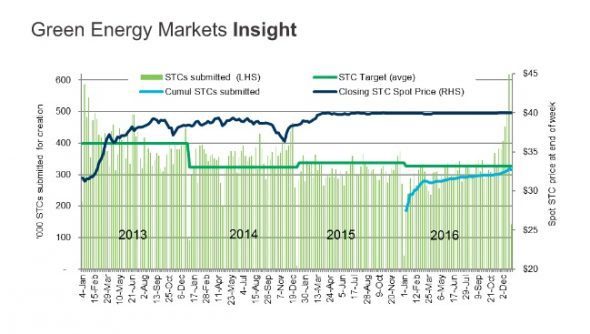
"The small-scale solar PV market recovered late in 2016 to post a 1.3% increase on 2015 installed capacity. Solar PV systems equivalent to 723MW were submitted for creation during 2016, compared to 714 MW in 2015."


About those numbers?


Title: Re: Decentralisation/decarbonisation of the grid
Post by Jovial Monk on May 2nd, 2017 at 12:47pm
Deserts are generally remote. Gee, I didn’t know that.  ::) ::) ::)

I have stated before that I don’t think solar baseload is practical. Solar is good for remote communities, cheaper than diesel, good for rooftop solar on homes, offices etc.

Tidal (yet to be really developed) and geothermal (SA possible) and wind are the most promising baseload renewable energy sources with hydro—better to set up another Snowy Mts Scheme in Qld than try largescale solar.

An ultra high voltage DC grid can connect the various major renewable sites together so there is always renewable power being generated somewhere.

And nuclear for heavy loads for industry.

But we do need to decarbonise the economy.

Title: Re: Decentralisation/decarbonisation of the grid
Post by lee on May 2nd, 2017 at 1:37pm

Jovial Monk wrote on May 2nd, 2017 at 12:47pm:
Deserts are generally remote. Gee, I didn’t know that.


I suspected that.

And you didn't say how and when cleaning dust off them would occur and at what cost.


Jovial Monk wrote on May 2nd, 2017 at 12:47pm:
better to set up another Snowy Mts Scheme in Qld than try largescale solar.


Got a site in mind that the Greenies won't object to?


Jovial Monk wrote on May 2nd, 2017 at 12:47pm:
and wind are the most promising baseload renewable energy sources


Intermittent wind as baseload? ;D ;D ;D

Title: Re: Decentralisation/decarbonisation of the grid
Post by Jovial Monk on May 2nd, 2017 at 1:45pm
If you are ignorant of the significance of the DC grid I suggest you educate yourself.

Title: Re: Decentralisation/decarbonisation of the grid
Post by lee on May 2nd, 2017 at 2:13pm

Jovial Monk wrote on May 2nd, 2017 at 1:45pm:
If you are ignorant of the significance of the DC grid I suggest you educate yourself.


I didn't even address DC grid. ;D ;D ;D

There will be less losses on the grid due to capacitance and inductance. The resistance will stay the same.

Other losses will occur converting AC to DC and finally DC to AC. Wind Generators are typically 3 phase AC output and 690 Volt. So typically you would need to use a transformer (losses) to bring up to the voltage of the grid and then convert.

Title: Re: Decentralisation/decarbonisation of the grid
Post by Jovial Monk on May 2nd, 2017 at 2:19pm
So you are ignorant. Noted.

Title: Re: Decentralisation/decarbonisation of the grid
Post by lee on May 2nd, 2017 at 2:29pm

Jovial Monk wrote on May 2nd, 2017 at 2:19pm:
So you are ignorant. Noted.


Nope. I am an electronics bloke who when he did his apprenticeship was required to do AC and DC theory. ;)

Title: Re: Decentralisation/decarbonisation of the grid
Post by Jovial Monk on May 2nd, 2017 at 2:31pm
Nope, ignorant. Can educate yourself tho.

Title: Re: Decentralisation/decarbonisation of the grid
Post by lee on May 2nd, 2017 at 2:32pm

Jovial Monk wrote on May 2nd, 2017 at 2:31pm:
Nope, ignorant. Can educate yourself tho.


Which is more than we can say for you.

Title: Re: Decentralisation/decarbonisation of the grid
Post by Jovial Monk on May 2nd, 2017 at 2:33pm
You are really reluctant to read and learn. Strange.

Title: Re: Decentralisation/decarbonisation of the grid
Post by Jovial Monk on May 2nd, 2017 at 11:32pm
http://www.theaustralian.com.au/business/technology/online-rage-erupts-over-goslow-nbn/news-story/cef7548b1d1251128415e01221241794

Read all about how great and glorious the MTM crap is!

Title: Re: Decentralisation/decarbonisation of the grid
Post by lee on May 3rd, 2017 at 11:29am

Jovial Monk wrote on May 2nd, 2017 at 11:32pm:
http://www.theaustralian.com.au/business/technology/online-rage-erupts-over-goslow-nbn/news-story/cef7548b1d1251128415e01221241794

Read all about how great and glorious the MTM crap is!


Thank you for offering a subscription to the Australian. however I must decline. ;)

Title: Re: Decentralisation/decarbonisation of the grid
Post by Jovial Monk on May 3rd, 2017 at 1:39pm
Most of us know a way around the firewall.

Title: Re: Decentralisation/decarbonisation of the grid
Post by lee on May 3rd, 2017 at 2:37pm

Jovial Monk wrote on May 3rd, 2017 at 1:39pm:
Most of us know a way around the firewall.


Who cares? You started off by saying you needed FTTH for smart meters - wrong.

Then you said you need FTTH for Netflix.

Now you seem just to be complaining about perceived slowness.

Nothing to do with decarbonisation of the grid. ;)

Title: Re: Decentralisation/decarbonisation of the grid
Post by Jovial Monk on May 3rd, 2017 at 2:47pm
Nope. I said FTTH would allow much better monitoring and management of electricity networks and it would.

You dragged up crappy, slow and unreliable FTTN. I mentioned it drops out frequently and because of Netflix (and all the congestion built into FTTN) and just wasn’t suitable.

You bullshitted that FTTN was good blah blah.

Nah.

FTTH will really allow the potential of the smart meters to be fulfilled.


Title: Re: Decentralisation/decarbonisation of the grid
Post by lee on May 3rd, 2017 at 3:09pm

Jovial Monk wrote on May 3rd, 2017 at 2:47pm:
Nope. I said FTTH would allow much better monitoring and management of electricity networks and it would.


You haven't made any argument to support that.


Jovial Monk wrote on May 3rd, 2017 at 2:47pm:
You dragged up crappy, slow and unreliable FTTN.


Nope. I just said you didn't need FTTH.


lee wrote on Apr 29th, 2017 at 11:32am:
Really? Now does a minuscule speed upgrade, less than 2 seconds, improve grid monitoring?


Jovial Monk wrote on May 3rd, 2017 at 2:47pm:
You bullshitted that FTTN was good blah blah.


Nope. I never even mentioned FTTN.

So when you stop lying about what was said; maybe you can make your point and prove it.


Title: Re: Decentralisation/decarbonisation of the grid
Post by Jovial Monk on May 3rd, 2017 at 3:19pm
FTTH would allow the potential of smart meters to be realised.

Title: Re: Decentralisation/decarbonisation of the grid
Post by lee on May 3rd, 2017 at 3:38pm

Jovial Monk wrote on May 3rd, 2017 at 3:19pm:
FTTH would allow the potential of smart meters to be realised.


Why would you need FTTH?

"Really? Now does a minuscule speed upgrade, less than 2 seconds, improve grid monitoring?"

Going round in circles. You haven't justified a need.

Title: Re: Decentralisation/decarbonisation of the grid
Post by Jovial Monk on May 3rd, 2017 at 3:55pm
Can’t you ever stop and read and maybe learn?

There is a huge load on the ’net these days: Netflix, IoT, M2M and general stuff. So you need a network topology that can cope. That is FTTH.

FTTH, unlike FTTN, is also 100%, rock solid reliable.

Both factors mean FTTH is needed to manage power networks.

You said you were an electric/electronic guy. Can’t tell from the crap you post.

Title: Re: Decentralisation/decarbonisation of the grid
Post by lee on May 3rd, 2017 at 4:03pm

Jovial Monk wrote on May 3rd, 2017 at 3:55pm:
Can’t you ever stop and read and maybe learn?

There is a huge load on the ’net these days: Netflix, IoT, M2M and general stuff. So you need a network topology that can cope. That is FTTH.


So it is not the smart meters that require FTTH. It is Netflix etc.

Of course that ignores those in the bush who won't even get FTTN. I guess their smart meters will give up and cry. ;D ;D ;D ;D ;D

Title: Re: Decentralisation/decarbonisation of the grid
Post by Jovial Monk on May 3rd, 2017 at 4:05pm
Nah, the smart meters which are probably smarter than you.

Title: Re: Decentralisation/decarbonisation of the grid
Post by lee on May 3rd, 2017 at 4:06pm

Jovial Monk wrote on May 3rd, 2017 at 4:05pm:
Nah, the smart meters which are probably smarter than you.


Which would make them infinitely smarter than you. ;)

Title: Re: Decentralisation/decarbonisation of the grid
Post by Jovial Monk on May 3rd, 2017 at 4:14pm
We do need to decarbonise the economy.

Renewables linked by an ultra high voltage DC grid backed by nuclear would do it.

FTTH, which will inevitably have to be rolled out, will allow better management of electricity use, helping to decarbonise the grid.

With the southern half of the continent drying out and the north getting wetter it is inevitable that a Snow Mts type scheme be implemented on a Qld river. This will provide hydro and irrigation water for the south (and the GAB!)

Title: Re: Decentralisation/decarbonisation of the grid
Post by lee on May 3rd, 2017 at 4:43pm

Jovial Monk wrote on May 3rd, 2017 at 4:14pm:
FTTH, which will inevitably have to be rolled out, will allow better management of electricity use, helping to decarbonise the grid.


On the one hand you say that FTTH is needed to utlise the smart meters.

On the other you say it is Netflix etc which necessitates the FTTH.

As I have pointed out you don't need FTTH for the smart meters; it would be nice, but it is not necessary.

One of the jobs I subcontracted to was putting modems on the Coke machines, so that they could restock as necessary, not just a fixed day of the week. The machines monitored sales so they could tell what stock was necessary. And that was back in the dial-up days.


Jovial Monk wrote on May 3rd, 2017 at 4:14pm:
FTTH, which will inevitably have to be rolled out,


FTTH will never roll out to the bush. FTTN will never roll out to the bush. Not enough customers.


Jovial Monk wrote on May 3rd, 2017 at 4:14pm:
will allow better management of electricity use, helping to decarbonise the grid.


That is pie in the sky stuff. The better management happens now without FTTH. There is no way it will help decarbonise the grid.

Title: Re: Decentralisation/decarbonisation of the grid
Post by Jovial Monk on May 3rd, 2017 at 4:48pm
No, FTTH is needed. It is rock solid reliable. It also can carry the bandwidth needed in these days.

Title: Re: Decentralisation/decarbonisation of the grid
Post by Jovial Monk on May 8th, 2017 at 5:17pm
Renewables are surging ahead:


Quote:
The world added record levels of renewable energy capacity in 2016 while spending less on clean energy development, according to a new report by the United Nations Environment Program and Bloomberg New Energy Finance.

Global renewable energy capacity, not including large-scale hydropower, increased by 9 percent in 2016 as spending on clean energy sources such as wind and solar decreased by 23 percent from the year before, according to the report published on Thursday.

"Ever-cheaper clean tech provides a real opportunity for investors to get more for less," Erik Solheim, executive director of the UN program said in a statement. "This is exactly the kind of situation, where the needs of profit and people meet, that will drive the shift to a better world for all."

New capacity from renewable energy sources made up 55 percent of all new power sources worldwide as the investment in renewable energy capacity was roughly double that of new fossil fuel power generation capacity. (However, because renewable plants typically run more intermittently, the comparisons are not exact.)

"It's a whole new world," said Michael Liebreich, Bloomberg New Energy Finance advisory board chairman. "Instead of having to subsidize renewables, now authorities may have to subsidize natural gas plants to help them provide grid reliability."


https://insideclimatenews.org/news/06042017/renewable-energy-costs-solar-wind-climate-change-emissions-goals


Title: Re: Decentralisation/decarbonisation of the grid
Post by lee on May 8th, 2017 at 5:27pm
Good. They can cut the subsidies for renewables. They should now be able to run on their own.

Is that actual output or rated capacity?


Jovial Monk wrote on May 8th, 2017 at 5:17pm:
Global renewable energy capacity


Oh, capacity, ;D ;D ;D ;D

Title: Re: Decentralisation/decarbonisation of the grid
Post by Jovial Monk on May 11th, 2017 at 8:40pm
Lots of complaints to the Ombudsman about unreliability of FTTN.

Need rock solid FTTH to help manage/optimise generation and consumption of electricity.

Title: Re: Decentralisation/decarbonisation of the grid
Post by lee on May 11th, 2017 at 8:49pm

Jovial Monk wrote on May 11th, 2017 at 8:40pm:
Lots of complaints to the Ombudsman about unreliability of FTTN.

Need rock solid FTTH to help manage/optimise generation and consumption of electricity.


Yep. Smart meters demand it. Except in the bush in the bush apparently. ;D ;D ;D ;D ;D ;D

Title: Re: Decentralisation/decarbonisation of the grid
Post by Jovial Monk on May 11th, 2017 at 10:03pm
https://youtu.be/mPqktW6wE7Q

Title: Re: Decentralisation/decarbonisation of the grid
Post by lee on May 12th, 2017 at 11:44am
"Scotland’s wind turbines have generated more electricity than the country used for a record four days in a row."

http://www.independent.co.uk/environment/scotland-wind-turbines-more-electricity-country-needs-four-days-renewable-energy-power-national-grid-a7517066.html

Woohoo. Only another 361 days to get all the power from the wind generators. And then a bit for emergencies. ;)

Title: Re: Decentralisation/decarbonisation of the grid
Post by Jovial Monk on May 14th, 2017 at 10:06am

Quote:
Utility-scale solar power, while still accounting for just a fraction of power in the U.S., has grown exponentially in the past seven years, according to an analysis from the U.S. Energy Information Administration.

While the first utility-scale solar farms were installed in the 1980s, more than half of the country’s solar current capacity came online in the past two years.


http://fuelfix.com/blog/2017/05/08/utility-scale-solar-has-grown-exponentially-since-2010/

Title: Re: Decentralisation/decarbonisation of the grid
Post by Jovial Monk on May 14th, 2017 at 10:11am

Quote:
Dutch officials have opened what is being billed as one of the world’s largest offshore wind farms, with 150 turbines spinning far out in the North Sea.

Over the next 15 years the Gemini windpark, which lies some 85km (53 miles) off the northern coast of the Netherlands, will meet the energy needs of about 1.5 million people.

At full tilt the windpark has a generating capacity of 600 megawatts and will help supply 785,000 Dutch households with renewable energy, according to the company.

“We are now officially in the operational stage,” the company’s managing director Matthias Haag said, celebrating the completion of a project first conceived in 2010.

The €2.8bn ($3bn) project is a collaboration between the Canadian independent renewable energy company Northland Power, wind turbine manufacturer Siemens Wind Power, Dutch maritime contractor Van Oord and waste processing company HVC.

It was “quite a complex” undertaking, Haag said, “particularly as this windpark lies relatively far offshore ... so it took quite a lot of logistics”


https://www.theguardian.com/environment/2017/may/09/full-tilt-giant-offshore-wind-farm-opens-in-north-sea

But here we have “hydro II” yay

Title: Re: Decentralisation/decarbonisation of the grid
Post by Jovial Monk on May 14th, 2017 at 10:26am

Quote:
Q&A: How rural co-ops can help lead the smart grid transition

Rural electric cooperatives spread across the U.S. in the 1930s to electrify parts of the country where as many as nine out of ten rural homes lacked electricity. Today, many of those co-ops are building on that legacy by deploying an advanced, 21st-century version of the electricity distribution systems they brought to farms decades ago.

In some cases, rural America is seeing the smart grid arrive at their doorstep well before their urban and suburban counterparts.

Phil Carson, director of the Tri-County Electric Co-op in Illinois, is the new president of the National Rural Electric Cooperative Association.

As the newly elected, two-year-term president of the National Rural Electric Cooperative Association (NRECA), Phil Carson has a bird’s-eye view of grid modernization efforts underway in rural America. Carson also sits on the board of directors at Tri-County Electric Cooperative in Mt. Vernon, Illinois, giving him an up-close-and-personal look at the challenges and opportunities facing rural power providers in the age of the smart grid.


Quote:
Midwest Energy News: What role should rural cooperatives play in the emerging 21st-century smart grid? 


Carson: I think we have a unique opportunity to play a key role in this. Our co-op business model is not-for-profit, member owned, member-controlled [and] service-oriented. It’s a unique business model and it makes us really flexible and responsive to member needs and wishes. . . .

For instance, here in Illinois, we have 25 cooperatives and it’s my understanding that 24 of them have already deployed their AMI systems, and I think the other co-op is the only one outside that is probably ready to take the plunge as well. So I think that’s one example of where we’ve made really good progress in adapting to grid modernization.

The other area that falls under this category would be the way that we have gotten into renewable energy. What we’ve done there is really adapted and adopted new technologies. Co-ops for instance lead the way on community solar: 75 percent of community solar is owned by electric co-ops across the United States.


I love this bit. Rural areas here were redhot for FTTH, offering to copay, until the Coalition got into govt and the Nats sold out their supporters by letting the Libs kill the NBN:


Quote:
And finally, the third leg of the stool that we would ask for in an infrastructure bill would be broadband – prioritize that out in rural areas. Eighty years ago when FDR stepped to the plate and said we’ve got to get electricity into rural America, he used [the Rural Electrification Act (REA)] and set up the programs that allow us to do that. Co-ops took that and ran with it.

Even so today, we need broadband in much of a similar way. It’s kind of sporadic out in rural America and we need it for economic diversity, and we need it for in terms of education, we need it in terms of healthcare, advanced healthcare. I think we would, if we were given the program that would allow us economically to have the footing to be able to do that, we’d do it. And we’d do it the way we [deployed] electricity [in that] we made sure that folks had it and the money was wisely used. We think that’s really vital going forward for rural America.


http://midwestenergynews.com/2017/05/02/qa-how-rural-co-ops-can-help-lead-the-smart-grid-transition/

Title: Re: Decentralisation/decarbonisation of the grid
Post by lee on May 14th, 2017 at 11:12am

Jovial Monk wrote on May 14th, 2017 at 10:06am:

Quote:
Utility-scale solar power, while still accounting for just a fraction of power in the U.S., has grown exponentially in the past seven years, according to an analysis from the U.S. Energy Information Administration.

While the first utility-scale solar farms were installed in the 1980s, more than half of the country’s solar current capacity came online in the past two years.


http://fuelfix.com/blog/2017/05/08/utility-scale-solar-has-grown-exponentially-since-2010/


Yep Huge fraction.

" Utility-scale solar (plants with a capacity of at least one megawatt) now makes up about 2% of all utility-scale electric generating capacity and 0.9% of utility-scale generation"

https://www.eia.gov/todayinenergy/detail.php?id=31072
Of course that's peak generation.

Title: Re: Decentralisation/decarbonisation of the grid
Post by lee on May 14th, 2017 at 11:14am

Jovial Monk wrote on May 14th, 2017 at 10:11am:
At full tilt the windpark has a generating capacity of 600 megawatts and will help supply 785,000 Dutch households with renewable energy, according to the company.


Peak capacity. How many will it supply intermittently?

Title: Re: Decentralisation/decarbonisation of the grid
Post by lee on May 14th, 2017 at 11:18am

Jovial Monk wrote on May 14th, 2017 at 10:26am:
Quote:
And finally, the third leg of the stool that we would ask for in an infrastructure bill would be broadband – prioritize that out in rural areas. Eighty years ago when FDR stepped to the plate and said we’ve got to get electricity into rural America, he used [the Rural Electrification Act (REA)] and set up the programs that allow us to do that. Co-ops took that and ran with it.

Even so today, we need broadband in much of a similar way. It’s kind of sporadic out in rural America and we need it for economic diversity, and we need it for in terms of education, we need it in terms of healthcare, advanced healthcare. I think we would, if we were given the program that would allow us economically to have the footing to be able to do that, we’d do it. And we’d do it the way we [deployed] electricity [in that] we made sure that folks had it and the money was wisely used. We think that’s really vital going forward for rural America.


So even in the USA, where they have greater population density than here, they still don't have broadband, let alone FTTN, FTTH. ;)

Title: Re: Decentralisation/decarbonisation of the grid
Post by Jovial Monk on May 16th, 2017 at 9:51am
Solar plus battery installations soar in WA south coast:

https://www.theguardian.com/sustainable-business/2017/may/15/blackout-parties-how-solar-and-storage-made-wa-farmers-the-most-popular-in-town

Title: Re: Decentralisation/decarbonisation of the grid
Post by lee on May 16th, 2017 at 11:22am

Jovial Monk wrote on May 16th, 2017 at 9:51am:
Solar plus battery installations soar in WA south coast:

https://www.theguardian.com/sustainable-business/2017/may/15/blackout-parties-how-solar-and-storage-made-wa-farmers-the-most-popular-in-town


Individual properties. So really microscale solar. Good for them.

And an ad for biofuels, Burn them and get more CO2. ;)

Title: Re: Decentralisation/decarbonisation of the grid
Post by Jovial Monk on May 16th, 2017 at 12:13pm

Quote:
Tesla’s Solar Roof Sets Musk’s Grand Unification Into Motion
“What is the future that we should have? What do we think the world should look like?”
by Tom Randall
May 11, 2017, 3:07 PM GMT+9:30

Tesla's Solar Roof Is Cheaper Than Expected
Tesla has begun taking orders for its transformative new solar roof. The pricing is competitive, and it marks the final piece in Elon Musk’s vision for a grand unification of his clean-energy ambitions—combining solar power, home batteries, and electric cars.

“These are really the three legs of the stool for a sustainable energy future,” Musk said. “Solar power going to a stationary battery pack so you have power at night, and then charging an electric vehicle … you can scale that to all the world’s demand.”

Tesla opened up its online store and began taking $1,000 deposits for two of four options unveiled in October: a smooth black glass and textured-glass roof tiles. From most viewing angles, the slick shingles look like standard roof materials, but they allow light to pass through from above onto a solar cell embedded beneath the tempered surface. The first installations will begin in the U.S. in June, though orders are being accepted from countries around the world for 2018.


These things produce electricity. Source Tesla


Quote:
The cost of Tesla’s solar roof is critical for determining whether it will be a niche product for the wealthy or the key to unlocking a residential solar market that has been slowing in the U.S. The pricing unveiled Wednesday was less than many analysts were expecting, including at Bloomberg New Energy Finance and Consumer Reports. When taking into account the energy savings and lifetime cost of ownership (Tesla guarantees it will outlast your home) it’s an affordable option in many areas of the country.

“The pricing is better than I expected, better than everyone expected,” said Hugh Bromley, a solar analyst at Bloomberg New Energy Finance who had been skeptical about the potential market impact of the new product. Tesla’s all-in cost for active solar tiles is about $42 per square foot, “significantly below” BNEF’s prior estimate of $68 per square foot, Bromley said. Inactive tiles will cost $11 per square foot, and Tesla says to expect an overall average of roughly $22 per square foot.


https://www.bloomberg.com/news/articles/2017-05-11/tesla-s-solar-roof-sets-musk-s-grand-unification-into-motion

Makes sense: why pay for a roof then pay to have solar cell panels placed on top of the roof? As volume rises prices should come down, competitors rise up etc. Neat.

Title: Re: Decentralisation/decarbonisation of the grid
Post by lee on May 16th, 2017 at 2:13pm
The houses can't be lo
Jovial Monk wrote on May 16th, 2017 at 12:13pm:
When taking into account the energy savings and lifetime cost of ownership (Tesla guarantees it will outlast your home) it’s an affordable option in many areas of the country.


Will the tiles outlast your home or will the solar still be working? They are two different things.

For another view of the product

http://www.zerohedge.com/news/2017-05-11/why-teslas-solar-roof-just-another-giant-taxpayer-gift-elon-musk

Title: Re: Decentralisation/decarbonisation of the grid
Post by Jovial Monk on May 19th, 2017 at 7:56am
FT article on the growth of renewable energy:
https://www.ft.com/content/44ed7e90-3960-11e7-ac89-b01cc67cfeec

Title: Re: Decentralisation/decarbonisation of the grid
Post by Jovial Monk on May 19th, 2017 at 12:00pm
Oh dear. Reality dawning even in the Nats!

An emissions intensity scheme could become official policy of the NSW Nationals on Friday, a move that would represent a split from the federal leadership and a challenge to the Turnbull government’s climate change agenda. Surely not!

http://www.smh.com.au/federal-politics/political-news/generational-evolution-forces-nationals-to-consider-adopting-emissions-intensity-scheme-20170518-gw7wdr.html


Quote:
An emissions intensity scheme could become official policy of the NSW Nationals on Friday, a move that would represent a split from the federal leadership and a challenge to the Turnbull government's climate change agenda.

After the state's Young Nationals backed the contentious proposal in April, the motion will be on the agenda at the party's annual conference, a two-day gathering that will draw hundreds of rank-and-file supporters, as well as Deputy Prime Minister Barnaby Joyce.

<snip>

The policy battles highlight the generational evolution taking place within the party, which is deeply conservative at a parliamentary level but more socially and environmentally progressive among younger members.

Jess Price-Purnell, chair of the NSW Young Nationals, said rural and regional Australians could see climate change happening and younger residents were generally more open-minded.

"I've got a child and am pregnant with a second and I'd quite like them to be able to breathe the air and drink the water when they grow up," Ms Price-Purnell said.


Yup, rural people are being let down by the hacks who supposedly represent them in Canberr. As well as seeing AGW and associated climate change hitting their property people in rural areas know the value of the original FTTH NBN rollout.

Hopefully the likes of Joyce can’t have the motion defeated tho Joyce would certainly ignore it. He is more the member for Gina than the member for New England.

Title: Re: Decentralisation/decarbonisation of the grid
Post by lee on May 19th, 2017 at 7:19pm

Jovial Monk wrote on May 19th, 2017 at 12:00pm:
property people in rural areas know the value of the original FTTH NBN rollout.


Yep. They won't be getting it. Not cost effective.

Now if they had a National Royalties for Regions type scheme it might get some funding, but only to the towns.


Jovial Monk wrote on May 19th, 2017 at 12:00pm:
"I've got a child and am pregnant with a second and I'd quite like them to be able to breathe the air and drink the water when they grow up," Ms Price-Purnell said.


She must live in the city.  Why wouldn't you be able to breathe the air in the country? Why does she not have a water tank?

Bizarre.

Title: Re: Decentralisation/decarbonisation of the grid
Post by Jovial Monk on May 27th, 2017 at 10:19am
Rural councils were negotiating with NBN Co for copayment to bring FTTH to towns otherwise slated for FW. A sensible move that the Libs killed such is their obsession to not roll out anymore fibre than they absolutely have to.

Nothing about cost–effectiveness as we see from the escalating costs of the stupid MTM.

Now from Europe comes news of a way to burn natural gas for power generation that does not emit CO2:

https://www.sciencedaily.com/releases/2017/05/170524084648.htm

Title: Re: Decentralisation/decarbonisation of the grid
Post by lee on May 27th, 2017 at 12:18pm
So in reality CO2 is emitted, it is merely captured and stored. So that if a problem occurs in the capture and storage leading to a leak it will still be emitted to the atmosphere.

"CO2 can be isolated during combustion without having to use any additional energy, which means it can then go on to be stored. This prevents it from being released into the atmosphere. "

Title: Re: Decentralisation/decarbonisation of the grid
Post by lee on May 27th, 2017 at 12:20pm

Jovial Monk wrote on May 27th, 2017 at 10:19am:
Rural councils were negotiating with NBN Co for copayment to bring FTTH to towns otherwise slated for FW. A sensible move that the Libs killed such is their obsession to not roll out anymore fibre than they absolutely have to.

Nothing about cost–effectiveness


Yes. Cost effectiveness. Was there a study done of this proposed FTTH in rural areas?

Title: Re: Decentralisation/decarbonisation of the grid
Post by miketrees on May 27th, 2017 at 12:57pm


I wonder if our legislators may have to mandate that homes with solar and are connected to the grid must have a certain amount of storage onsite?

Lee , I think solar is going to win in the end, they are bumbling along but they will get there.

Title: Re: Decentralisation/decarbonisation of the grid
Post by Jovial Monk on May 27th, 2017 at 1:26pm
The councils were proposing to pay what it took to make it economic for NBN Co to roll out fibre in the towns. The Nats let the Libs destroy the NBN, they routinely now betray their supporters like this.

Title: Re: Decentralisation/decarbonisation of the grid
Post by Jovial Monk on May 27th, 2017 at 1:31pm

miketrees wrote on May 27th, 2017 at 12:57pm:
I wonder if our legislators may have to mandate that homes with solar and are connected to the grid must have a certain amount of storage onsite?

Lee , I think solar is going to win in the end, they are bumbling along but they will get there.


Small scale, decentralised solar, I think with wind for the big installations. I would like to see nuclear here as part of the mix. We also need to nationalise the electricity grid.

Title: Re: Decentralisation/decarbonisation of the grid
Post by miketrees on May 27th, 2017 at 1:44pm


nationalise the electricity grid.


No, then governments can stuff it up.

Just let them legislate and thats all.

Title: Re: Decentralisation/decarbonisation of the grid
Post by Jovial Monk on May 27th, 2017 at 2:06pm
No way, Mike! The stuffing up happens under private ownership: prices rise and costs, corners are cut until a bit of wind topples transmission towers.

Title: Re: Decentralisation/decarbonisation of the grid
Post by Jovial Monk on May 27th, 2017 at 2:31pm

lee wrote on May 27th, 2017 at 12:20pm:

Jovial Monk wrote on May 27th, 2017 at 10:19am:
Rural councils were negotiating with NBN Co for copayment to bring FTTH to towns otherwise slated for FW. A sensible move that the Libs killed such is their obsession to not roll out anymore fibre than they absolutely have to.

Nothing about cost–effectiveness


Yes. Cost effectiveness. Was there a study done of this proposed FTTH in rural areas?


You have to laugh at poopypants Lees. Worried about the cost effectiveness of some rollouts that didn’t end up happening. Meantime, the Libs are spending $60Bn on a heap of junk that will need to be ripped up and replaced by FTTH ASAP.

;D ;D ;D ;D ;D ;D ;D ;D ;D

Title: Re: Decentralisation/decarbonisation of the grid
Post by miketrees on May 27th, 2017 at 3:19pm


JV governments have been stuffing around in fear of raising prices, which has sent the wrong message to consumers and they have failed to invest because they are short of money.

We are better paying more and getting a privatized service.

Governments can still regulate penalties for non supply or faulty infrastructure.

We have to start paying real prices.

Title: Re: Decentralisation/decarbonisation of the grid
Post by Jovial Monk on May 27th, 2017 at 3:29pm
Mike, I am in SA. One of the fricking towers that collapsed had about as much cement around the foot that got ripped out the ground as you and I would put around a fricking fence post!

Nope, power is one of those natural monopolies that should NEVER be privatised!

Title: Re: Decentralisation/decarbonisation of the grid
Post by miketrees on May 27th, 2017 at 8:47pm


One of the fricking towers that collapsed had about as much cement around the foot that got ripped out the ground as you and I would put around a fricking fence post!


Contractors the world over will resort to cheating if left unsupervised,,, better oversight required

Title: Re: Decentralisation/decarbonisation of the grid
Post by Jovial Monk on May 28th, 2017 at 8:59am
Too many states did away with their Public Works Departments and boy are we paying the price for that!

But natural monopolies should never be privatised.

Australian Politics Forum » Powered by YaBB 2.5.2!
YaBB Forum Software © 2000-2026. All Rights Reserved.