Australian Politics Forum
http://www.ozpolitic.com/forum/YaBB.pl
Member Run Boards >> Environment >> Pesticides tied to decline in bee population
http://www.ozpolitic.com/forum/YaBB.pl?num=1333087240

Message started by PoliticalPuppet on Mar 30th, 2012 at 4:00pm

Title: Pesticides tied to decline in bee population
Post by PoliticalPuppet on Mar 30th, 2012 at 4:00pm
Neonicotinoid pesticides tied to decline in bee's

http://usnews.msnbc.msn.com/_news/2012/03/29/10921493-neonicotinoid-pesticides-tied-to-crashing-bee-populations-2-studies-find


Quote:
By Miguel Llanos, msnbc.com

A widely used farm pesticide first introduced in the 1990s has caused significant changes to bee colonies and removing it could be the key factor in restoring nature's army of pollinators, according to two studies released Thursday.

The scientists behind the studies in Europe called for regulators to consider banning the class of chemicals known as neonicotinoid insecticides. In the U.S., the Environmental Protection Agency told msnbc.com that the studies would be incorporated into a review that's currently under way.

A pesticide trade group questioned the data, saying the levels of pesticide used were unrealistically high, while the researchers said the levels used were typical of what bees would find on farms.


Something seems wrong here, there have been studies for decades linking pesticides to many dangerous problems and the media has never paid attention.
Without a doubt the decline in bee populations is one of the biggest problems the human race faces, but why do they listen now?
I am guess the big bio tech corporations don't need to use it anymore and have a new alternative, or that this certain type of pesticide is being used as a scapegoat to make it look like something is actually being done about the issue of dangerous pesticide in general.
There have been studies done linking many types of pesticides to bee population decline.


Quote:
AAS / Science

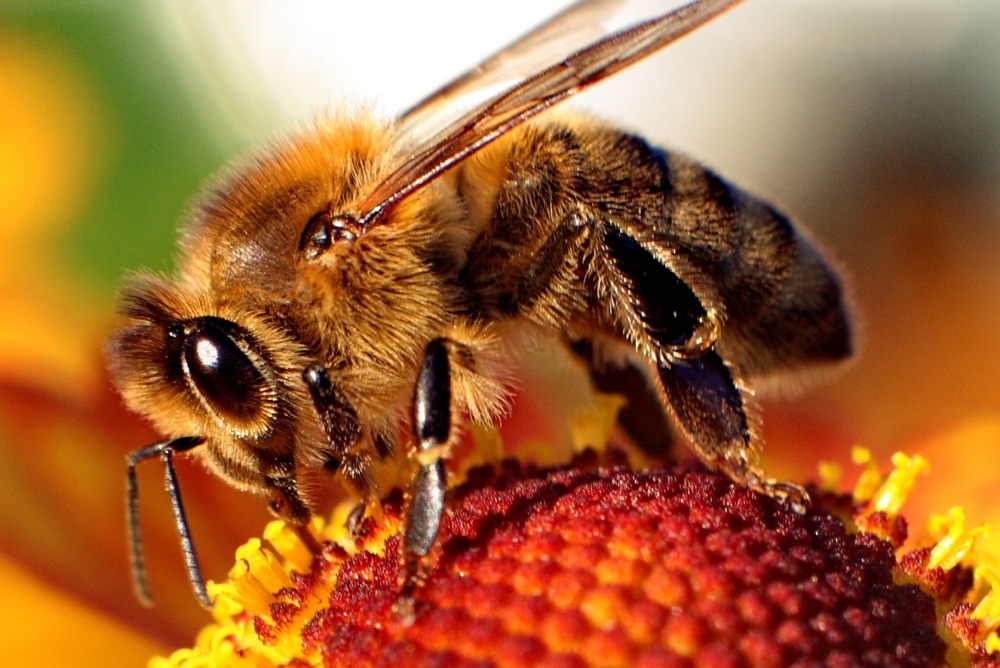
A bee with a transmitter glued to its back was one of the specimens in a study that used the radio technology to track what happened to bee colonies exposed to a widely used pesticide.


Problem is bee's are exposed to multible pesticides, chemicals and GMO crops.


Quote:
In the bumble bee study, researchers concluded that colonies treated with nonlethal levels of the pesticide "had a significantly reduced growth rate and suffered an 85% reduction in production of new queens" compared to colonies without the pesticide.


Related links:
http://bayer-kills-bees.com/
http://proliberty.com/observer/20090408.htm
http://www.rodaleinstitute.org/20120202_ge-honeybee
https://en.wikipedia.org/wiki/Colony_collapse_disorder


Mass honeybee deaths now occurring worldwide, says UN
http://www.naturalnews.com/031694_honeybees_decline.html

More Damning Evidence Points to Pesticide as Cause of Mass Bee Deaths
http://www.commondreams.org/headline/2012/01/30-9
[url]A new study published in Naturwissenschaften - The Science of Nature by a leading bee expert provides damning evidence that a widely used pesticide, even at low levels, is responsible for the recent catastrophic decline in honey bees. Dr. Jeff Pettis of the USDA's Bee Research Laboratory in Beltsville, MD led the study.[/url]

http://www.youtube.com/watch?v=gTiQTRWbeDw
http://www.youtube.com/watch?v=Cv6lCHRqsHw


Quote:
If the bee disappeared off the surface of the globe, then man would only have a fewr years of life left


Title: Re: Neonicotinoid pesticides tied to decline in bee's
Post by PoliticalPuppet on Mar 30th, 2012 at 4:04pm
Controversial Pesticide Linked to Bee Collapse

http://www.wired.com/wiredscience/2012/03/neonicotinoids-bee-collapse/


Quote:
A controversial type of pesticide linked to declining global bee populations appears to scramble bees’ sense of direction, making it hard for them to find home. Starved of foragers and the pollen they carry, colonies produce fewer queens, and eventually collapse.

The phenomenon is described in two new studies published March 29 in Science. While they don’t conclusively explain global bee declines, which almost certainly involve a combination of factors, they establish neonicotinoids as a prime suspect.

“It’s pretty damning,” said David Goulson, a bee biologist at Scotland’s University of Stirling. “It’s clear evidence that they’re likely to be having an effect on both honeybees and bumblebees.”

Neonicotinoids emerged in the mid-1990s as a relatively less-toxic alternative to human-damaging pesticides. They soon became wildly popular, and were the fastest-growing class of pesticides in modern history. Their effects on non-pest insects, however, were unknown.

In the mid-2000s, beekeepers in the United States and elsewhere started to report sharp and inexplicable declines in honeybee populations. Researchers called the phenomenon colony collapse disorder. It was also found in bumblebees, and in some regions now threatens to extirpate bees altogether.

Many possible causes were suggested, from viruses and mites to industrial beekeeping practices and climate change. Pesticides, in particular neonicotinoids, also came under scrutiny.

Leaked internal reports by the Environmental Protection Agency showed that industry-run studies used to demonstrate some neonicotinoids’ environmental safety were shoddy and unreliable. Other researchers found signs that neonicotinoids, while they didn’t kill bees outright, affected their ability to learn and navigate.

'Anything that makes bees even a little bit worse at navigating or learning could be a disaster.'
Those results came from laboratory situations, with no guarantee of real-world applicability, but they were troubling.

“Bees’ ability to navigate is very important. When they leave their nest, they fly miles to gather food. Anything that makes them even a little bit worse at navigating or learning could be a disaster in those circumstances,” said Goulson. “The research suggested effects on their learning ability, but it was all done in confined situations. What we and the French group did is something more natural.”

In the first study, led by biologist Mickaël Henry of INRA, a French agricultural research institute, free-roaming honeybees were tagged with RFID chips that allowed researchers to track their movements. When dosed with a neonicotinoid, bees were more than twice as likely as non-dosed controls to die outside their hives. They seemed to get lost.

When the researchers added their results to computer simulations of honeybee dynamics, the model populations crashed.

Penn State entomologist James Frazier, who was not involved in the study, called it “the best study to date” on neonicotinoids’ real-world effects on foraging.”

The result dovetailed with the findings of Goulson’s group, who exposed developing bumblebees to varying neonicotinoid levels and set them loose to forage in an enclosed field. Measured after six weeks of growth, pesticide-dosed colonies were stunted, weighing about 10 percent less and producing 85 percent fewer queens.

“Nests have annual cycles. They start with a single queen, and the nest grows through the season. If it doesn’t get big enough, it doesn’t have the resources to pour into rearing queens,” Goulson said. “The French study shows that exposure to neonicotinoids make honeybees less likely to find their nest. That’s likely the mechanism that led to our nests growing more slowly.”

However, biologist Jerry Bromenshenk of the University of Montana was critical of the results. Goulson’s results were interesting but the researchers weren’t careful enough in verifying the doses given to their bees, and Henry’s group administered an unrealistically high dose, said Bromenshenk.

The latter’s dosing “is not what I would consider to be a field-relevant, low dose,” wrote Bromenshenk in an email, citing another recent study that used RFIDs to track bees given what he considers a more realistic dose. “At truly field representative, sublethal doses — no effect,” Bromenshenk wrote.


[quote]A comparison of bee queen production in colonies treated (middle, right) and untreated (left) with a neonicotinoid pesticide. Image: Whitehorn et al./Science


Both Goulson and Mace Vaughn, pollinator program director at the Xerces Society, an invertebrate conservation group, said neonicotinoids won’t be the only cause of colony collapse disorder.

“If it was as simple as that, the answer would have been discovered a long time ago,” said Goulson. “I’m sure it’s a combination of things. I’m sure that disease is a part of it, and maybe the two interact.” He noted a study in which honeybees exposed to neonicotinoids were especially vulnerable to a common bee parasite. Another study found that neonicotinoids dramatically increase the toxicity of fungicides.

Vaughn raised the issue of industrial-scale beekeeping practices, which have also been linked to bee declines. “We’ve potentially created a situation where behavioral impacts, compounded with a lack of genetic diversity and the food they eat, results in something like colony collapse disorder,” he said.

“My only caution is that farmers use neonicotinoids for a reason,” said Goulson. “If they were banned, farmers would have to use something else. The question is, what would that be? Would it be better? Would it also have harmful effects?”

While it’s unlikely that neonicotinoids will be banned outright in the United States, where they’re now used on more than 100 million crop acres and an unknown area of home gardens and urban vegetation, Vaughn said they could be used differently.

“I would call for a ban on their use without a demonstrated pest threat. If you have corn rootworm, and need to address that, then use neonicotinoid-coated seeds,” he said. “But if it’s a vague threat that you haven’t identified, you shouldn’t be using them. Maybe it makes you a few bucks, and certainly makes the seed companies a lot of money, but it’s potentially killing bees across the country.”

Heather Pilatic of the Pesticide Action Network recommended a return to pest management strategies used widely through the 1990s, when the rise of pesticide-treated seeds and genetically modified crops allowed farmers to change their growing strategies.

“When you plant the same crop, year after year, you’re creating the conditions for a pest infestation,” Pilatic said. “In the mid-1990s, we were doing a really good job of pest management with corn in particular. With the introduction of treated seeds, and in particular of genetically engineered corn, it all unraveled. But we know how to do it. We were doing it 20 years ago.”

Penn State’s Frazier said that the Environmental Protection Agency, which recently received a 1.25 million-signature-strong petition to ban neonicotinoids, is slowly becoming better at risk assessment, though the agency is still heavily influenced by chemical companies and opaque in its workings.

The fundamental problem isn’t neonicotinoids, but our society’s relationship to chemicals, said Frazier. “We’re making ourselves the guinea pigs,” he said. “I don’t think that’s what a rational society should be doing.”

Image: Jack Wolf/Flickr

Citations: “Neonicotinoid Pesticide Reduces Bumble Bee Colony Growth and Queen Production.” By Penelope R. Whitehorn, Stephanie O’Connor, Felix L. Wackers, Dave Goulson. Science, Vol. 335 No. 6076, March 30, 2012.

“A Common Pesticide Decreases Foraging Success and Survival in Honey Bees.” By Mickaël Henry, Maxime Beguin, Fabrice Requier, Orianne Rollin, Jean‐François Odoux, Pierrick Aupinel, Jean Aptel, Sylvie Tchamitchian, Axel Decourtye. Science, Vol. 335 No. 6076, March 30, 2012.[/quote]

Title: Re: Pesticides tied to decline in bee population
Post by PoliticalPuppet on Mar 30th, 2012 at 6:08pm
Monsanto's GMO Corn Linked To Organ Failure, Study Reveals
http://www.huffingtonpost.com/2010/01/12/monsantos-gmo-corn-linked_n_420365.html

Quote:
In a study released by the International Journal of Biological Sciences, analyzing the effects of genetically modified foods on mammalian health, researchers found that agricultural giant Monsanto's GM corn is linked to organ damage in rats.

According to the study, which was summarized by Rady Ananda at Food Freedom, "Three varieties of Monsanto's GM corn - Mon 863, insecticide-producing Mon 810, and Roundup® herbicide-absorbing NK 603 - were approved for consumption by US, European and several other national food safety authorities."

Monsanto gathered its own crude statistical data after conducting a 90-day study, even though chronic problems can rarely be found after 90 days, and concluded that the corn was safe for consumption. The stamp of approval may have been premature, however.

In the conclusion of the IJBS study, researchers wrote:

    "Effects were mostly concentrated in kidney and liver function, the two major diet detoxification organs, but in detail differed with each GM type. In addition, some effects on heart, adrenal, spleen and blood cells were also frequently noted. As there normally exists sex differences in liver and kidney metabolism, the highly statistically significant disturbances in the function of these organs, seen between male and female rats, cannot be dismissed as biologically insignificant as has been proposed by others. We therefore conclude that our data strongly suggests that these GM maize varieties induce a state of hepatorenal toxicity....These substances have never before been an integral part of the human or animal diet and therefore their health consequences for those who consume them, especially over long time periods are currently unknown."


http://www.youtube.com/watch?v=BY8ZAX4Cfxw

Title: Re: Pesticides tied to decline in bee population
Post by muso on Mar 31st, 2012 at 10:50am

bobbythefap1 wrote on Mar 30th, 2012 at 6:08pm:
Monsanto's GMO Corn Linked To Organ Failure, Study Reveals
http://www.huffingtonpost.com/2010/01/12/monsantos-gmo-corn-linked_n_420365.html

Quote:
In a study released by the International Journal of Biological Sciences, analyzing the effects of genetically modified foods on mammalian health, researchers found that agricultural giant Monsanto's GM corn is linked to organ damage in rats.

According to the study, which was summarized by Rady Ananda at Food Freedom, "Three varieties of Monsanto's GM corn - Mon 863, insecticide-producing Mon 810, and Roundup® herbicide-absorbing NK 603 - were approved for consumption by US, European and several other national food safety authorities."

Monsanto gathered its own crude statistical data after conducting a 90-day study, even though chronic problems can rarely be found after 90 days, and concluded that the corn was safe for consumption. The stamp of approval may have been premature, however.

In the conclusion of the IJBS study, researchers wrote:

    "Effects were mostly concentrated in kidney and liver function, the two major diet detoxification organs, but in detail differed with each GM type. In addition, some effects on heart, adrenal, spleen and blood cells were also frequently noted. As there normally exists sex differences in liver and kidney metabolism, the highly statistically significant disturbances in the function of these organs, seen between male and female rats, cannot be dismissed as biologically insignificant as has been proposed by others. We therefore conclude that our data strongly suggests that these GM maize varieties induce a state of hepatorenal toxicity....These substances have never before been an integral part of the human or animal diet and therefore their health consequences for those who consume them, especially over long time periods are currently unknown."


One thing that Australia does well is careful vetting of GM crops. Apart from canola, there is no other GM food crop grown in Australia as far as I know, and Canola is made into oil, which has practically nil genetic content. 

By the way, the argument about bees and GM crops is only partly true. GM crops actually avoid the need for crop dusting and spraying because they produce their own pesticide.  Crop dusting and spraying (particularly aerial spraying) is a lot worse than that. Any argument that a GM crop producing pesticide or herbicide causes organ damage should be read in conjunction with the fact that the pesticides themselves do exactly the same, except that it's ten times worse. (Well, hello - this is not new news - pesticides kill), and the extent of the problem with pesticides in non GM crops is much greater.

Virtually all non-GM crops are sprayed with pesticide. Organic crops are in a tiny minority.

If you want to go 100% organic, you won't achieve anything like the same yields so we need to consider the effects on the human population worldwide.

Just a tip: Euthanasia is much kinder than death by starvation, but it's unlikely that you'd be able to manufacture enough bullets to keep up with demand..

Title: Re: Pesticides tied to decline in bee population
Post by PoliticalPuppet on Mar 31st, 2012 at 11:13am
Muso,

Quote:
One thing that Australia does well is careful vetting of GM crops. Apart from canola, there is no other GM food crop grown in Australia as far as I know, and Canola is made into oil, which has practically nil genetic content. 
Firstly you will find that products from the canola grown go into a huge percentage of our processed foods.
Likewise almost all processed foods on your supermarket shelve WILL contain some GMO products.


Quote:
By the way, the argument about bees and GM crops is only partly true. GM crops actually avoid the need for crop dusting and spraying because they produce their own pesticide.  Crop dusting and spraying (particularly aerial spraying) is a lot worse than that. Any argument that a GM crop producing pesticide or herbicide causes organ damage should be read in conjunction with the fact that the pesticides themselves do exactly the same, except that it's ten times worse. (Well, hello - this is not new news - pesticides kill), and the extent of the problem with pesticides in non GM crops is much greater.

This is only one part true because while some GMO's produce their own pesticide a huge majority are designed to resist pesticide so that you can spray it and kill weeds and not your crop. You will find that Monsanto the largest GM producer actually owns and produces the largest brands of pesticieds, so it would be horrible business for them to do what you are saying. A majority of there profit comes from the sale of round up.
The resisting of pesticide does not mean that the plant does not absorb the dangerous chemicals tho.


Quote:
If you want to go 100% organic, you won't achieve anything like the same yields so we need to consider the effects on the human population worldwide.

This is simply not true, and on a large timescale GMO will actually be more damaging to our food supply because it will ruin the gentic structure or natural stains which will make it impossible for people to grow their own food unless it is GMO, which is controlled by a huge monopoly. Essentially the world food supply will be controlled by one corporation which has already proven itself to be the definition of the word evil, and who clearly do not care about the wellbeing of people.


Quote:
Just a tip: Euthanasia is much kinder than death by starvation, but it's unlikely that you'd be able to manufacture enough bullets to keep up with demand..
GMO is not going to stop starvation.

Title: Re: Pesticides tied to decline in bee population
Post by muso on Mar 31st, 2012 at 1:42pm

bobbythefap1 wrote on Mar 31st, 2012 at 11:13am:
Muso,

Quote:
One thing that Australia does well is careful vetting of GM crops. Apart from canola, there is no other GM food crop grown in Australia as far as I know, and Canola is made into oil, which has practically nil genetic content. 
Firstly you will find that products from the canola grown go into a huge percentage of our processed foods.
Likewise almost all processed foods on your supermarket shelve WILL contain some GMO products.


You mean that they contain oil. That's the only product that comes from canola. As previously noted, these oils are just long chain fatty acids.  A wide range of plants produce oils. Oil doesn't contain genetic material.  There is an issue regarding Erucic acid, but I'll let you research that yourself. It's a problem with wild varieties as opposed to cultivars.


Quote:
This is only one part true because while some GMO's produce their own pesticide a huge majority are designed to resist pesticide so that you can spray it and kill weeds and not your crop. You will find that Monsanto the largest GM producer actually owns and produces the largest brands of pesticieds, so it would be horrible business for them to do what you are saying. A majority of there profit comes from the sale of round up.
The resisting of pesticide does not mean that the plant does not absorb the dangerous chemicals tho.

Strictly speaking, that only refers to herbicide resistance, and the only one I'm aware of is glyphosate (and glufosinate - the same applies). I don't know if you know the facts about glyphosate, but it's pretty innocuous stuff, and it breaks down so quickly that you can make a planting of any crop within a couple of weeks of application.  A lot of these arguments about Monsanto spring from the globalisation conspirators.  Pesticides are absorbed by plants regardless of whether they are sprayed or produced biologically, with the difference that the quantities are much greater when sprayed.  By the way most of the pesticides (that act against insects) are anti-cholinesterase type pesticides.  Their toxicity is acute. They are in the same family as nerve gases. The less we ingest the better, so the GM crop has advantages in that respect.

With regards brands, there are many brands that market the same basic ingredients. The brand is irrelevant. For example, you can buy glyphosate from a wide range of suppliers. It doesn't need to carry the brand name "Roundup". The same goes for pesticides.


Quote:
[quote]If you want to go 100% organic, you won't achieve anything like the same yields so we need to consider the effects on the human population worldwide.


This is simply not true, and on a large timescale GMO will actually be more damaging to our food supply because it will ruin the gentic structure or natural stains which will make it impossible for people to grow their own food unless it is GMO, which is controlled by a huge monopoly. Essentially the world food supply will be controlled by one corporation which has already proven itself to be the definition of the word evil, and who clearly do not care about the wellbeing of people. [/quote]

Well it has been used for something like 30 years, and the best that anybody has come up with is a study that states that pesticides are harmful. The  issues related to drift are minimal by the fact that these crops are sterile (including the pollen)

My point regarding starvation related to crops grown without pesticide. It comes down to three possibilities :

1. You grow organically worldwide  (not just in the Developed world where people can afford it) Result- Yields are diminished. The result is starvation. I can look up the yields for organic crops if you like. Extrapolate worldwide and the only possible result is catastrophe.

2. You grow conventional crops and spray with pesticides (and herbicides pre-emergence). The pesticide exposure is much greater. Greater exposure provides greater health risks. Pre-emergence herbicides reduce yields to non resistant crops.  (but nobody starves)

3. You grow GM pesticide producing crops and don't need to spray.  Result - Reduced exposure to pesticides. The effects of the pesticides are the only detrimental effects of any magnitude reported in GM crops to date in the 30 years they have been in use in the US. 3(b) You grow glyphosate resistant GM crops. No additional consequence.    (again, nobody starves)

So I've clarified the position, and I hope you can see that I was specifically not arguing that GM crops will reduce starvation.

Some of the anti-GM mentality comes from a hatred of corporations.

My own observation is that the economical effects of GM crops in poorer countries is probably the worst consequence of their use.

Title: Re: Pesticides tied to decline in bee population
Post by PoliticalPuppet on Mar 31st, 2012 at 3:33pm

Quote:
You mean that they contain oil. That's the only product that comes from canola. As previously noted, these oils are just long chain fatty acids.  A wide range of plants produce oils. Oil doesn't contain genetic material.  There is an issue regarding Erucic acid, but I'll let you research that yourself. It's a problem with wild varieties as opposed to cultivars.

Yes, I know what oils are.
There are many problems that come from the cultivation of GM canola.
GM has removed the genome which let the canola created erucic acid or something, but this has put at risk the stablilty of canola as a species.

Quote:
Strictly speaking, that only refers to herbicide resistance, and the only one I'm aware of is glyphosate (and glufosinate - the same applies). I don't know if you know the facts about glyphosate, but it's pretty innocuous stuff, and it breaks down so quickly that you can make a planting of any crop within a couple of weeks of application.  A lot of these arguments about Monsanto spring from the globalisation conspirators.  Pesticides are absorbed by plants regardless of whether they are sprayed or produced biologically, with the difference that the quantities are much greater when sprayed.  By the way most of the pesticides (that act against insects) are anti-cholinesterase type pesticides.  Their toxicity is acute. They are in the same family as nerve gases. The less we ingest the better, so the GM crop has advantages in that respect.

With regards brands, there are many brands that market the same basic ingredients. The brand is irrelevant. For example, you can buy glyphosate from a wide range of suppliers. It doesn't need to carry the brand name "Roundup". The same goes for pesticides.

GMO strands are designed to be resistant to a wide range of chemicals. While glyphosate is the main active ingredient in round up and similar pesticides they do have many other chemicals and substances which are dangerous to plants, the environment and people.
With just a quick search this is what I could find:

Quote:
Some Important Facts You Should Know
•      Glyphosate, the active ingredient in Roundup, is the third most commonly-reported cause of pesticide illness among agricultural workers in California.
•      Glyphosate is the most commonly reported cause of pesticide illness among landscape maintenance workers in California.
•      The surfactant ingredient in Roundup is more acutely toxic than glyphosate itself and the combination of the two is yet more toxic.
•      Glyphosate is suspected of causing genetic damage.
•      Glyphosate is acutely toxic to fish and birds and can kill beneficial insects and soil organisms that maintain ecological balance.
•      Laboratory studies have identified adverse effects of glyphosate-containing products in all standard categories of toxicological testing.
•      Glyphosate residues in soil can persist over a year.
•      Glyphosate residues has been found in strawberries, wild blueberries and raspberries, lettuce, carrots and barley.
•      Glyphosate has been measured 1,300 - 2,600 feet away from its application site.
•      This year Monsanto, manufacturer of Roundup, agreed with the New York Attorney General's office to discontinue their use of the terms "biodegradable" and "environmentally friendly" in ads promoting glyphosate-based products, including Roundup.

Effective and Safe Alternatives Exist!
For more information, contact the Ecology Center.
Sources:
Cox, Caroline. 1995. Glyphosate, Pt. 1: Toxicology
Journal of Pesticide Reform Vol.15, No.3:14 -20
Cox, Caroline. 1995. Glyphosate, Pt. 2: Human Exposure and Ecological Effects
Journal of Pesticide Reform Vol.15, No.4:14-19
Moses,Marion. 1995. Designer Poisons

Not nice stuff.
Breaking down doesn’t mean it becomes non dangerous, it just means it is passed into the soil and plants in this case.

Sorry but the arguments against Monsanto and GMO are based on hard scientific fact.
The fact they are a corporation is irrelevant, although it does add many more problems to the list of thousands non corporation related.
Problem is GMO and pesticides are found to be extremely dangerous even in much lower doses then are produced biologically by plants or sprayed in pesticide. These dangers range from organ damage to genetic mutation and permanent damage of DNA.

The brand is not irrelevant; Monsanto GMO crops and Round Up are the biggest thing on the market by a huge amount. Their GMO is specifically tailored for Round Up, giving them a huge monopoly.
I really don’t feel I should need to explain the dangers of letting one group have a monopoly over food and agriculture as a whole.

Quote:
Well it has been used for something like 30 years, and the best that anybody has come up with is a study that states that pesticides are harmful. The  issues related to drift are minimal by the fact that these crops are sterile (including the pollen)

Muso there are literally thousands of studies, thousands of scientists, and a million reasons while all this is bad.
The problems are in no way minimal and if you think they are you clearly haven’t read many studies or opinions on the issue.

Quote:
My point regarding starvation related to crops grown without pesticide. It comes down to three possibilities :

1. You grow organically worldwide  (not just in the Developed world where people can afford it) Result- Yields are diminished. The result is starvation. I can look up the yields for organic crops if you like. Extrapolate worldwide and the only possible result is catastrophe.

2. You grow conventional crops and spray with pesticides (and herbicides pre-emergence). The pesticide exposure is much greater. Greater exposure provides greater health risks. Pre-emergence herbicides reduce yields to non resistant crops.  (but nobody starves)

3. You grow GM pesticide producing crops and don't need to spray.  Result - Reduced exposure to pesticides. The effects of the pesticides are the only detrimental effects of any magnitude reported in GM crops to date in the 30 years they have been in use in the US. 3(b) You grow glyphosate resistant GM crops. No additional consequence.    (again, nobody starves)

So I've clarified the position, and I hope you can see that I was specifically not arguing that GM crops will reduce starvation.
It is perfectly viable to supply the world with food without GMO and I really think you are going to need to prove that we cant here.
GM crops may produce better yields for a short amount of time but before long they will have caused much more damage and starvation then what would happen without them.
There is no reduced exposure to pesticides with GM crops, I don’t know where you are getting that idea from.
There is consequence.

Quote:
Some of the anti-GM mentality comes from a hatred of corporations.

This is just ridiculous.
And even if it was true it still does not justify any of what you are saying.
Monsanto create hatred of corporations.
Why would you want one corporation having complete monopoly food anyway? Is that really what you want?

Quote:
My own observation is that the economical effects of GM crops in poorer countries is probably the worst consequence of their use.
Just another reason but not the worst.

You really need to look more into this.
Read and watch all you can.
You either don’t understand the ramifications or don’t know enough.

I think GM is a good technology and needs to be expanded and learnt.
BUT.
This does not mean that it should have been released, or something that should be allowed to be patented.
This is something which requires possibly centuries of investigation, research and testing before it goes to the production scale we see it at now.

Title: Re: Pesticides tied to decline in bee population
Post by PoliticalPuppet on Mar 31st, 2012 at 6:55pm
Breaking:

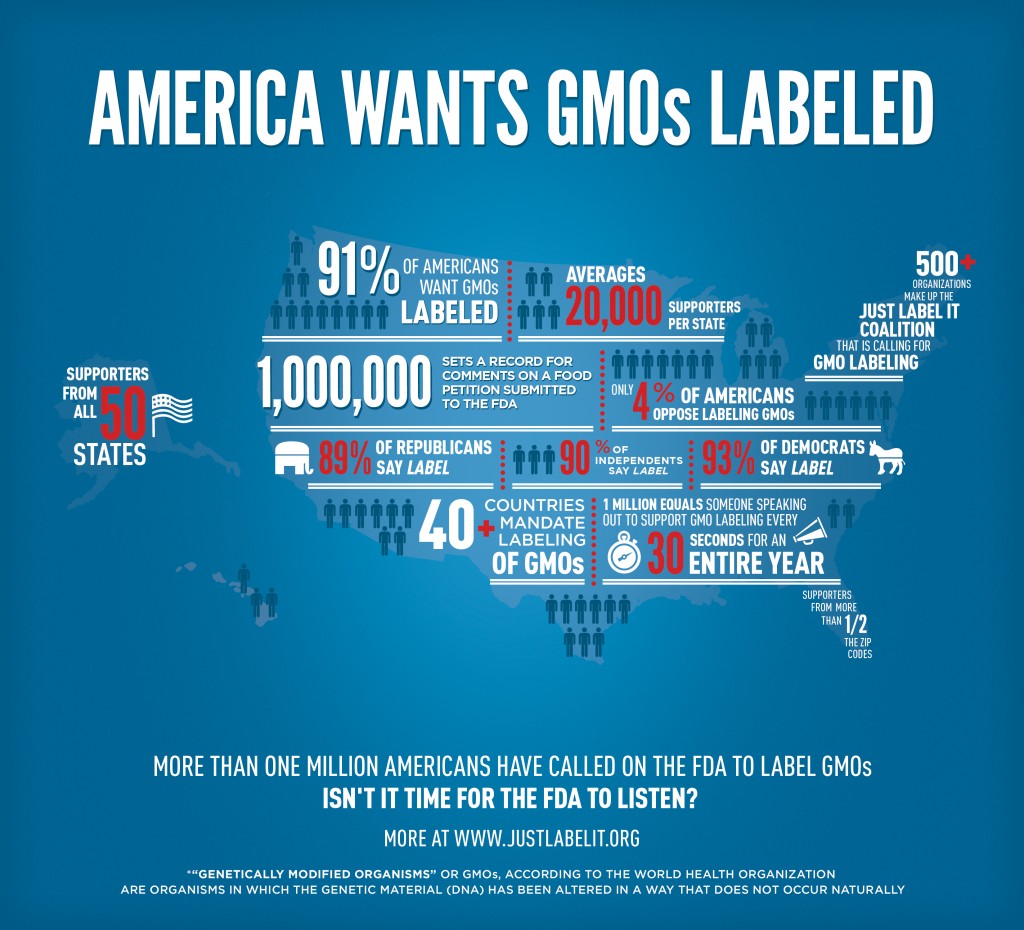
FDA Deletes 1 Million Signatures for GMO Labeling Campaign

http://naturalsociety.com/fda-deletes-1-million-signatures-for-gmo-labeling-campaign/#ixzz1qbopIlSj


Quote:
The ‘Just Label It” campaign has gotten more signatures than any campaign in history for the labeling of genetically modified foods. Since October of 2011, the campaign has received over 900,000 signatures, with 55 politicians joining in on the movement. So what’s the problem here?

Evidently, the FDA counts the amount of signatures not by how many people signed, but how many different individual letters are brought to it. To the FDA, even tens of thousands of signatures presented on a single petition are counted as – you guessed it – a single comment. This is how, despite over a million supporters being gathered by the petition, the FDA concluded a count of only 394.

    “This is an election year and there are more than a million people who say this is important to them. This is petition has nothing to do with whether or genetically modified foods are dangerous. We don’t label dangerous foods, we take them off the shelves. This petition is about a the citizens’ right to know what they are eating and whether or not these foods represent a novel change.” said Andrew Kimbrell an attorney for the Center for Food Safety, one of the partner groups on the Just Label It campaign.


Title: Re: Pesticides tied to decline in bee population
Post by PoliticalPuppet on Mar 31st, 2012 at 7:11pm
GM food toxins found in the blood of 93% of unborn babies

http://www.dailymail.co.uk/health/article-1388888/GM-food-toxins-blood-93-unborn-babies.html


Quote:
Toxins implanted into GM food crops to kill pests are reaching the bloodstreams of women and unborn babies, alarming research has revealed.

A landmark study found 93 per cent of blood samples taken from pregnant women and 80 per cent from umbilical cords tested positive for traces of the chemicals.

Millions of acres in North and South America are planted with GM corn containing the toxins, which is fed in vast quantities to farm livestock around the world – including Britain.

However, it is now clear the  toxins designed to kill crop pests are reaching humans and babies in the womb – apparently through food.

It is not known what, if any, harm this causes but there is speculation it could lead to allergies, miscarriage, abnormalities or even cancer.

To date the industry has always argued that if these toxins were eaten by animals or humans they would be destroyed in the gut and pass out of the body, thus causing no harm.

Food safety authorities in Britain and Europe have accepted these assurances on the basis that GM crops are effectively no different to those produced using conventional methods.


Read more at the link

Title: Re: Pesticides tied to decline in bee population
Post by muso on Apr 1st, 2012 at 12:14pm
You really need to be more discriminating about your sources. Glyphosate causes genetic damage? Good grief, It must be among the few non-radioactive substances on earth to do that.

Anyway, I was talking about Australia. Here, the only GM crop that's actually eaten is canola, and in that case it's just the oil.  The oil from GM canola is not significantly different from non-GM canola.

I don't have time to talk about the wetting agents right now, but basically they are only skin irritants when at high concentration.  There are plenty of similar substances that cause similar levels of irritation, including most disinfectants at high concentration.  There are as many hyped up reports about GM foods as there are about nuclear power. They are almost all blown out of proportion by advocates and activists. 

Title: Re: Pesticides tied to decline in bee population
Post by PoliticalPuppet on Apr 1st, 2012 at 2:06pm
Muso there is enough information and scientific study around to show there is a danger with glypohsate.
Certainly not something we should be risking on the whim of what the people selling it tell us.
Either way more testing is needed and it should not have been put on the market without it.
http://www.pesticideinfo.org/Detail_Chemical.jsp?Rec_Id=PC33138


Quote:
Anyway, I was talking about Australia. Here, the only GM crop that's actually eaten is canola, and in that case it's just the oil.  The oil from GM canola is not significantly different from non-GM canola.

The problem with canola is the effect it has on the environment and the natural species itself. Likewise it helps to mutate other plants such as weeds when cross pollinated etc..
Actually the oil is different in that it is genetically inhibited to not produce a certain chemical.

Please don’t tell me you believe the whole "substantially equivalent" crap.


Quote:
I don't have time to talk about the wetting agents right now, but basically they are only skin irritants when at high concentration.  There are plenty of similar substances that cause similar levels of irritation, including most disinfectants at high concentration.  There are as many hyped up reports about GM foods as there are about nuclear power. They are almost all blown out of proportion by advocates and activists.

According to what?
Yes these things are in other product but not ones we eat.
There are also thousands upon thousands of scientific studies that prove GM is no good.

All you have posted is opinion.
While I have posted a wealth of information that you clearly cannot overcome.
You have yet to respond to all of the serious information I have posted about.
Stating that it’s just anti corporate wack jobs, while clearly the majority of scientists not payed off disagree with you.
Not good enough Muso,
Let’s start hearing some facts and not just opinion.
Let’s see you try and respond to all of the studies I have posted on this thread.

You got nothing.

Title: Re: Pesticides tied to decline in bee population
Post by muso on Apr 1st, 2012 at 3:45pm
OK, it's based on 20 years experience in hazardous materials. My BS meter is going off right left and centre, especially when I read about oil being genetically inhibited and glyphosate adjuvants causing genetic harm.  These statements are to me clearly nonsensical.

In toxicological studies, we need to consider the route of exposure and the concentration among other things. The US EPA, who have the most stringent limitations anywhere (except that they are often ignored in the US) puts the toxicity of Glyphosate mixtures at something like 4000mg/kg. (very low)

Here is another example of nonsense: 
http://www.naturalnews.com/034504_glyphosate_groundwater_contamination.html

That site calls Glyphosate a GMO herbicide. That in itself is another nonsense statement. It has actually been used for something like 50 years, long before GMO's. 

You're talking about Glyphosate as if it has some inherent connection with GMO's. No GMO's produce Glyphosate. They are resistant to glyphosate, like many weed species.

There is a lot of hype about glyphosate. What you should really be worrying about is OC and OP Pesticides.

By the way, you seem to be a good thinker in general.  I just think you've gone off the rails on this particular issue by believing activists. OK, not everything Monsanto says is correct either, but the truth is somewhere in the middle. 

What I'm saying is that some of these people are cherry picking. They seize on a property of a particular substance, but fail to contextualise that in terms of actual exposure.  It's also clear from some of the language used, that they don't understand the basics.

Title: Re: Pesticides tied to decline in bee population
Post by PoliticalPuppet on Apr 1st, 2012 at 6:23pm
Upon further investigation the active ingredient in round up is actually Isopropylamine salt of glyphosate.
Which if you research is very dangerous.
It is not the oil that is GM it is the canola plant.

I don’t get what is nonsense about it being in the groundwater.
It is a substance which seeps into the ground.
Plus it gets washed into every above ground water system.

The site calling it a pesticide is really just clarifying that they are talking about it in regards to pesticides so someone doesn’t get confused by its other uses, they need to do this.

I’m not stating they have a connection, but that they are part of a web of problems in the industry.


Quote:
By the way, you seem to be a good thinker in general.  I just think you've gone off the rails on this particular issue by believing activists. OK, not everything Monsanto says is correct either, but the truth is somewhere in the middle. 
Im sorry Muso but my opinion is based on fact and research.

I have nothing against GMO in principle, which is something someone who is just following the trend would not say.
I just believe that it should have been researched for a long time before it was released on such a large scale.
Monsanto is buggered up and that is a fact, they have and are putting many lives at risks if not the future our species, because the food supply is obviously that important.


Quote:
What I'm saying is that some of these people are cherry picking. They seize on a property of a particular substance, but fail to contextualise that in terms of actual exposure.  It's also clear from some of the language used, that they don't understand the basics.

This is an issue that you can come at from a million different angles.
There are a million different problems.
And that clearly does work to the biotech corporation’s advantage.
I wouldn’t say people are cherry picking but working as a society to paint a big picture from many different brush strokes.

In terms of exposure the level is high and that is not really a point of argument even by Monsanto and the like.

Seems silly to say they don’t know anything..
We both know there are thousands of scientists in the field against it and for good reason

Title: Re: Pesticides tied to decline in bee population
Post by Imperium on Apr 1st, 2012 at 6:24pm
whats the big issue with GM crops anyway people have been genetically modifying their crops through planned cultivation for thousands of years.

the bananas youre eatin now aint the same bananas that people were pickin off trees in africa (or where ever they came from) in the paleolithic era.

Title: Re: Pesticides tied to decline in bee population
Post by PoliticalPuppet on Apr 1st, 2012 at 6:27pm

barnaby joe wrote on Apr 1st, 2012 at 6:24pm:
whats the big issue with GM crops anyway people have been genetically modifying their crops through planned cultivation for thousands of years.

the bananas youre eatin now aint the same bananas that people were pickin off trees in africa in the paleolithic era.

You will find there is a big difference.
The genetic modification of old was a gradual and natural process.
Today the methods put at risk the stability of species of plants.
By destroying our natural species it is possible that biotech corporations will gain a monopoly of the food industry for the entire world.

Have a look at the links I have posted.
Do some of your own research.
.

Title: Re: Pesticides tied to decline in bee population
Post by PoliticalPuppet on Apr 1st, 2012 at 6:28pm
Muso,
Would you not agree tho that GM and to a certain extent pesticides is something that should have been researched, tested and improved for a very long time before it was released on the large scale that it was?
Is this not enough reason to have great concern and contempt for the biotech corps?

Title: Re: Pesticides tied to decline in bee population
Post by Imperium on Apr 1st, 2012 at 6:28pm
ok but its just that when i hear the word 'natural' to imply an unqualified good red flags go off in my head

Title: Re: Pesticides tied to decline in bee population
Post by PoliticalPuppet on Apr 1st, 2012 at 6:29pm

barnaby joe wrote on Apr 1st, 2012 at 6:28pm:
ok but its just that when i hear the word 'natural' to imply an unqualified good red flags go off in my head

Natural in the sense it doesnt happen over night and can actually correct genetic problems.

Title: Re: Pesticides tied to decline in bee population
Post by Imperium on Apr 1st, 2012 at 6:31pm
plant eugenics

Title: Re: Pesticides tied to decline in bee population
Post by PoliticalPuppet on Apr 1st, 2012 at 6:36pm

barnaby joe wrote on Apr 1st, 2012 at 6:31pm:
plant eugenics

Pretty much

Title: Re: Pesticides tied to decline in bee population
Post by muso on Apr 2nd, 2012 at 11:23am

bobbythefap1 wrote on Apr 1st, 2012 at 6:23pm:

Quote:
What I'm saying is that some of these people are cherry picking. They seize on a property of a particular substance, but fail to contextualise that in terms of actual exposure.  It's also clear from some of the language used, that they don't understand the basics.

This is an issue that you can come at from a million different angles.
There are a million different problems.
And that clearly does work to the biotech corporation’s advantage.
I wouldn’t say people are cherry picking but working as a society to paint a big picture from many different brush strokes.

In terms of exposure the level is high and that is not really a point of argument even by Monsanto and the like.

Seems silly to say they don’t know anything..
We both know there are thousands of scientists in the field against it and for good reason


One of the problems is that most of what you read about it on the web is written by non-technical people who make some terrible gaffes.

I really don't want to get involved in this any more than to say - Don't believe everything you read on this. I would far rather be involved in a roadside  incident that involved Glyphosate than any of the Organophosphorus, or Organochlorine based pesticides, and I've been aksed to advise on both. 

By the way, the word "pesticide" used to be used to describe substances that were used to control faunal and micro-faunal pests. Nowadays, it also includes herbicides, some relatively non-toxic (such as glyphosate) and some (such as paraquat or N,N′-dimethyl-4,4′-bipyridinium dichloride) extremely toxic.  Lumping all these substances together is a bit misleading in itself and can lead to inappropriate generalisation.

All I suggest is to tread cautiously when reading articles for public consumption.

As far as GMO's are concerned, they might actually save us in the long run. Evolution can't cope with the projected changes in climate, but genetically engineered foraminifera may help us with biosedimentation of excess CO2 from the oceans. They could be a last resort solution to ocean acidification.

The way things are going, we'll probably need large scale bioengineering. You may shudder at the thought, but it's a reality. We may not have an option.  The world's giovernments seem intent on the lemming strategy.

I often think that some environmental activists are wasting a lot of time  and effort "rearranging deckchairs on the Titanic". 

Title: Re: Pesticides tied to decline in bee population
Post by PoliticalPuppet on Apr 2nd, 2012 at 11:39am
Once again Muso you’re giving all opinion and no fact.
Nothing you are saying can come close to combating the information I have posted on this thread.


Quote:
One of the problems is that most of what you read about it on the web is written by non-technical people who make some terrible gaffes.

Muso please stop trying to discredit me and my argument by stating this over and over when I have answered this point from you many times in this thread.
It is simply not true for the majority.
There is more than enough accurate information and scientific study supporting my opinion.


Quote:
I really don't want to get involved in this any more than to say - Don't believe everything you read on this. I would far rather be involved in a roadside  incident that involved Glyphosate than any of the Organophosphorus, or Organochlorine based pesticides, and I've been aksed to advise on both. 
Says the person who believes what the people selling it is telling him?
We know they are dangerous and the fact is they should not have been forced into the entire worlds food supply.


Quote:
By the way, the word "pesticide" used to be used to describe substances that were used to control faunal and micro-faunal pests. Nowadays, it also includes herbicides, some relatively non-toxic (such as glyphosate) and some (such as paraquat or N,N′-dimethyl-4,4′-bipyridinium dichloride) extremely toxic.  Lumping all these substances together is a bit misleading in itself and can lead to inappropriate generalisation.

Irrelevant really, the major brands of pesticides are linked to huge medical, environmental and genetic problems.
You are trying to ignore this by focusing on one ingredient.


Quote:
All I suggest is to tread cautiously when reading articles for public consumption.
The same clearly goes for you.
For your information I have reviewed thousands of articles relating to the subject evenly from the pro and against side.
I have based my opinion on fact, and there is plenty enough fact around to do so.
You are the one generalizing one entire side of the story based on the say of a minute few; this does not justify you ignoring the important facts like you so clearly are.


Quote:
As far as GMO's are concerned, they might actually save us in the long run. Evolution can't cope with the projected changes in climate, but genetically engineered foraminifera may help us with biosedimentation of excess CO2 from the oceans. They could be a last resort solution to ocean acidification.
Links please.

I think you will find that plants would cope quite well, see an actual plant greenhouse for examples.

GM and the involved pesticides are contributing far more pollution, dangerous chemicals and sediment into our oceans and water supplies.


Quote:
The way things are going, we'll probably need large scale bioengineering. You may shudder at the thought, but it's a reality. We may not have an option.  The world's giovernments seem intent on the lemming strategy.
Links please.

Have you ever heard of aquaponics? There are plenty of cheap and efficient methods we can use instead of GM.

You are right; we don’t have an option because it has been forced on the entire world population.

World governments excluding the US, UK and Australia are waking up to the dangers and paying attention the scientific data and research which show they should not allow it to be grown.


Quote:
I often think that some environmental activists are wasting a lot of time  and effort "rearranging deckchairs on the Titanic". 
Your an idiot.

LET’S SEE SOME FACTS
LET’S SEE YOU COME UP WITH MORE THEN I HAVE!
STOP FOCUSING ON A TINY PART OF THE ISSUE TO TRY AND DISCREDIT THE ENTIRE THING.


Title: Re: Pesticides tied to decline in bee population
Post by muso on Apr 2nd, 2012 at 11:47am
Let me expand on that deckchair comment with some examples. 

In developed countries, we have the luxury of being able to buy "organic" foods, but the reality is that  it's not sustainable because it comes at lower yields. As I said before, the world would starve if forced to grow everything organically.

The brutal fact is that we need chemical pesticides, fertilisers and herbicides. We can't sustain our global population without them.


We also need industry, and all industry pollutes. It's always a question of balancing risks.

The Greenpeaces of this world throw their arms up in horror because of chlorination of water. "Chlorination produces dioxins!" is their catchcry.  Well sure it does, but again it's a question of balancing risk. If you ask anybody in a remote African village if they would prefer the risk of dioxins to the risk of pathogens (eg bacteria), the dioxin risk wins hands down.

You just have to look at the Age Expectancy in developed countries. These technological solutions such as chlorination, vaccination and the risks associated with industry carry a risk, but that risk is miniscule when compared to the risks of not chlorinating, not vaccinating, and living in a backward society without technology.      

Whenever environmental activists come up with "serious issues", I'm not saying that you should accept those issues without question, or reject them totally. All I'm saying is that the risk should be considered in context.  The way they present it sometimes, you would think that Western countries would have a life expectancy of 51 and those with more natural lifestyles should have a life expectancy of 86.  In fact it's the opposite way around.


Quote:
Irrelevant really, the major brands of pesticides are linked to huge medical, environmental and genetic problems. You are trying to ignore this by focusing on one ingredient.


In the context of what I've just said, how is that risk balanced by the risks of not using pesticides?


Title: Re: Pesticides tied to decline in bee population
Post by muso on Apr 2nd, 2012 at 11:56am

bobbythefap1 wrote on Apr 1st, 2012 at 6:28pm:
Muso,
Would you not agree tho that GM and to a certain extent pesticides is something that should have been researched, tested and improved for a very long time before it was released on the large scale that it was?
Is this not enough reason to have great concern and contempt for the biotech corps?


Answer me one thing - Do you believe that you can get genetic damage from oil (cooking oil) that has been distilled from oilseed and then processed by your digestive system?

Title: Re: Pesticides tied to decline in bee population
Post by PoliticalPuppet on Apr 2nd, 2012 at 12:00pm
LINKS PLEASE


Quote:
In developed countries, we have the luxury of being able to buy "organic" foods, but the reality is that  it's not sustainable because it comes at lower yields. As I said before, the world would starve if forced to grow everything organically.

The brutal fact is that we need chemical pesticides, fertilisers and herbicides. We can't sustain our global population without them.

Links please.

You will find there are many cheap, effecient and sustainable organic methods to grow crops with large yields.
Also it is not sensible to destroy long term food supply for short term gain like GM does.


Quote:
We also need industry, and all industry pollutes. It's always a question of balancing risks.

Links please.
This is the most stupid thing you have said so far.


Sorry Muso but I am not responding to the rest of your post.
This is redicioulous.
Return with some facts and evidence.


Title: Re: Pesticides tied to decline in bee population
Post by PoliticalPuppet on Apr 2nd, 2012 at 12:01pm

muso wrote on Apr 2nd, 2012 at 11:56am:

bobbythefap1 wrote on Apr 1st, 2012 at 6:28pm:
Muso,
Would you not agree tho that GM and to a certain extent pesticides is something that should have been researched, tested and improved for a very long time before it was released on the large scale that it was?
Is this not enough reason to have great concern and contempt for the biotech corps?


Answer me one thing - Do you believe that you can get genetic damage from oil (cooking oil) that has been distilled from oilseed and then processed by your digestive system?

Muso I am not going to answer this question again.
This entire thread you have ignored the majority of what has been said and the facts that have been given.

Title: Re: Pesticides tied to decline in bee population
Post by Sprintcyclist on Apr 2nd, 2012 at 12:44pm

My Cucumbers have had just 2 fruits, many flowers.

resorted to hand pollinating them the other week, after doing the pumpkins

Title: Re: Pesticides tied to decline in bee population
Post by PoliticalPuppet on Apr 2nd, 2012 at 12:45pm

Sprintcyclist wrote on Apr 2nd, 2012 at 12:44pm:
My Cucumbers have had just 2 fruits, many flowers.

resorted to hand pollinating them the other week, after doing the pumpkins

Just another serious problem as a result of GM.

Title: Re: Pesticides tied to decline in bee population
Post by chimera on Apr 2nd, 2012 at 1:30pm
deleted

Title: Re: Pesticides tied to decline in bee population
Post by PoliticalPuppet on Apr 2nd, 2012 at 4:01pm
Monsanto Corn Plant Losing Bug Resistance

http://online.wsj.com/article/SB10001424053111904009304576532742267732046.html


Quote:
Widely grown corn plants that Monsanto Co. genetically modified to thwart a voracious bug are falling prey to that very pest in a few Iowa fields, the first time a major Midwest scourge has developed resistance to a genetically modified crop.

The discovery raises concerns that the way some farmers are using biotech crops could spawn superbugs.

Iowa State University entomologist Aaron Gassmann's discovery that western corn rootworms in four northeast Iowa fields have evolved to resist the natural pesticide made by Monsanto's corn plant could encourage some farmers to switch to insect-proof seeds sold by competitors of the St. ...


Here's a living example where Monsanto Bt Corn (GE spliced with Bacillus thuringiensis DNA which provides an in-plant pesticide on rootworms and caterpillars)... has FAILED and the corn plants have lost pest resistance in the WORST way: the rootworms, earworms, and caterpillars in subsequent generations have developed a mutant strain RESISTANT to Bacillus thuringiensis which had never yet occured before Monsanto splicing the Bt into Corn genes and upon consumption passing on a Bt resistant strain in subsequent generation.


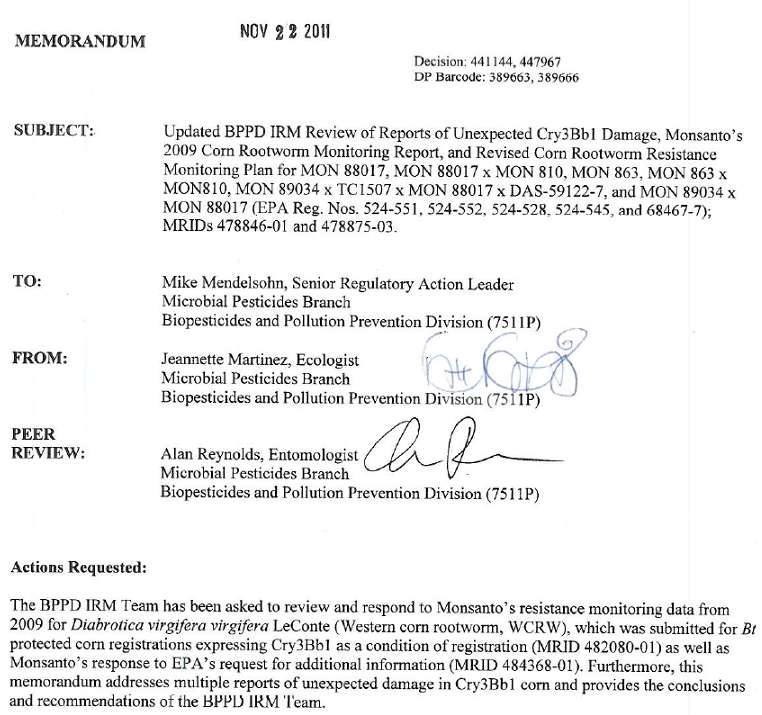
EPA: Monsanto GMO Corn Failing, Resistance Evolving

http://www.dailykos.com/story/2011/12/02/1041774/-EPA-Monsanto-GMO-Corn-Failing-Resistance-Evolving


Quote:
Severe crop damage to GMO Monsanto BT corn from rootworms which have developed resistance to BT has prompted the  EPA to issue a memo to Monsanto demanding a remedial action plan that includes using conventional pesticides, crop rotation and GMO crop free refuges. Because GMO corn, and Roundup used on it, accounts for 41% of Monsanto's profits, Monsanto's stock price plunged on the news. Monsanto continues to claim that there is no scientific evidence of developing resistance despite EPA's memo and multiple EPA confirmed reports from multiple states.


Quote:
    EXECUTIVE SUMMARY

    The BPPD IRM Team concludes that Cry3Bb1 resistance is suspected in at least some portions of four states in which “unexpected damage” reports originated (IA, IL, MN, and NE) and recommends that the Cry3Bb1 remedial action plan be implemented for “suspected resistance”. The BPPD IRM Team’s conclusions are based on multiple documented cases of unexpected “severe” corn rootworm damage to Cry3Bb1 fields
    (Gassmann et al. 2011a; Gray 2011a, c) and other undocumented reports from corn entomologists. The 2009 resistance monitoring data for Cry3Bb1 showed that field-collected populations (collected from Illinois, Iowa, and Nebraska) were less susceptible to the toxin than the laboratory reference colony. In 2009, every field-collected population had a higher EC50 and LC50 than the laboratory control, in some cases by an order of magnitude.

    Sampling was conducted in three states (Nebraska, Illinois, and Iowa); the BPPD IRM Team recommends that Colorado, South Dakota, Minnesota, and western Wisconsin be included in future monitoring based on the registrant’s reported Cry3Bb1 performance inquiries. After reviewing Monsanto’s overall resistance monitoring strategy for Cry3Bb1 (including responses to previous Agency reviews), the BPPD IRM Team concludes that the registrant’s current resistance monitoring program (as proposed) is inadequate and likely to miss early resistance events. This is due to a sampling trigger (> 1.5 NIS) in fields with unexpected damage that is too high (and may miss potentially resistant populations) and a sampling regime that collects beetles too far (1-2 miles away) from problem fields.

Title: Re: Pesticides tied to decline in bee population
Post by muso on Apr 2nd, 2012 at 6:24pm

bobbythefap1 wrote on Apr 2nd, 2012 at 12:45pm:

Sprintcyclist wrote on Apr 2nd, 2012 at 12:44pm:
My Cucumbers have had just 2 fruits, many flowers.

resorted to hand pollinating them the other week, after doing the pumpkins

Just another serious problem as a result of GM.


I don't believe that the drop in insect population has been linked to GM foods. The last report I read pinned it down to Neonicotinoid. What's the connection with GM food?

What else are you blaming on GMO's? Acne?

If GM foods are so bad, why don't we notice more illnesses and deaths in countries that have adopted GM foods?

You see headlines like: "GM food can cause cancer". The problem is that it's meaningless given that green cabbage and brussel sprouts can also cause cancer. Coffee is an IARC Group 2B  carcinogen.  Petrol and diesel are worse. Do you wear a respirator when you top up your car?

The headlines need to be put in context.

Title: Re: Pesticides tied to decline in bee population
Post by PoliticalPuppet on Apr 2nd, 2012 at 10:54pm

Quote:
I don't believe that the drop in insect population has been linked to GM foods. The last report I read pinned it down to Neonicotinoid. What's the connection with GM food?

What else are you blaming on GMO's? Acne?

If GM foods are so bad, why don't we notice more illnesses and deaths in countries that have adopted GM foods?
You answered your own question in the highlighted bits.
Do a bit of research.
We have noticed rises in disease, but obviously you can’t pinpoint the cause because the rises are unilateral.
That is where the scientific research comes in linking gmo to countless diseases, organ failure etc..


Quote:
You see headlines like: "GM food can cause cancer". The problem is that it's meaningless given that green cabbage and brussel sprouts can also cause cancer. Coffee is an IARC Group 2B  carcinogen.  Petrol and diesel are worse. Do you wear a respirator when you top up your car?

The headlines need to be put in context.
These conclusions are made in scientific tests of animals mostly, which is a process suitable for any other product.
Why is GM the only product where we do not care about the results, which always show a plethora of serious health problems.
Once again do some research?

Are you even reading the links I am posting?


__________________________________________


Death of the Bees. Genetically Modified Crops and the Decline of Bee Colonies in North America

http://globalresearch.ca/index.php?context=va&aid=25950


__________________________________________


http://www.youtube.com/watch?v=jV9CCxdkOng

Title: Re: Pesticides tied to decline in bee population
Post by PoliticalPuppet on Apr 2nd, 2012 at 10:55pm
This Supermarket "Health Food" Killed These Baby Rats in Three Weeks

http://articles.mercola.com/sites/articles/archive/2010/10/04/watch-out-there-are-more-problems-with-genetically-modified-foods-than-youre-allowed-to-know.aspx

This is a good link to read


Quote:
In the early 1990s, Dr. Pusztai was awarded a $3 million grant by the UK government to design the system for safety testing genetically modified organisms (GMOs).

His team included more than 20 scientists working at three facilities, including the Rowett Institute in Aberdeen, Scotland, the top nutritional research lab in the UK, and his employer for the previous 35 years.

The results of Pusztai's work were supposed to become the required testing protocols for all of Europe. But when he fed supposedly harmless GM potatoes to rats, things didn't go as planned.

Within just 10 days, the animals developed potentially pre-cancerous cell growth, smaller brains, livers, and testicles, partially atrophied livers, and damaged immune systems. Moreover, the cause was almost certainly side effects from the process of genetic engineering itself. In other words, the GM foods on the market, which are created from the same process, might have similar affects on humans.

With permission from his director, Pusztai was interviewed on TV and expressed his concerns about GM foods. He became a hero at his institute -- for two days.

Then came the phone calls from the pro-GMO prime minister's office to the institute's director. The next morning, Pusztai was fired. He was silenced with threats of a lawsuit, his team was dismantled, and the protocols never implemented. His Institute, the biotech industry, and the UK government, together launched a smear campaign to destroy Pusztai's reputation.

Eventually, an invitation to speak before Parliament lifted his gag order and his research was published in the prestigious Lancet. No similar in-depth studies have yet tested the GM foods eaten every day by Americans.


Quote:
    Epidemiologist Judy Carman used to investigate outbreaks of disease for a state government in Australia. She knows that health problems associated with GM foods might be impossible to track or take decades to discover. Moreover, the superficial, short-term animal feeding studies usually do not evaluate "biochemistry, immunology, tissue pathology, gut function, liver function, and kidney function" and are too short to test for cancer or reproductive or child health.

    Dr. Carman has critiqued the GMO approval process on behalf of the Public Health Association of Australia and speaks openly about her concerns. As a result, she is repeatedly attacked. Pro-GM scientists threatened disciplinary action through her Vice-Chancellor, and circulated a defamatory letter to government and university officials.

    Carman was awarded a grant by the Western Australia government to conduct some of the few long-term animal feeding studies on GMOs. Apparently concerned about what she might find, GMO advocates wrote letters to the government demanding that the grant be withdrawn. One scientist tried to convince the Western Australia Agriculture minister that sufficient safety research had been conducted and he should therefore cancel the grant.

     As his evidence, however, he presented a report summarizing only 60 GMO animal feeding studies -- an infinitesimal amount of research to justify exposing the entire population to GM foods.

    A closer investigation, however, revealed that most of the 60 were not safety studies at all. They were production studies, measuring, for example, the animals' carcass weight. Only 9 contained data applicable to human health. And 6 of the 9 showed adverse effects in animals that ate GM feed!

    Furthermore, there were several other studies with adverse findings that were mysteriously missing from the compilation. Carman points out that the report "does not support claims that GM crops are safe to eat. On the contrary, it provides evidence that GM crops may be harmful to health."

    When the Western Government refused to withdraw the grant, opponents successfully interfered with Carman's relationship with the university where she was to do the research.


Quote:
Irina Ermakova, a senior scientist at the Russian National Academy of Sciences, was shocked to discover that more than half of the baby rats in her experiment died within three weeks. She had fed the mothers GM soy flour purchased at a supermarket. The babies from mothers fed natural non-GMO soy, however, only suffered a 10% death rate. She repeated her experiment three times with similar results.


Quote:
    Embryologist Andrés Carrasco told a leading Buenos Aires newspaper about the results of his research into Roundup, the herbicide sold in conjunction with Monsanto's genetically engineered Roundup Ready crops.

    Dr. Carrasco, who works in Argentina's Ministry of Science, said his studies of amphibians suggest that the herbicide could cause defects in the brain, intestines, and hearts of fetuses. Moreover, the amount of Roundup used on GM soy fields was as much as 1,500 times greater than that which created the defects.

    Tragically, his research had been inspired by the experience of desperate peasant and indigenous communities who were suffering from exposure to toxic herbicides used on the GM soy fields throughout Argentina.

    According to an article in Grain, the biotech industry "mounted an unprecedented attack on Carrasco, ridiculing his research and even issuing personal threats." In addition, four men arrived unannounced at his laboratory and were extremely aggressive, attempting to interrogate Carrasco and obtain details of his study. "It was a violent, disproportionate, dirty reaction," he said. "I hadn't even discovered anything new, only confirmed conclusions that others had reached."

    Argentina's Association of Environmental Lawyers filed a petition calling for a ban on Roundup, and the Ministry of Defense banned GM soy from its fields.


Quote:
    Prominent virologist Terje Traavik presented preliminary data at a February 2004 meeting at the UN Biosafety Protocol Conference, showing that:

        Filipinos living next to a GM cornfield developed serious symptoms while the corn was pollinating;
        Genetic material inserted into GM crops transferred to rat organs after a single meal; and
        Key safety assumptions about genetically engineered viruses were overturned, calling into question the safety of using these viruses in vaccines.

    The biotech industry mercilessly attacked Dr. Traavik. Their excuse? -- he presented unpublished work. But presenting preliminary data at professional conferences is a long tradition in science, something that the biotech industry itself relied on in 1999 to try to counter the evidence that butterflies were endangered by GM corn.

    Ironically, three years after attacking Traavik, the same biotech proponents sharply criticized a peer-reviewed publication for not citing unpublished data that had been presented at a conference. The paper shows how the runoff of GM Bt corn into streams can kill the "caddis fly," which may seriously upset marine ecosystems. The study set off a storm of attacks against its author, ecologist Emma Rosi-Marshall, which Nature described in a September 2009 article as a "hail of abuse."


Quote:
"Agritech companies have given themselves veto power over the work of independent researchers ... Only studies that the seed companies have approved ever see the light of a peer-reviewed journal."


[quote][/quote]

Title: Re: Pesticides tied to decline in bee population
Post by muso on Apr 3rd, 2012 at 10:33am
The research on GM foods tends to be polarised. Either it's backed by the likes of Monsanto, in which case it's biased towards GMO foods or it's sponsored by anti-GMO advocates, in which cases it's biased against GMO foods.

The best thing you can do is to read the reports and actively look for inconsistencies. There are plenty of inconsistencies in the links you provided.

Unfortunately the truth is not out there. You have to search for it.

As far as the Pusztai affair is concerned, I don't have all the facts, so I can't comment.

I don't doubt that there is a fair bit of skullduggery going on by both Monsanto and the anti-GMO advocates. On balance, I don't believe that Monsanto or any other corporation would knowingly produce crops that would actually harm people.  It wouldn't make sense from a liability standpoint for one thing. (Think James Hardie)

It's one of these emotive issues.

To be honest, I'd prefer not to waste my time on this issue, although when I see obvious technical errors, I tend to speak out. I question everything.  We might have to agree to disagree on this.

The more pressing issue is that of Anthropogenic Climate Change.  There are a heck of a lot of people out there who don't think it's a problem.  People need to know exactly how serious it is.

Title: Re: Pesticides tied to decline in bee population
Post by PoliticalPuppet on Apr 3rd, 2012 at 10:38am
Muso I will respond briefly,
You cannot justify the continual use of GMO's by saying that the evidence is clear.
There is more than enough evidence to justify the discontinuation of GMO's.

In reality there should only need to be one report showing the dangers of GM for people to stop and think, hmm maybe we shouldn’t allow this to be forced on the entire planet before we know better.

You continue to discredit the entire argument due to some very small points which is really arrogant.


Quote:
I don't doubt that there is a fair bit of skullduggery going on by both Monsanto and the anti-GMO advocates. On balance, I don't believe that Monsanto or any other corporation would knowingly produce crops that would actually harm people.  It wouldn't make sense from a liability standpoint for one thing. (Think James Hardie)
This really shows that you dont know much about the issue.
Biotech companies have proved thousands of times that they are not to be trusted.

Title: Re: Pesticides tied to decline in bee population
Post by falah on Apr 4th, 2012 at 9:10am
The oil companies and their supporters that oppose banning petroleum-based pesticides cite the increased yield as reason to keep the industry going.

It would be ironic if their chemicals actually inflicted the biggest loss of crop yields in history by wiping out bees which are needed for pollination.


Title: Re: Pesticides tied to decline in bee population
Post by PoliticalPuppet on Apr 4th, 2012 at 9:27am

falah wrote on Apr 4th, 2012 at 9:10am:
The oil companies and their supporters that oppose banning petroleum-based pesticides cite the increased yield as reason to keep the industry going.

It would be ironic if their chemicals actually inflicted the biggest loss of crop yields in history by wiping out bees which are needed for pollination.
Well this is exactly what they are doing, and in many different ways.
If the bees are to become extinct or even endangered we will see a massive drop in certain crucial food production.
They are also destroying the genetic makeup of plants which destroys future chances of growing food that isn’t gm, which is already known to be highly dangerous for the environment and humans.

If they gain a full monopoly then the lives of billions are in the hands of the same people who created agent orange and other things like that...
Need I say more?


Title: Re: Pesticides tied to decline in bee population
Post by muso on Apr 4th, 2012 at 1:13pm
I may be wrong, but I was under the impression that neonicotinoids were produced from  plants such as nicotiana (tobacco species) and another one whose name escapes me for the moment (Duboisia perhaps?).  It's not a petroleum product. It's actually alkaloid based.

They are almost certainly to blame for the drop in insect populations gievn the catasrtophic effects reported in Eastern Europe where they were first used. .

Title: Re: Pesticides tied to decline in bee population
Post by falah on Apr 4th, 2012 at 2:59pm

muso wrote on Apr 4th, 2012 at 1:13pm:
I may be wrong, but I was under the impression that neonicotinoids were produced from  plants such as nicotiana (tobacco species) and another one whose name escapes me for the moment (Duboisia perhaps?).  It's not a petroleum product. It's actually alkaloid based.

They are almost certainly to blame for the drop in insect populations gievn the catasrtophic effects reported in Eastern Europe where they were first used. .


The natural nicotine chemical is found in plants, but howis the synthetic chemical produced?

Title: Re: Pesticides tied to decline in bee population
Post by muso on Apr 4th, 2012 at 3:56pm

falah wrote on Apr 4th, 2012 at 2:59pm:

muso wrote on Apr 4th, 2012 at 1:13pm:
I may be wrong, but I was under the impression that neonicotinoids were produced from  plants such as nicotiana (tobacco species) and another one whose name escapes me for the moment (Duboisia perhaps?).  It's not a petroleum product. It's actually alkaloid based.

They are almost certainly to blame for the drop in insect populations given the catastrophic effects reported in Eastern Europe where they were first used. .


The natural nicotine chemical is found in plants, but howis the synthetic chemical produced?


All kinds of alkaloids are present in plants. To be honest, and as I indicated in my previous post, I don't know this for sure, but it would make sense that nicotine would be the raw material. An intelligent guess here since I don't have any industrial espionage data on Bayer, but I'd say that they would use nucleophilic substitution to produce the various neonicotinoids.

I found this Fact Sheet for one neonicotinoid: (Imidacloprid)

(That's interesting. I use "Advantage flea control" on my dog.  Do you? )

http://www.absoluteastronomy.com/topics/Imidacloprid

Quote:
Imidacloprid is a nicotine-based, systemic insecticide, which acts as a neurotoxin and belongs to a class of chemicals called the neonicotinoids. Although it is now off patent, the primary manufacturer of this chemical is Bayer CropScience, (part of Bayer AG). It is sold under the trade names Kohinor, Admire, Advantage (Advocate) (flea killer for pets), Gaucho, Mallet, Merit, Nuprid, Prothor, Turfthor, Confidor, Conguard, Dominion 2L, Hachikusan, Premise, Prothor, Provado, Intercept, and Winner. Imidacloprid is one of the most widely used insecticides and can be applied by soil injection, tree injection, application to the skin, or broadcast foliar or ground application as a granular or liquid formulation or as a pesticide-coated seed treatment.


I can research this further if you're interested. I have quite a reference library on pesticides.

Title: Re: Pesticides tied to decline in bee population
Post by PoliticalPuppet on Apr 4th, 2012 at 4:00pm

muso wrote on Apr 4th, 2012 at 1:13pm:
I may be wrong, but I was under the impression that neonicotinoids were produced from  plants such as nicotiana (tobacco species) and another one whose name escapes me for the moment (Duboisia perhaps?).  It's not a petroleum product. It's actually alkaloid based.

They are almost certainly to blame for the drop in insect populations gievn the catasrtophic effects reported in Eastern Europe where they were first used. .
How does this justify it?
Aids is natural too but I dont go sprinkling it over your soup do I?

The drop in bee population is probably due to a mixture of problems.

Title: Re: Pesticides tied to decline in bee population
Post by muso on Apr 5th, 2012 at 11:11am

bobbythefap1 wrote on Apr 4th, 2012 at 4:00pm:

muso wrote on Apr 4th, 2012 at 1:13pm:
I may be wrong, but I was under the impression that neonicotinoids were produced from  plants such as nicotiana (tobacco species) and another one whose name escapes me for the moment (Duboisia perhaps?).  It's not a petroleum product. It's actually alkaloid based.

They are almost certainly to blame for the drop in insect populations gievn the catasrtophic effects reported in Eastern Europe where they were first used. .
How does this justify it?
Aids is natural too but I dont go sprinkling it over your soup do I?

The drop in bee population is probably due to a mixture of problems.


What's your problem? Have I ever said that neonicotinoids were justified? I was just replying to falah's point about the evil Oil companies and doing some research in the process. I noted that they were derived from nicotiana plants. Is a plant derivative more "natural" than an "oil" derivative anyway?  The real concern is its ecotoxicity, is it not? 

I already said that  neonicotinoids are probably to blame for the drop in bee population. There may indeed be other factors.

I was just taken aback at the fact that they are present in a fairly well known product like Advantage. I'd hazard a guess that these substances are very widely used.

Title: Re: Pesticides tied to decline in bee population
Post by PoliticalPuppet on Apr 5th, 2012 at 11:24am

muso wrote on Apr 5th, 2012 at 11:11am:

bobbythefap1 wrote on Apr 4th, 2012 at 4:00pm:

muso wrote on Apr 4th, 2012 at 1:13pm:
I may be wrong, but I was under the impression that neonicotinoids were produced from  plants such as nicotiana (tobacco species) and another one whose name escapes me for the moment (Duboisia perhaps?).  It's not a petroleum product. It's actually alkaloid based.

They are almost certainly to blame for the drop in insect populations gievn the catasrtophic effects reported in Eastern Europe where they were first used. .
How does this justify it?
Aids is natural too but I dont go sprinkling it over your soup do I?

The drop in bee population is probably due to a mixture of problems.


What's your problem? Have I ever said that neonicotinoids were justified? I was just replying to falah's point about the evil Oil companies and doing some research in the process. I noted that they were derived from nicotiana plants. Is a plant derivative more "natural" than an "oil" derivative anyway?  The real concern is its ecotoxicity, is it not? 

I already said that  neonicotinoids are probably to blame for the drop in bee population. There may indeed be other factors.

I was just taken aback at the fact that they are present in a fairly well known product like Advantage. I'd hazard a guess that these substances are very widely used.
You seem to be trying to justify it, well that’s how it comes across.
All things are natural, that doesn’t mean that we should be using them for commercial proposes.


Title: Re: Pesticides tied to decline in bee population
Post by PoliticalPuppet on Apr 5th, 2012 at 9:31pm
MONSANTO Bill S510/HR2751 BANS Homegrown FOOD Makes Private, Backyard Fruit, Veggie Gardens ILLEGAL!

https://www.youtube.com/watch?v=YUUS-pGm5PY
https://www.youtube.com/watch?v=f-LcbK1ZqRs

Title: Re: Pesticides tied to decline in bee population
Post by PoliticalPuppet on Apr 5th, 2012 at 9:33pm
Police Begin "Guns Drawn" Raids on Organic Food Stores in California
http://www.youtube.com/watch?v=b27EFldZ17k

Title: Re: Pesticides tied to decline in bee population
Post by PoliticalPuppet on Apr 5th, 2012 at 9:33pm
NZ food bill to make growing food a government privilege rather than a human right

http://www.naturalnews.com/034337_New_Zealand_food_freedom_human_rights.html


Quote:
The God-given human right to freely cultivate food is under attack in New Zealand (NZ) as special interest groups and others are currently attempting to push a "food security" bill through the nation's parliament that will strip individuals of their right to grow food, save seeds, and even share the fruits of their labor with friends and family members.

In accordance with the World Trade Organization's (WTO) Codex Alimentarius scheme for global food control, the NZ Food Bill, if passed, will essentially transfer primary control of food from individuals to corporations under the guise of food safety. And unless massive public outcry and awakened consciences within the NZ government are able to put a stop to it, the bill could become law very soon.

Title: Re: Pesticides tied to decline in bee population
Post by PoliticalPuppet on Apr 6th, 2012 at 10:02am
Lets face it, they act like they are guilty dont they.
____________________________________________


Monsanto Threatens to Sue Vermont if Legislators Pass a Bill Requiring GMO Food to Be Labeled

http://www.alternet.org/food/154855/monsanto_threatens_to_sue_vermont_if_legislators_pass_a_bill_requiring_gmo_food_to_be_labeled?page=1


Quote:
Despite overwhelming public support and support from a clear majority of Vermont’s Agriculture Committee, Vermont legislators are dragging their feet on a proposed GMO labeling bill. Why? Because Monsanto has threatened to sue the state if the bill passes.

The popular legislative bill requiring mandatory labels on genetically engineered food (H-722) is languishing in the Vermont House Agriculture Committee, with only four weeks left until the legislature adjourns for the year. Despite thousands of emails and calls from constituents who overwhelmingly support mandatory labeling, despite the fact that a majority (6 to 5) of Agriculture Committee members support passage of the measure, Vermont legislators are holding up the labeling bill and refusing to take a vote.


____________________________________________


Poland to ban Monsanto’s genetically modified maize


Quote:
http://www.rawstory.com/rs/2012/04/04/poland-to-ban-monsantos-genetically-modified-maize/


Quote:
WARSAW — Poland will impose a complete ban on growing the MON810 genetically modified strain of maize made by US company Monsanto on its territory, Agriculture Minister Marek Sawicki said Wednesday.

“The decree is in the works. It introduces a complete ban on the MON810 strain of maize in Poland,” Sawicki told reporters, adding that pollen of this strain could have a harmful effect on bees.

On March 9, seven European countries — Belgium, Britain, Bulgaria, France, Germany, Ireland and Slovakia — blocked a proposal by the Danish EU presidency to allow the cultivation of genetically-modified plants on the continent.

Seven days after that, France imposed a temporary ban on the MON810 strain.

Title: Re: Pesticides tied to decline in bee population
Post by muso on Apr 7th, 2012 at 7:50am
Did you just take everything at face value regarding the NZ Food Bill, or did you research it yourself?


Quote:
The bill in no way affects people's right to grow food and to then exchange, sell or trade it. Food grown at home for personal or family consumption or given away to friends is excluded from the bill.

http://www.stuff.co.nz/southland-times/opinion/6271131/Nothing-to-fear-from-Food-Bill

The Health Food industry is well overdue for an overhaul of regulations.

Here's an example. The internet was rife with sites promoting Apricot Kernels as a cancer cure. Now in moderation, they are fine, but they do contain Amygdalin and Laetrile, which are both cyanogenic glycosides. There are many other examples of this. Nutmeg is another. 
http://www.ozpolitic.com/forum/YaBB.pl?num=1287169442/31#31

I still believe that a lot of this anti-industry reaction comes from a kind of paranoia. Some of it may be justified, but certainly not all.

If what you "know" about GM foods is based on activist sites like that,  maybe it's time to do a reality check. Look at other sources and use your own judgement a bit.  The internet is rife with conspiracy theories. The trick is to be able to apply a BS filter.

Beware - Pet theories can very quickly turn feral. Approach all emotive subjects like this with an open mind. Don't form any conclusions until you have had a chance to examine the evidence.

Usually I find that subjects with a lot of emotive content form a perfect habitat for the Lesser Crested Bvllshit Spreader.

Title: Re: Pesticides tied to decline in bee population
Post by PoliticalPuppet on Apr 7th, 2012 at 11:22am
The bill is setting the way for stricter bills in the future.
And it really just helps push a monopoly on smaller farmers.


Quote:
Here's an example. The internet was rife with sites promoting Apricot Kernels as a cancer cure. Now in moderation, they are fine, but they do contain Amygdalin and Laetrile, which are both cyanogenic glycosides. There are many other examples of this. Nutmeg is another.
http://www.ozpolitic.com/forum/YaBB.pl?num=1287169442/31#31
Nutmeg also gives a great high! Message me if you want to know how to prepare it.


Quote:
I still believe that a lot of this anti-industry reaction comes from a kind of paranoia. Some of it may be justified, but certainly not all.
While I am sure for a minute few this is true.
A lot of it comes from common sense, there is a bigger picture that most people do not see; likewise most people don’t think about the future.
Industry has some fatal flaws and while it’s a good short term idea, in the long term it is horrible unless of course you live in a world of infinite resources.


Quote:
If what you "know" about GM foods is based on activist sites like that,  maybe it's time to do a reality check. Look at other sources and use your own judgement a bit.  The internet is rife with conspiracy theories. The trick is to be able to apply a BS filter.
When I first started looking into it there was almost no web news on the topic, I took most of my information from scientific research, studies and firsthand accounts from people involved.


Quote:
Beware - Pet theories can very quickly turn feral. Approach all emotive subjects like this with an open mind. Don't form any conclusions until you have had a chance to examine the evidence.

Usually I find that subjects with a lot of emotive content form a perfect habitat for the Lesser Crested Bvllshit Spreader.
I usually base my opinion on the facts available.

Using emotive content is a justifiable tactic, if you have an opposition who thrive simply by using this then maybe facts aren’t enough to convince a human.

Title: Re: Pesticides tied to decline in bee population
Post by muso on Apr 7th, 2012 at 3:15pm
Did you listen to this programme when it was on ABC Radio? I always thought it was a good reality check on the use of pesticides and inorganic fertilisers.  If you didn't, I'll try to retrieve some of the material off the web. The listeners chose to grow non GMO cotton. The outcome was quite an eye opener.

http://www.abc.net.au/rural/grow/about.htm

Title: Re: Pesticides tied to decline in bee population
Post by PoliticalPuppet on Apr 7th, 2012 at 3:28pm

muso wrote on Apr 7th, 2012 at 3:15pm:
Did you listen to this programme when it was on ABC Radio? I always thought it was a good reality check on the use of pesticides and inorganic fertilisers.  If you didn't, I'll try to retrieve some of the material off the web. The listeners chose to grow non GMO cotton. The outcome was quite an eye opener.

http://www.abc.net.au/rural/grow/about.htm

What were the outcomes?

Title: Re: Pesticides tied to decline in bee population
Post by muso on Apr 7th, 2012 at 4:18pm
The outcome was less important than the insight into the problems faced by cotton growers. It was quite a fascinating series. At the time I was driving long distances, so it made for some interesting listening. There were many things that I learned from this series, and by the way it wasn't sponsored by Monsanto or anything like that.

The yield was considerably reduced, but the cotton was of good quality. They ended up making cotton teeshirts out of it which they sold to listeners I presume. They actually made the teeshirts in Australia, which came at a considerable premium. 

I see that the sound bytes are missing, which is not surprising after 10 years.  What I found really interesting was just how much of a balancing act cotton growing is in Australia. It was an eye-opener.

Title: Re: Pesticides tied to decline in bee population
Post by PoliticalPuppet on Apr 7th, 2012 at 4:28pm
Seems that there would be very little difference then, with higher quantity you get more specimens of high quality which would probably even itself out to the rates produced by GM.
Cotton is not a good crop for australia.

Title: Re: Pesticides tied to decline in bee population
Post by muso on Apr 7th, 2012 at 4:42pm
Actually I agree that cotton is not necessarily a good crop for Australia.

By the way the reduction in yield in that case, actually made the difference between economically viable and non-viable.  Also read about his experiments in which he didn't apply any pesticide to a small portion of his crop. The results were quite dramatic.

I found a reasonable summary of the "Grow your Own" programme, but I'm almost reluctant to give you this link.

The first article on this site is questionable. Anything with the University of Guelph and M&M should be regarded as questionable. Unfortunately Climate change is another highly emotive issue, although I agree that we shouldn't be using fiction to get the message across.

Read the one titled:  5 – Genetically modified organisms. It summarises where I stand on this issue quite well. It puts a risk management perspective on it.

If we want to produce large quantities of crops such as wheat, corn and rice, then we are forced into mono cultures. Monocultures are great when it comes to materials handling and harvesting, but they introduce all kinds of problems such as disease and pests. We are practically forced into using pesticides and herbicides for weed control.

By the way, I am well acquainted with Aquaculture. I was thinking of trying it out myself on a small scale. Maybe one day.

Title: Re: Pesticides tied to decline in bee population
Post by PoliticalPuppet on Apr 7th, 2012 at 5:00pm

muso wrote on Apr 7th, 2012 at 4:42pm:
Actually I agree that cotton is not necessarily a good crop for Australia.

By the way the reduction in yield in that case, actually made the difference between economically viable and non-viable.  Also read about his experiments in which he didn't apply any pesticide to a small portion of his crop. The results were quite dramatic.

I found a reasonable summary of the "Grow your Own" programme, but I'm almost reluctant to give you this link.

The first article on this site is questionable. Anything with the University of Guelph and M&M should be regarded as questionable. Unfortunately Climate change is another highly emotive issue, although I agree that we shouldn't be using fiction to get the message across.

Read the one titled:  5 – Genetically modified organisms. It summarises where I stand on this issue quite well. It puts a risk management perspective on it.

If we want to produce large quantities of crops such as wheat, corn and rice, then we are forced into mono cultures. Monocultures are great when it comes to materials handling and harvesting, but they introduce all kinds of problems such as disease and pests. We are practically forced into using pesticides and herbicides for weed control.

By the way, I am well acquainted with Aquaculture. I was thinking of trying it out myself on a small scale. Maybe one day.

In the short term it is more viable, but in the long term poses much greater threats to the crops viability.

What is the link?

Climate change has been made into a highly emotive issue, and for good reason. Since we have been arguing about that we have forgotten that there are thousands of other real reasons why we should not be using fossil fuels, something that people were starting to realise just before the global warming phenomena hit.

There are organic and pesticide free methods, in a communal basis they are more then what we need.
Our current system is not economic and we need to set up local bases for growing food supply rather than importing and sourcing foods from 1000s of kms away.
We could easily supply food for everyone on this planet except the methods to do it right are not able to be commercialised.

Takes a few years to set up but it is one of the most rewarding form of agriculture

Title: Re: Pesticides tied to decline in bee population
Post by muso on Apr 7th, 2012 at 5:53pm

bobbythefap1 wrote on Apr 7th, 2012 at 5:00pm:
In the short term it is more viable, but in the long term poses much greater threats to the crops viability.

What is the link?

Climate change has been made into a highly emotive issue, and for good reason. Since we have been arguing about that we have forgotten that there are thousands of other real reasons why we should not be using fossil fuels, something that people were starting to realise just before the global warming phenomena hit.

There are organic and pesticide free methods, in a communal basis they are more then what we need.
Our current system is not economic and we need to set up local bases for growing food supply rather than importing and sourcing foods from 1000s of kms away.
We could easily supply food for everyone on this planet except the methods to do it right are not able to be commercialised.

Takes a few years to set up but it is one of the most rewarding form of agriculture


I tend to think that you'd come across the same stumbling blocks as with Renewable Energy, namely commercial interests, and no matter how much you may wish for a brave new world, the reality is that we're going to have to use the economic system we already have. It's not perfect, but having seen extreme Marxism induced poverty in Africa, I assure you that you definitely don't want to go there. Apart from that, we don't have time to experiment with different economical systems.

The double standards can be quite bizarre, even in those who claim to be eco friendly. I checked out a new Vegetarian supplier in Brisbane last month, with Ecologically Friendly splashed across the door. I was amazed to find the Linda McCartney range of vegetarian pies and sausage rolls. They were manufactured in the UK!

I have no arguments that Climate Change should be an emotive issue. Its effects will dominate that of just about everything else during the next century and beyond. I also agree that people don't have their priorities set appropriately and are missing some important issues. For example, we are losing plant species at an incredible rate and will continue to do so into the future, but we're not giving due consideration to preserving the genetic material and we're not looking at species that will be better suited to warmer and drier climatic conditions. (or warmer and wetter depending on the region).  These are factors that have enormous effects on crop yield.

By the way, there have been some encouraging trends towards urban based agriculture in recent times.

Title: Re: Pesticides tied to decline in bee population
Post by PoliticalPuppet on Apr 23rd, 2012 at 10:21am

Quote:
Instead of addressing issues of an environmental concern. Mosanto buy up the organisations that expose them. Really there should be laws in place to stop this kind of thing happening.


Blamed for Bee Collapse, Monsanto Buys Leading Bee Research Firm
http://theintelhub.com/2012/04/19/blamed-for-bee-collapse-monsanto-buys-leading-bee-research-firm/

Quote:
Monsanto, the massive biotechnology company being blamed for contributing to the dwindling bee population, has bought up one of the leading bee collapse research organizations.

Recently banned from Poland with one of the primary reasons being that the company’s genetically modified corn may be devastating the dying bee population, it is evident that Monsanto is under serious fire for their role in the downfall of the vital insects.

It is therefore quite apparent why Monsanto bought one of the largest bee research firms on the planet.


Australian Politics Forum » Powered by YaBB 2.5.2!
YaBB Forum Software © 2000-2026. All Rights Reserved.